

provider
Dino IPTV
Use the Dino product and support routes to confirm which current price and player apply.
dinoiptv.app · Check exact market
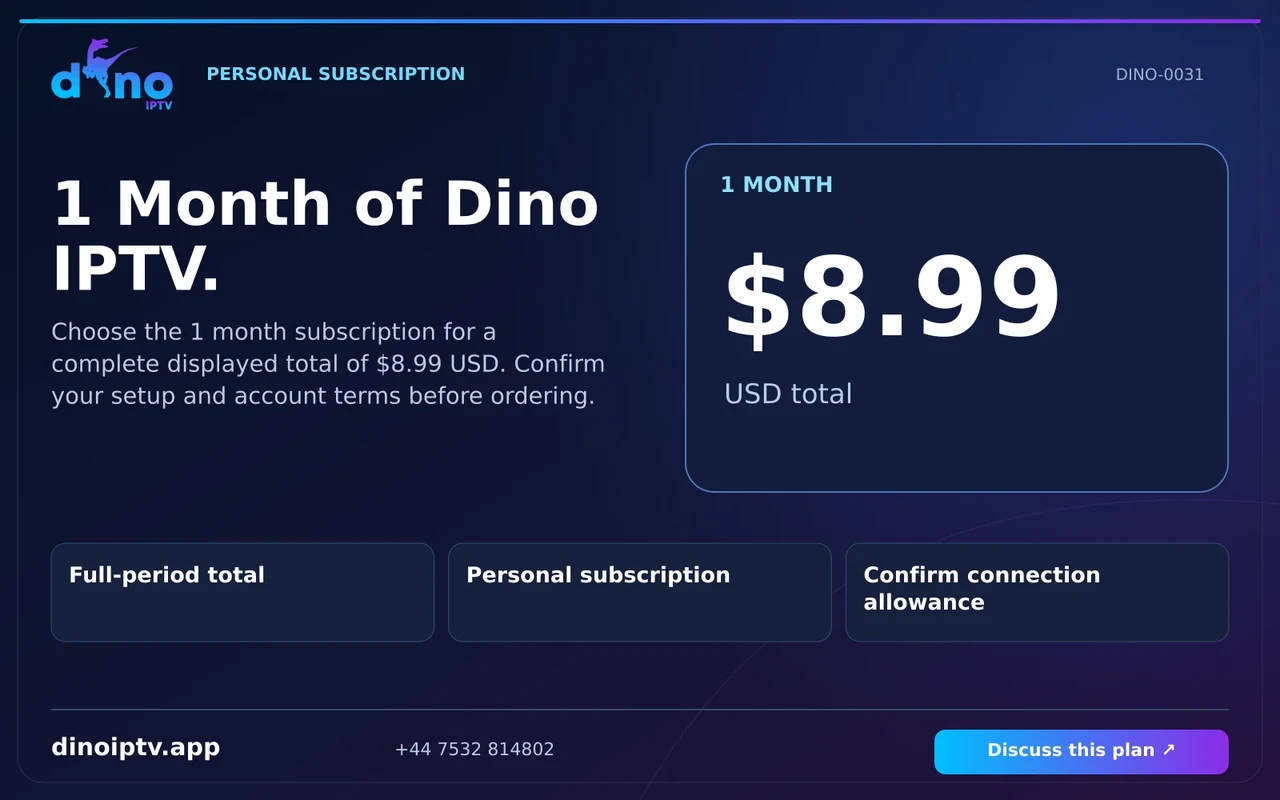
Open the official Dino IPTV websiteThe 1 month plan is listed at $8.99 USD. The operator also lists 4 reseller pack sizes.

dinoiptv.app
The 1 month plan is listed at $8.99 USD. The operator also lists 4 reseller pack sizes.
The 1 month plan is listed at $8.99 USD. The operator also lists 4 reseller pack sizes.
Use the Dino product and support routes to confirm which current price and player apply.
dinoiptv.app · Check exact market
Open the official Dino IPTV websiteDino IPTV maintains the site at dinoiptv.app. Check who issues the invoice and who replaces the access if the app or TV changes. The buyer needs both answers before paying for a long term.
Document review · November 19, 2026. Playback performance, service rights and ZIP-level access require separate evidence.
The 1 month plan is listed at $8.99 USD. The operator also lists 4 reseller pack sizes.

dinoiptv.app
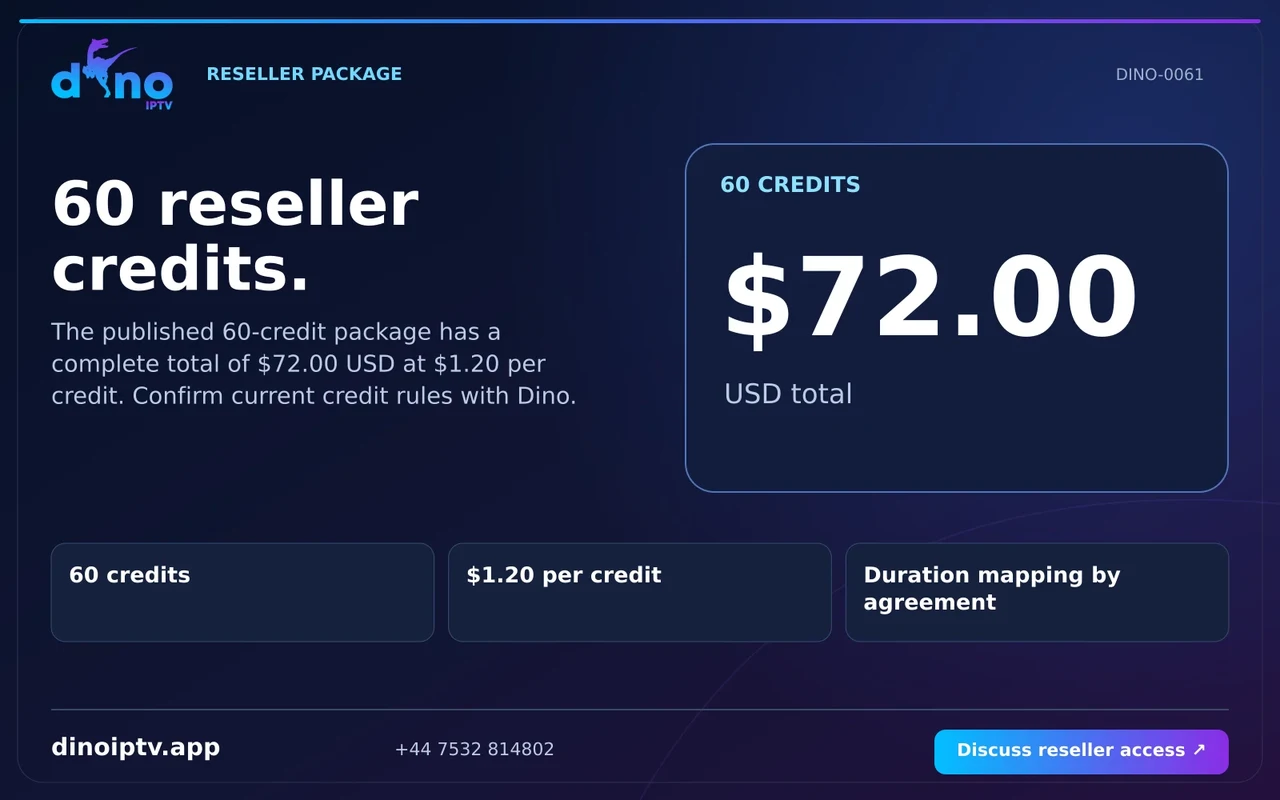
Dino lists sixty reseller credits for $72. That establishes a purchase price of $1.20 per credit. It does not establish the cost of activating a customer for a month. The missing number is the debit applied to that particular customer term. A shop can compare four Dino pack prices today. It should wait for the operator's written debit schedule before setting prices for the accounts it plans to sell. A household shopping for one television can skip that step and go straight to Dino's separate viewing subscriptions.
That distinction matters most when the business is small. Imagine an installer whose customers occasionally ask for help setting up an internet television player. Four of them have asked for prices. Buying the smallest pack might appear to secure sixty potential sales. Yet a customer could ask for one month, a quarter, half a year or a full year. Four enquiries could also lead to no orders. The only count the pack establishes is the number of units the operator agrees to put in a reseller's balance.
The figures below come from Dino's published subscription and reseller schedules checked for the November 19, 2026 edition. The order desk also lists pack quantities and totals. Dino’s FAQ offers a 24-hour compatibility trial by request. Before ordering, confirm activation for the intended device and U.S. viewing market, the identity of the party issuing the invoice and the terms of any reseller panel. The sections on account handling describe procedures an independent seller can use. They make no claim that we bought a pack, provisioned a line or tested the streams.
| Dino pack | Amount due for the pack | Cost of one credit |
|---|---|---|
| 60 credits | $72.00 USD | $1.20 |
| 120 credits | $118.80 USD | $0.99 |
| 300 credits | $285.00 USD | $0.95 |
| 600 credits | $510.00 USD | $0.85 |
The jump from sixty to 120 credits is unusually important in this table. Buying two sixty-credit packs would cost $144. A single 120-credit pack is $25.20 less for the same number of credits. The buyer still has to come up with $46.80 more than the smallest order. For an operator with only one confirmed customer, the larger purchase ties up cash before the first invoice, access handoff and support request have gone through. The saving exists only in a comparison against credits the operator would otherwise have bought.
At three hundred credits, buying five packs of sixty would cost $360. One pack of three hundred costs $285. Buying two packs of 120 and one of sixty would also give three hundred, for $309.60. A desk that can choose different pack sizes has more than one legitimate comparison. The $75 difference against five small packs is real arithmetic. Against the mixed purchase it falls to $24.60. Neither figure is a discount against doing nothing.
At six hundred credits, two three-hundred packs cost $570 against a single $510 purchase. If a second group of orders never materializes, the ability to stop after the first $285 purchase may be worth more than the $60 difference. Before increasing a pack size, write down which actual accounts need the units and their proposed start dates. Keep customer names and private account details out of any public planning sheet.
Suppose the operator has received a written debit schedule for its own assigned account and has converted its orders into a requirement of 180 credits. This example starts with the confirmed credit requirement. It makes no assumption about how many viewing months produce that requirement. Three sixty-credit packs cost $216 and leave zero credits. A 120 plus a sixty costs $190.80 and also leaves zero. The mixed order releases $25.20 for other purposes on that forecast.
If the business needs 240 credits at the same published prices, two packs of 120 come to $237.60. One pack of three hundred costs $47.40 more today and leaves sixty credits. That $47.40 is the cash difference between these two whole purchases. It is not the published price of a separate sixty-credit top-up. Whether paying it makes sense depends on what happens to those sixty remaining units. A confirmed renewal due next week has a different status from an optimistic idea about future sales.
A 301-credit requirement is an instructive threshold. A single three-hundred pack cannot cover it. A three-hundred plus a sixty costs $357 for 360 credits. Three packs of 120 also deliver 360 but cost $356.40. The seemingly less efficient per-credit tier wins this particular whole-pack comparison by sixty cents. Both conclusions require multiple purchases to be allowed at the published rate and credited before the due date. The operator needs to confirm that behavior. A price table cannot tell you how quickly separate orders settle or whether a pack can be repeated.
Dino's published viewing totals are $8.99 for one month, $23.99 for three, $38.99 for six and $49.99 for twelve. Those are USD full-term amounts. A buyer selecting twelve months should budget $49.99 at the point of order before any separately disclosed items. The approximate monthly equivalent is $4.17. That division is useful for comparison and says nothing about whether the household can pay in twelve installments.
The six-to-twelve-month step costs $11 more on the listed schedule. Consider a family staying in a rental for precisely six months. The additional months held on paper have little value if the household cannot take the account to its next address or the seller does not cover that destination. The six-month total is lower for the six months currently needed. A family running the same television in the same home all year might make another choice entirely. Ask the seller about changing address before putting any value on the unused period.
Three individual months at $8.99 total $26.97. A prepaid quarter is $23.99, a difference of $2.98. A viewer who does not know whether the first month will meet a particular requirement has to decide whether to commit the additional $15 at the outset. Put the requirement into words. Local late news, working captions after a player restart or a program guide in a particular language are all better reasons to extend than the fact that a checkout happens to show a lower rounded monthly figure.
Keep the household receipt separate from any receipt for reseller inventory. If a customer later asks a local technician to reinstall the player, the receipt should tell the technician which business supplied the viewing account. A reseller pack reference cannot identify the buyer's term or its expiry. An independent software license on a smart television belongs in a third record when applicable.
Ask Dino what the assigned panel deducts for creating one standard account for each of the four offered terms. Ask the same question for extending an existing account which still has time on it. Include the number of connections in the question. If a different kind of account has a different debit, give it a separate row. Otherwise the seller could answer a perfectly reasonable question about a single-screen line while the reseller budgets a different service for a two-screen household.
A usable answer includes the effective date and a way to identify the panel or program to which it applies. If the reply arrives in a chat, save the message alongside the corresponding pack quote and agreed currency. A cropped screenshot of four numbers without the headings tells another operator very little. They need to see which is the term, which is the deduction, whether credits use decimals, and whether the figure refers to a new line or renewal. A transaction reference or a succinct quotation in a private order record is enough.
Until those cells are known, the working equation is still useful. Divide the billed pack total by credited quantity, then multiply by the confirmed debit for the requested action. Add separate known operating costs only when explaining a business budget. For the sixty-credit pack the first step gives $1.20. For the three-hundred pack it gives $0.95. Leave the second step blank wherever the operator has supplied no debit. A spreadsheet returning zero for an empty debit makes an uncertain customer order look free.
Ask who can change the schedule and how existing obligations are handled if it changes before a renewal. The answer can affect a small business even when every unit in the current pack is correctly delivered. A price already promised to a customer is a commitment between that customer and the reseller. A future change in an operator's deduction can make the commitment more expensive to fulfill. Agree on the limits of a quote before taking money for a term far in advance.
A pack receipt should answer three short questions. Who received the money, what paid amount and currency appear on the invoice, and how many usable credits were added? An account confirmation answers a different set. Which customer reference was acted on, what is the agreed term and connection allowance, and what expiry does the account now display? Keeping the two records separate makes it possible to diagnose a problem without sharing one customer's private details with another.
Use a neutral internal order number on the customer's receipt. A label such as order 104 can join two private records without exposing the login used on the television. On the commercial side, record the money due and whether it has settled. On the operational side, record the requested start, account status and confirmed expiry. There is no need to put a viewing password into a bookkeeping spreadsheet. The person checking the figures typically needs to know a line was activated, not how to use it.
Before closing an order, take a moment to compare the written date with the service date. An account bought on a Friday and activated on a Monday may have one of those dates as its effective start. Ask what the operator counts for this offer. A customer hearing “one month” has no reason to guess that three days were consumed while the shop was closed. If a start date needs correcting, raise it with the actual issuer while the original confirmation and transaction reference are easy to retrieve.
When two people handle an order, assign one person the final account action. A payment confirmation arriving on a phone and an email at the same time can look like two requests for service. A single shared order number and one recorded action keep the customer from receiving two conflicting messages. The second colleague can verify the result against the written term. If the panel timed out before confirming the first attempt, check the balance and the customer line before repeating it.
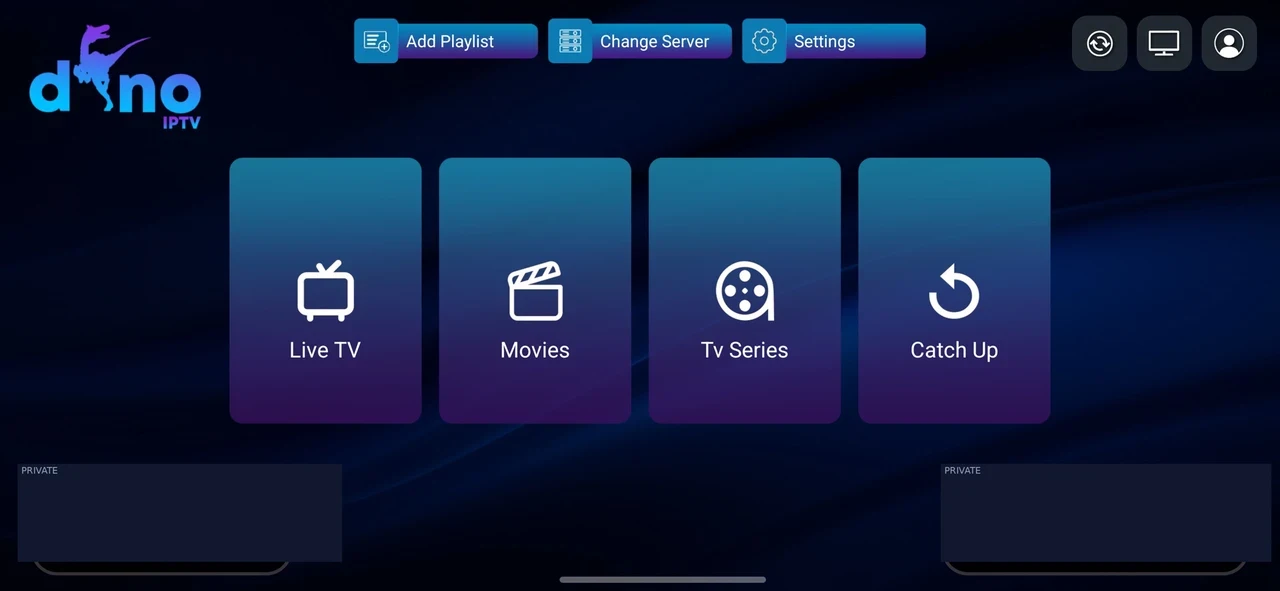
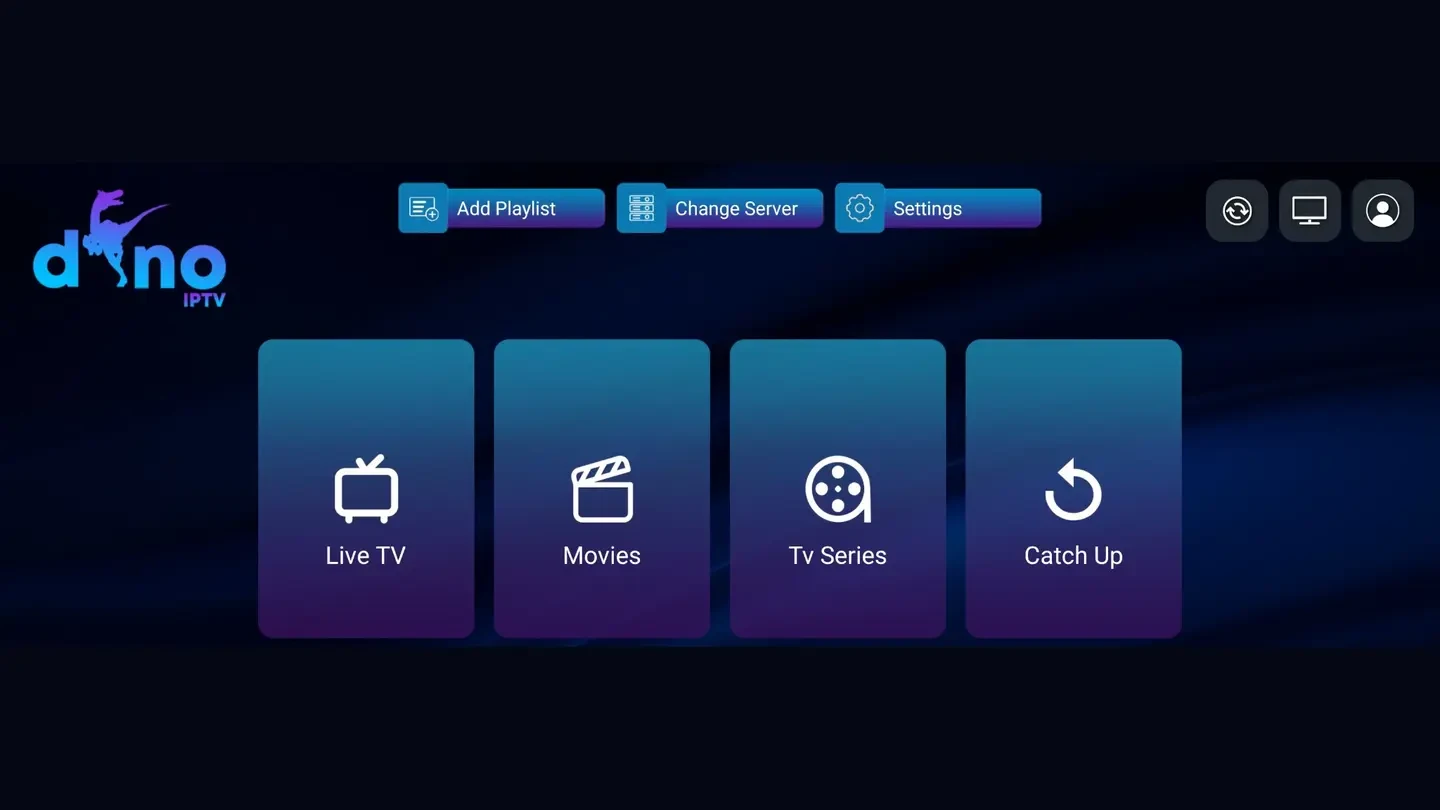
An attractive image of a panel establishes how a published screen looks. It cannot demonstrate that your account has permission to perform a sensitive action. Ask the operator to walk through the specific tasks the business expects to perform using demonstration data. For a small desk, the useful tasks are finding a customer reference, checking an expiry, identifying the debit for a supported action and locating the route for a correction. A completed operation on somebody else's account is not a permission grant for yours.
Give the demonstration a realistic shape. Suppose a customer still has a week left and wants to add a quarter. Ask where the present end date appears, what the confirmation screen would show, and what the post-action record should say. If the program provides different privileges to employees, ask whether a junior colleague can read that result without being allowed to create accounts or move stock. Buying the pack does not by itself establish multi-user access, a subordinate reseller program, branding rights or the ability to transfer balances.
Ask what happens when an order is entered for the wrong term. The useful information is who can reverse or amend it, what records must be provided and whether any credit is returned. An operator may require a support request. It may also decline a reversal after activation. The reseller needs to know this before promising an immediate correction. A policy that sounds generous in a marketing line can still have conditions tied to dates, account status or who made the original change.
Have the person responsible for closing the day's work describe the process in their own words when the demonstration finishes. They should be able to explain how they know an action succeeded and how they would recognize one that needs help. If they can only describe the color of a button they saw in a screenshot, the business still lacks a reliable operating procedure. A small first purchase gives it a manageable way to establish one.
Consider a part-time shop staffed on Monday, Wednesday and Saturday. Four customers asking for renewals on Friday place a practical demand on the business even if there is more than enough credit. Put the end date, any requested renewal date, permission to proceed and an owner for the next action into a private queue. A request reading “renew me next month” needs an actual term and an agreed amount. A previous purchase is a reason to offer continuity, not an instruction to spend more money.
A renewal already paid for should be visible independently of new sales enquiries. If the business mixes everything in one inbox, an enthusiastic prospect can consume the attention and inventory needed to serve a customer who has already paid. Reserve units against confirmed dates only after the relevant debit is known. Mark an early extension separately from a newly started replacement line. A customer with unexpired time may care a great deal about the distinction.
When a renewal succeeds, verify the new date in the account and tell the customer what changed. If the date appears unchanged, look at the order history or ask the operator whether an accepted request takes time to apply. A second blind attempt risks a second deduction while leaving the underlying issue unresolved. The evidence to retain is the earlier expiry, requested term, time of attempt, visible outcome and private transaction reference. Neither the family's entertainment preferences nor a complete screenshot of the account is needed.
For a busy month, review the queue by day and by staff availability. Ten renewals spread across four weeks have a different staffing cost from ten arriving on the last evening before a holiday. Passing routine renewals to a colleague works only if that person knows the authorized account and support contacts. The permission to use a reseller balance and the ability to recognize a billing question both matter. Put those decisions in the runbook before the queue becomes urgent.
A household considering Dino should identify its playback device before asking for access. A television's panel maker and the box plugged into HDMI can point to different software stores. Read the model and operating system from the device that will run the player. Include the player's exact name and publisher when asking the seller whether that combination is supported. If someone has only seen a promotional card with a television on it, they still do not know whether their particular model can install the anticipated app.
Dino invites prospective viewers to request a 24-hour compatibility trial. Tell the seller your viewing market, device model, player and usual network. Confirm activation for that setup, the start and end of the 24 hours, whether the trial uses the intended paid account type and the connection limit that applies. For a household that routinely watches after work, an unexplained midday activation can use much of a short testing window before anyone is home.
Make the test about one normal evening. Start with a program the family recognizes and establish that the guide entry, actual picture and audio language match. Use captions if a viewer relies on them. Close the player, change the television input, then return as the family normally would. Check whether the favorites and guide survive that sequence. A box that plays after someone else sets it up may still be a poor choice if the regular viewer cannot find their way back to the right input tomorrow.
Write a short outcome for each must-have. “Six o'clock local bulletin matched the broadcaster's schedule on Tuesday” is an observation about a date, feed and account. A general statement that every local channel will always work goes far beyond that observation. Save the seller's reply about any essential station or event beside the applicable market. If the seller cannot confirm it and the household regards it as indispensable, leave the larger financial decision until there is better evidence.
When a buyer says “Dino is down,” ask what appeared on the screen immediately before the problem. A television showing its own no-signal message has not necessarily reached the external player. A player which opens to a login page is doing something different from one whose channel list is present but one station has no picture. Each symptom suggests a different person to involve. Replacing the viewing account is an expensive response to an incorrect HDMI input.
For a player that loses a single favorite, identify the station using its full name or call sign and test another permitted station in the same guide. Record the local time, device and player version. If every station on the same account suddenly asks for sign-in, check the account's stated expiry and the connection limit with the seller before reinstalling anything. Removing the app can erase favorites and settings that might otherwise help explain the problem.
If only the family room fails, compare what worked on the other device without exceeding the confirmed account allowance. Stop playback on the first device before moving a single connection. Note whether the same account and network are involved. A successful check on a different network or a different player narrows the question differently. Tell support which one changed. “The other screen worked” without that detail leaves the support person to reconstruct the test.
The reseller should have a written division of responsibilities for these cases. One person may have supplied the viewing account, a different publisher may own the player, and the customer's internet provider controls the home connection. Give the buyer a clear first contact and explain when the issue will move to the operator. An honest handoff includes the useful facts already collected. It spares the household the annoyance of repeating basic information and keeps its private credentials out of general chat.
Before confirming a pack, ask which rules apply to reseller stock, unused balances, allocated credits and mistaken activations. A retail viewing policy may be written for households and say nothing about the sale of business inventory. An operator may agree to correct the wrong expiry while declining to buy back unspent units. Those are different outcomes. A written answer supplies a usable boundary when a customer later asks the reseller a reasonable question.
For a retail problem, start with the exact difference between the order and the result. The customer purchased six months and the account shows three, for example. The reseller can identify the private reference, original order time, term promised and the now-visible expiry. Ask the issuer to investigate that mismatch or explain the applied rule. A public accusation about the whole service adds nothing to the evidence and can expose details the customer expected the reseller to keep private.
If the issue is the absence of a particular program, find the commitment that existed before payment. Did the seller confirm the exact broadcaster, feed and viewing area in writing, or did the buyer recognize a brand logo? The two situations call for different conversations. Only the parties to a purchase can establish their agreed terms and settle an individual request. A store comparison cannot authorize a refund or guarantee the outcome of that discussion.
Give the customer an honest update while a case is open. State when the issue was raised, what evidence was provided and what response is outstanding. Avoid promising a response by a particular hour if the operator has given no such undertaking. If compensation or a replacement term is offered, document the change to dates, amounts or equipment requirements in the same record as the original issue. Otherwise a generous correction can itself turn into a source of confusion at the next renewal.
The 600-credit pack has the lowest published cost per credit in Dino's table. That ranking settles a unit-price question. It does not settle a new operator's order size. Think about the money after it leaves the bank. A $510 balance committed to one operator is unavailable for an unexpected equipment replacement, a duplicate customer payment that needs resolving or the subscription renewals the business must honor elsewhere. A buyer can have an excellent unit price and an awkward week for cash.
Put a date on the forecast. List the credit requirement for confirmed orders due inside that window using the applicable written deductions. Add a separately labeled allowance for renewals that customers have actually authorized. Keep unconfirmed enquiries in a separate column. If those enquiries vanish, the remaining committed orders still give a defensible reason for the purchase. If most of the proposed quantity rests on possible future business, a smaller pack may be the more sensible first transaction.
Examine the conditions for unused stock. Ask about expiry, portability, permitted transfer, refunds and how to export a simple transaction record. Get the answer for the named panel you expect to use. A low unit cost becomes hard to value if the business cannot establish when the credits cease to be usable. For a short family trial these questions are irrelevant. For a reseller choosing between $285 and $510 they can easily matter more than the published ten-cent difference per unit.
One final comparison is worth making. If a buyer has the money for sixty credits but cannot spare the time to answer customers after activation, a smaller pack will not fix that constraint. They can offer installation assistance under clear terms or let the household purchase directly from its chosen named seller if appropriate. Selling viewing access brings a different set of billing, account and escalation responsibilities. A credit balance alone will not discharge any of them.
For a household order, the closing note should identify the seller, term, total, device used and expiry the customer should expect. Indicate whether the player has its own purchase or activation. Give the viewer a simple path back to the guide using the normal remote. Keep login information private and avoid writing an entire account string on a card taped to the television. Someone helping with tomorrow's input problem ought to be able to help without gaining access to the account.
For a reseller order, record the issued quantity and compare it against the invoice in the correct currency. Select one authorized customer transaction to validate the confirmed debit and expiry. Make the check when someone who can fix the issue is available. A large batch of accounts created before that first reconciliation leaves the same mistake multiplied across the business. When the first order is right, document what established that result so the next colleague can repeat the procedure.
For an unresolved case, bring the question back to the smallest thing that must be known before someone pays. A family may need confirmation that the usual evening program is available at its address. A reseller may need a debit for a particular term or permission to extend an existing account. A business asking about its own branded player or managed infrastructure needs a separately described service and commercial agreement. The Dino pack table answers none of those questions by itself.
Dino belongs on a shortlist when its published terms match the task and the missing account-specific details can be settled. A viewer can decide whether an $8.99 first month is an appropriate commitment for their television. A shop can decide whether it has enough known demand to justify a $72 first pack. Those are independent decisions, and each has a point at which it makes sense to wait. Write down that point before opening an order request.
A business can buy its first sixty Dino credits for $72 and later purchase 120 for $118.80. If none have been spent yet, the combined stock is 180 credits acquired for $190.80. The weighted average acquisition cost is exactly $1.06 per credit. Simply averaging the two unit rates, $1.20 and $0.99, gives $1.095. That calculation gives the smaller purchase as much weight as the larger one and overstates the average. Keep quantities, amounts and currencies together when reviewing what a running balance cost.
Suppose ninety-six credits have since been used in authorized account operations and the panel shows eighty-four remaining. Under a simple weighted-average costing illustration, the remaining units represent $89.04 of the original purchases. The units already allocated represent $101.76. Together those figures reconcile to $190.80. No claim about the customer duration behind a ninety-six-credit movement is necessary. The example answers the narrower question of how a shop can check the internal arithmetic on two receipts and one stock balance.
If the panel actually shows eighty-three remaining, the missing credit is an operational discrepancy before it is a pricing problem. Look for an additional transaction, a second attempt after a time-out, a reversal entered differently from the original debit, or a top-up whose credited quantity differed from the order. Keep the transaction references and compare them with the operator's available history. An average-cost worksheet cannot reconstruct a transaction it never recorded. Resolve the unit count before presenting a dollar figure as settled.
A business with stock already on hand before a new pack arrives must use its actual opening quantity. Buying 120 today does not mean last month's full sixty still belong in today's weighted average. Record the balance and its internal carrying value immediately before the new purchase, then add the incoming units and amount. Formal bookkeeping treatment belongs with the business's accountant. The operating benefit of this simple check is that an underpriced customer quotation or a missing panel movement is easier to notice while the details are fresh.
Imagine a customer contacts the reseller on Sunday evening. Friday's invoice promised an extension through a stated date. The television now shows a sign-in message. The customer assumes the whole three-month purchase has disappeared. Start with the most recent fact the desk can actually establish. What is the account expiry visible to the issuer right now, what was the last transaction applied, and what private reference joins that transaction to Friday's receipt? This sequence saves a tired operator from treating the customer's assumption as the cause.
If the issuer still shows the old end date, examine whether a payment arrived without the corresponding renewal action. A receipt for an incoming payment and a successful change to a viewing line are different events. If the new end date is present and more than one station fails, the question shifts toward activation status, the supported player or the allowed connection. If a different authorized station plays normally, a complete account expiry becomes a less convincing explanation. The point is to choose the next evidence to collect, not to diagnose a remote television from a receipt alone.
Before moving anything, check whether someone at home is already using the single account on another device if a one-connection allowance applies to this order. Ask the viewer to say exactly which screen displays the message. A phone app and a television app can still be pointing at different saved profiles, even when both display an identical service label. A successful account renewal on the issuer's side cannot update a device which the household has inadvertently left on an earlier trial profile.
Close the incident with one sentence the next person can understand. The agreed term was present on the original account, or the operator corrected the expiry, or a different feed remained under investigation. Include the date checked. If the customer's private screen photo is no longer needed, follow the business's normal retention practice instead of moving it into a general training folder. Staff can learn from a description of the sequence without retaining identifiable account data.
A clear first enquiry can fit into an ordinary message. A shop might write that it wants to purchase the sixty-credit Dino pack, has seen a $72 USD full total, and intends to serve households with one active screen. It can then ask for the debit for each term, the effective start of an extension, the treatment of unspent credits and the party responsible for correcting a mistaken term. Mention the operating territory. An answer that settles those few points is more actionable than several pages of generic promotional material.
A household should send a different message. Give the prospective viewing term, real playback device, general service area and the one station or accessibility requirement that would decide the order. Ask what the full first payment covers, how to activate the 24-hour trial for that setup and market and which name appears on the receipt. There is no reason to attach a reseller pack screenshot or discuss credit balances in that conversation. The seller can respond to a product that the reader actually intends to buy.
Keep the reply with the original question. A future operator seeing only “yes, it works” cannot know whether the answer concerned the family's television, a month of access, two simultaneous screens or a supported payment method. A precise exchange is useful months later when the customer renews or changes equipment. If the reply answers half the question, repeat only the missing part. This small amount of care is cheaper than committing to a year or a business pack on a misunderstood unit.
Published viewing terms · Reseller pack quantities and prices · Provider order desk and activation questions · Dino FAQ and 24-hour compatibility trial.
Suppose you expect to watch for six months. At the listed single-month amount, six separate purchases would total $53.94 USD. The six-month offer asks for $38.99 USD up front. That comparison assumes every new month is available at the listed amount. Check renewal separately before relying on it.
| Viewing period | Separate monthly purchases | Single matching term | Difference | Monthly purchases to reach term price |
|---|---|---|---|---|
| 3 months | $26.97 USD | $23.99 USD | $2.98 USD | 3 |
| 6 months | $53.94 USD | $38.99 USD | $14.95 USD | 5 |
| 12 months | $107.88 USD | $49.99 USD | $57.89 USD | 6 |
Read the final column as a spending threshold. If you expect to cancel sooner, compare the shorter commitment with the cash you would have paid up front. The figures exclude fees the seller has not confirmed.
Check Dino IPTV subscription termsThe smallest priced pack in this register holds 60 credits and costs $72.00 USD. The largest holds 600 for $510.00 USD. Their displayed unit costs are $1.20 and $0.85 respectively. A written deduction schedule is needed to turn those units into customer months.
Choose a matchup to see the actual currency, term and outcome.
Open the caption on a website-sourced image to see its original. The remaining captions identify material supplied with the provider archive.


