
provider
Hot IPTV
Use the published catalogue for the current plan. Confirm the payable total and order handoff.
hotiptv.co · Check exact market
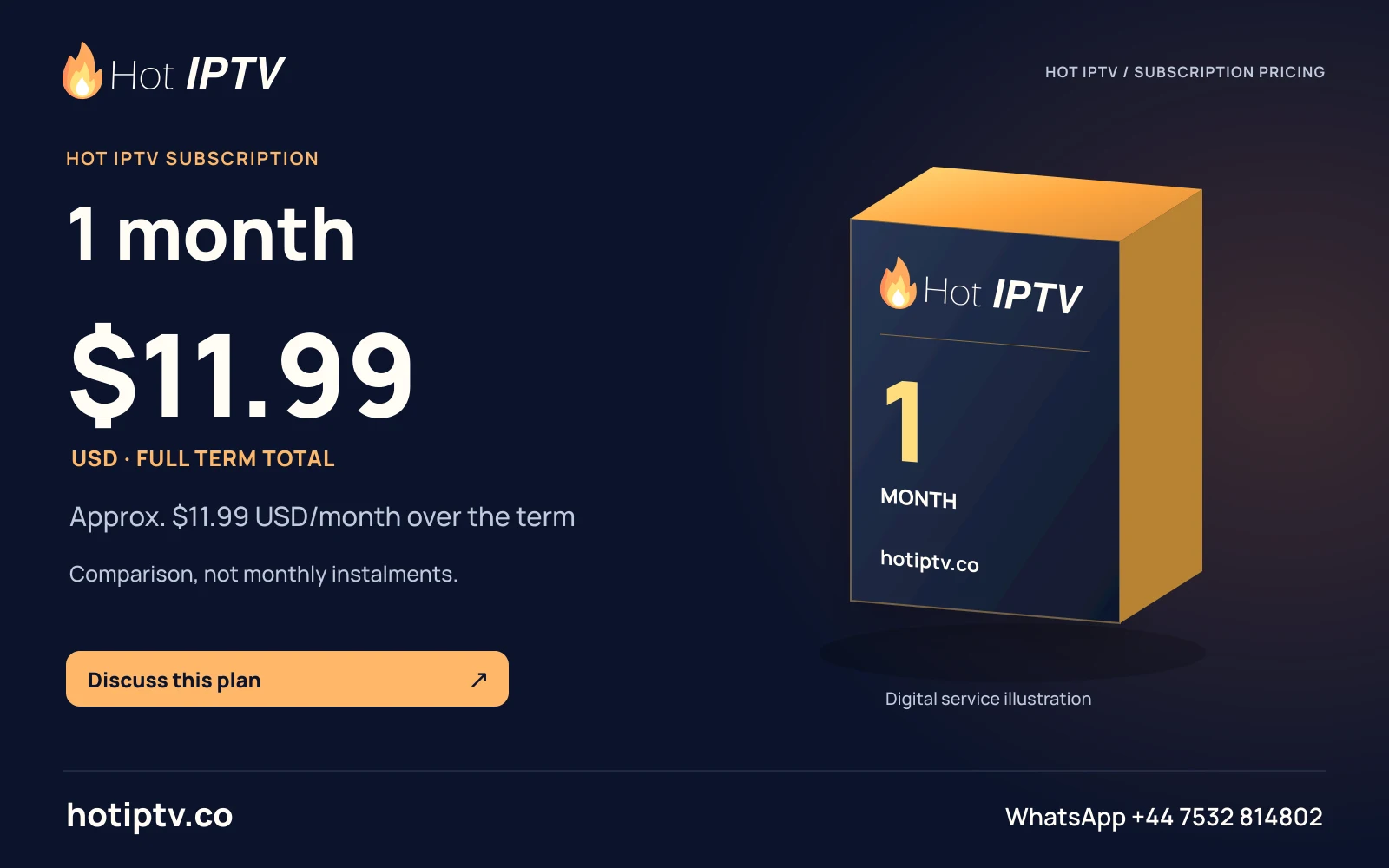
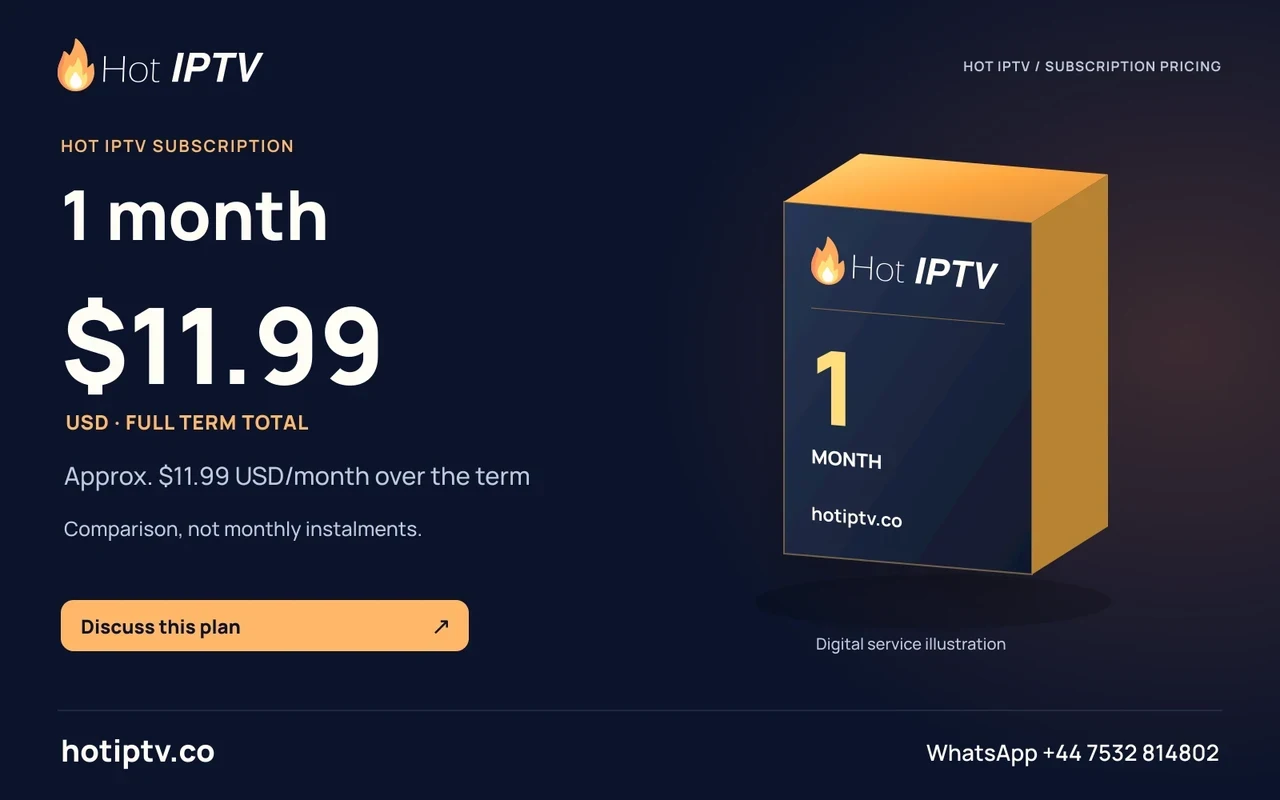
Open the official Hot IPTV websiteThe 1 month plan is listed at $11.99 USD. The operator also lists 3 reseller pack sizes.

hotiptv.co
The 1 month plan is listed at $11.99 USD. The operator also lists 3 reseller pack sizes.
The 1 month plan is listed at $11.99 USD. The operator also lists 3 reseller pack sizes.
Use the published catalogue for the current plan. Confirm the payable total and order handoff.
hotiptv.co · Check exact market
Open the official Hot IPTV websiteHot IPTV maintains the site at hotiptv.co. Check who issues the invoice and who replaces the access if the app or TV changes. The buyer needs both answers before paying for a long term.
Document review · November 19, 2026. Playback performance, service rights and ZIP-level access require separate evidence.
The 1 month plan is listed at $11.99 USD. The operator also lists 3 reseller pack sizes.

hotiptv.co
A family member has installed something called Hot Player on the spare-room television. Now the screen asks for a playlist. Is the $11.99 Hot IPTV plan a second charge for the same thing? Usually these are two separate purchases to investigate. Hot Player is software. Hot IPTV offers viewing accounts. Open the application listing or receipt to see which party supplied the software, then read the viewing offer on Hot IPTV's own site. Seeing a familiar word in both names settles neither bill.
The Apple example is unusually easy to identify. The U.S. App Store lists Hot Player under the developer STE DIGI VIBES, app ID 6695762404. The publisher describes a player to which the user adds a compatible account or playlist. The store lists in-app purchases. A receipt for such a purchase does not say that Hot IPTV has activated a viewing term. Equally, paying Hot IPTV's subscription does not settle a separate charge the player publisher may require for a particular piece of software.
This distinction affects the whole shopping sequence. Work out which device runs the player, see whether the intended app is offered there, then ask Hot IPTV about a trial and which account format the app needs. The provider publishes four U.S.-dollar viewing terms and three business packs in its current /4k/ store. Prices here refer to that edition, checked November 19, 2026. Start with the job you need the purchase to do. Opening another subscription will not make an unsupported player appear in an app store.
Hot IPTV's order page is an enquiry builder. It shows a selected plan and its full published total, then prepares a message for the customer to review and send through WhatsApp. It does not process payment or activate an account on that page. If a household stops at the prepared message, it has not completed an order. A person helping an older relative appreciate this distinction can save them an unnecessary second request and a morning spent looking for a receipt that was never due.
Read the prepared message before sending. Does it name one month, three months, six months, twelve months or a block of reseller credits? Does the displayed currency read USD? Does the intended recipient match the current contact reached from the same provider page? A message that correctly identifies the seller but selects a business pack still asks the wrong question. Change the product first. A household asking for one month of television has no reason to send an order request for one hundred panel credits.
When Hot IPTV replies, compare the amount, term, activation method and any separately charged item with the enquiry you actually sent. Record the name of the party receiving payment and how to identify this order in a follow-up. A customer acknowledgement and a payment receipt are different evidence. Keep both where the purchaser can retrieve them. State which address or general viewing area the seller has considered when a specific station or region is essential to the purchase.
If payment is taken through a separate approved route, keep any reference there private. A public forum can help explain the difference between a pending enquiry and a completed setup. Its readers have no need to see your payment details or playlist login. Describe the last step you reached. “The site prepared a message, but I haven't sent it” points to a completely different next action from “the seller acknowledged my payment and the player rejects its supplied account.”
A month costs $11.99. Three months cost $24.99. Six cost $39.99. A year costs $50.99. For a household needing seven months, six plus a single month would cost $51.98 at unchanged rates. The full twelve-month price is ninety-nine cents lower than that combination. For a household needing only six months, the six-month total is eleven dollars below the annual total. An annual offer can become the cheapest way to cover seven months while still being a poor purchase for a home needing precisely six.
| Planned viewing window | Lowest listed combination covering that window | Combined USD total |
|---|---|---|
| One month | One monthly term | $11.99 |
| Two months | Two monthly terms | $23.98 |
| Three months | One quarter | $24.99 |
| Four months | One quarter and one month | $36.98 |
| Five or six months | One six-month term | $39.99 |
| Seven to twelve months | One annual term | $50.99 |
The combinations assume the customer can continue with another term at the listed price, with no unused days lost and no additional processing charge each time. The table compares amounts necessary to cover a planned interval, which sometimes means buying a longer term. It is not a promise that you can pre-stack terms, pause them, transfer them or obtain a credit for unused days. Ask about the specific operation you intend before relying on a mixed-term calculation.
A second useful threshold appears at two months. Two monthly purchases total $23.98. A quarter costs $24.99, only $1.01 more in the full-term comparison. Someone certain of two months and reasonably likely to want a third may find the quarter appealing. Someone uncertain they will use the service beyond next weekend can limit the first outlay to $11.99. The same price list can support both choices because the family is buying different degrees of commitment.
Try the comparison with the actual holiday or lease date in mind. If the house is empty for half the year and the account cannot be transferred or suspended under the agreed terms, a low monthly equivalent gives the household little benefit during those empty months. If retired relatives visit most evenings during a four-month stay, the quarter and monthly combination may merit a closer look. Ask when a renewed month begins. Losing a week of the first term by renewing early can wipe out the apparent advantage.
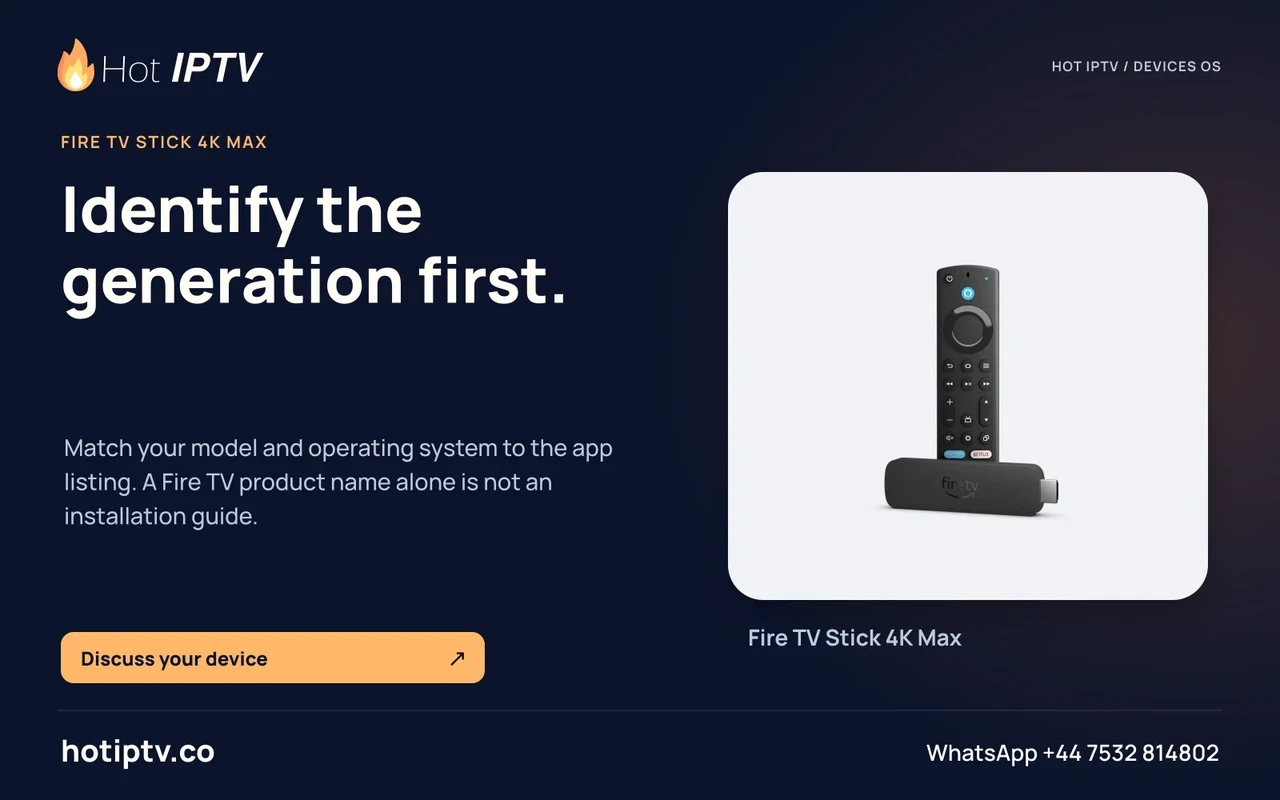
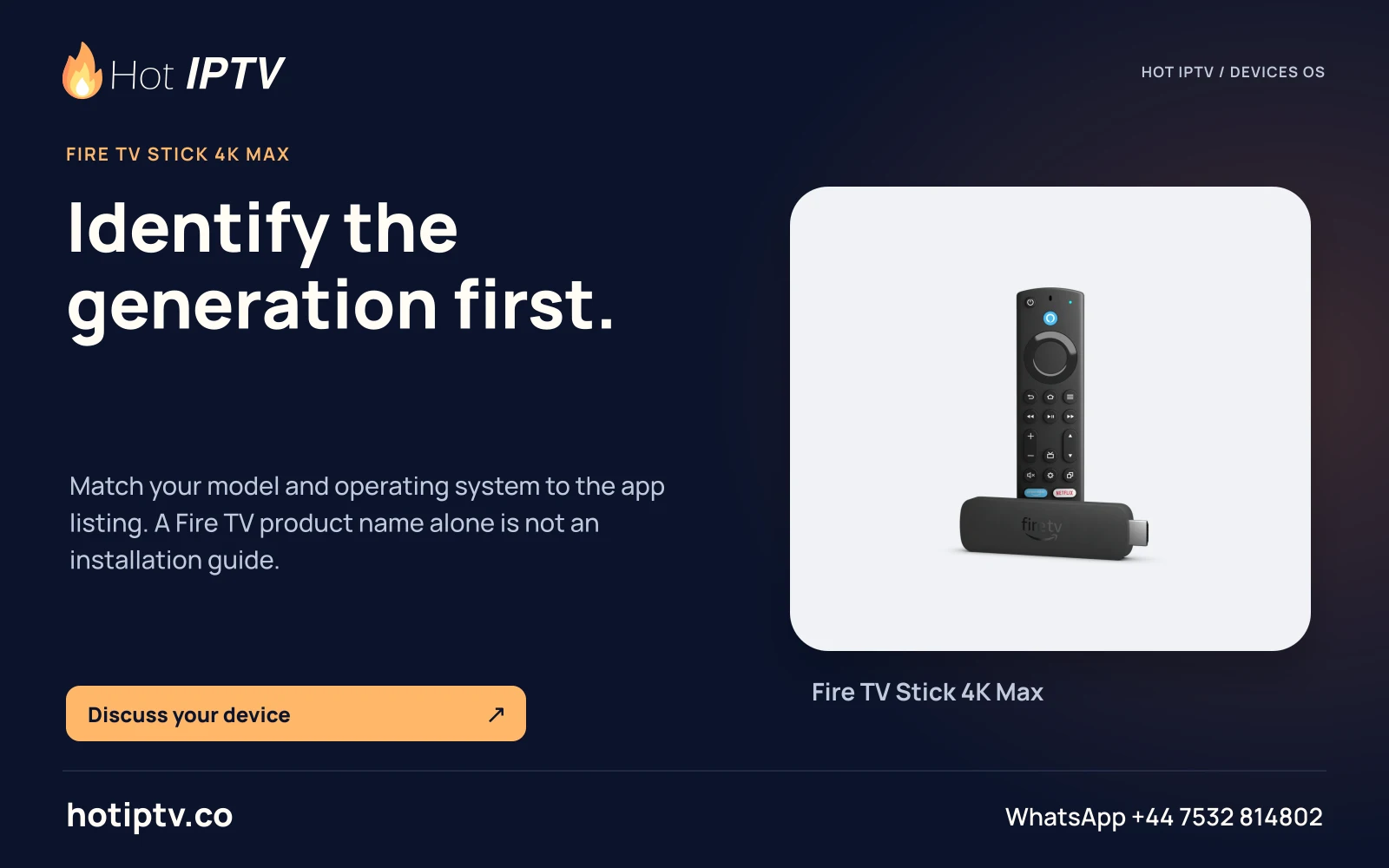
Hot IPTV has a guide specifically for identifying a Fire TV model and operating system. This is worth reading before asking for an installer. Fire TV is a hardware family spanning more than one software platform. For example, Amazon identifies its Fire TV Stick 4K Select from 2025 as a Vega OS device. Instructions written for a different Fire OS stick need not apply. A family member remembering that both devices have an Amazon remote is supplying a clue, not a compatibility determination.
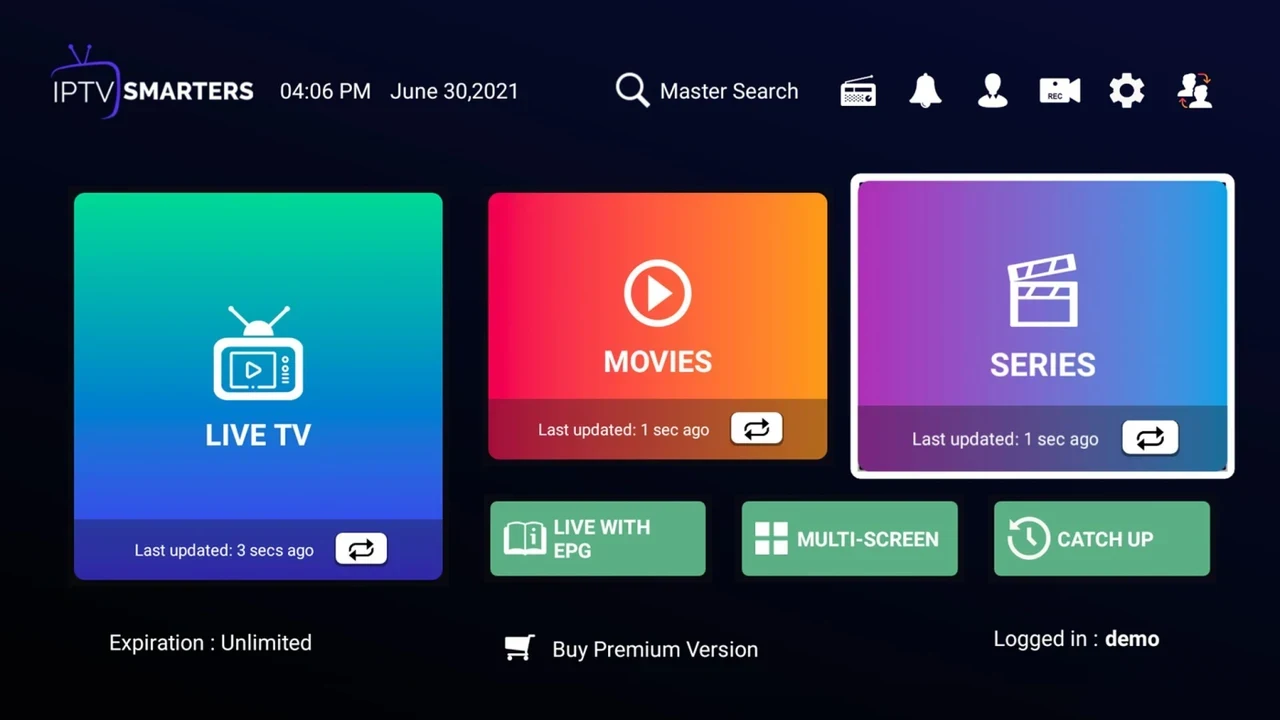
Find the model in the device's settings or on its label and check the operating-system information available to you. If a stick is attached to a television, record both but tell support that the stick runs the app. If the television itself has a Fire TV platform, say that instead. A generational label without the full model can be ambiguous when names differ by market. A photo of the model line is useful in a private support request after cropping serial numbers and unrelated personal details.
Ask for the official installation route for that exact device, a compatible player name and which account format it expects. If the app cannot be found in the device's own store, confirm the model and configured region before spending the trial time. A supported alternative may be appropriate. A web result offering a similarly named installer proves little about compatibility, publisher identity or what that software will do with account credentials. The official player store and the provider's current setup guidance give the buyer a better place to start.
Do the first launch with the physical remote. Notice how easily the viewer can enter text, leave settings, move up a guide and return to the program. A technically compatible app can still be a poor practical fit for the person who watches every night. A relative familiar with phone gestures may find that the television app needs several remote steps to reach the same controls. Better to discover that while an alternative is still under consideration than after buying a long term on the assumption that all screens work alike.
On Apple devices the current Hot IPTV setup reference points to the App Store listing by STE DIGI VIBES. Search the exact app identity on the intended device and look for the developer and store identifier. A phone search result can show the existence of the product while leaving open whether your Apple TV, iPad or Mac meets the current version requirement. Use the current listing for the device and region where the household actually plans to install it.
Ask what the app's in-app payment, if one is required in your setup, would cover. It might concern use of the software rather than any viewing selection. Check the receipt and the applicable purchase terms before assuming it transfers to another device or account. Do not copy an old screenshot's software price into the subscription budget. What matters is the amount offered by the actual storefront to the actual purchaser on the day of installation.
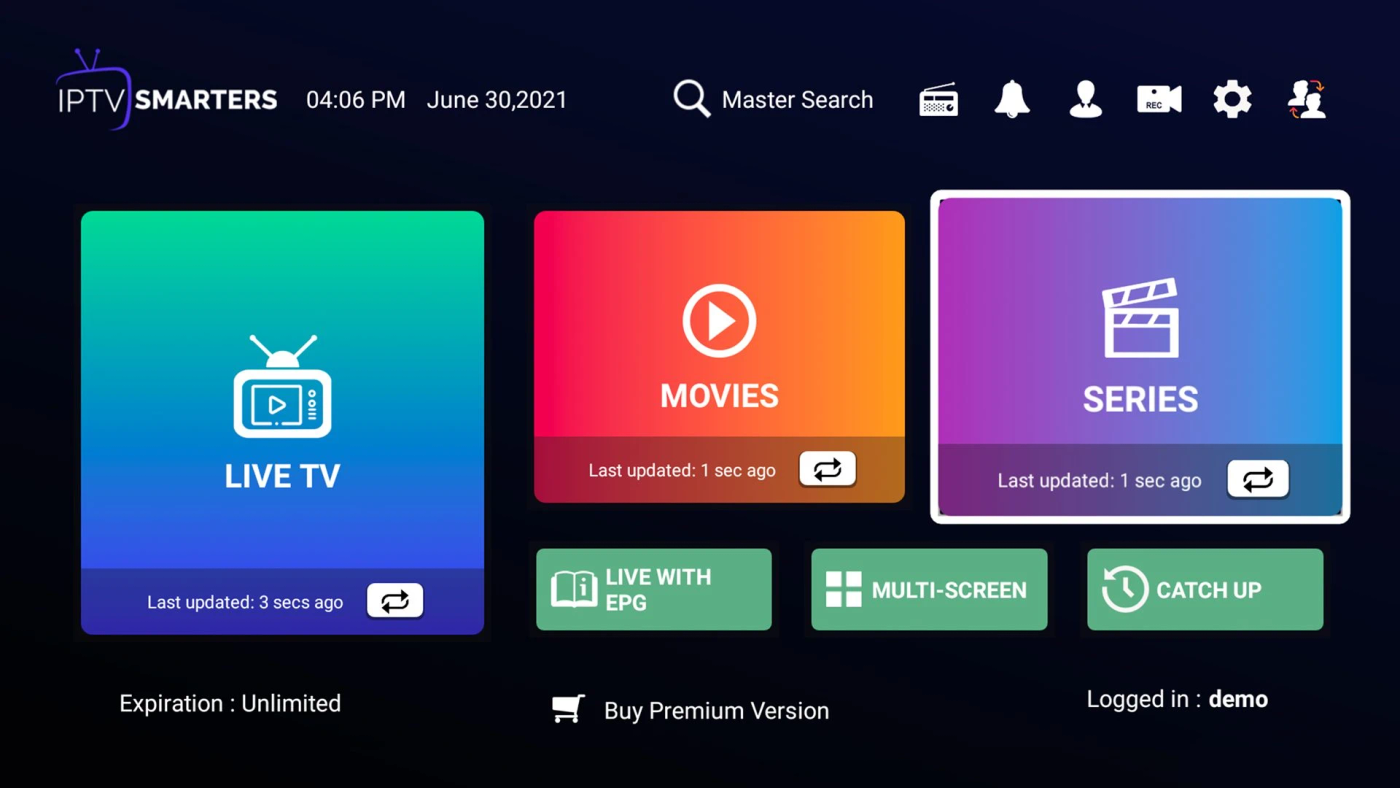
The publisher identifies compatible ways to supply an authorized playlist or account. Use the input the application actually displays and the format the provider supplied for your account. A full playlist address can contain private data. Treat it with the same care as a password, even if it looks like an ordinary website link. In a public support question, describe whether the app asks for one address or separate login fields. The hidden values are unnecessary.
A useful Apple-screen test pairs one living-room task with one accessibility task. Can the regular viewer reach the intended service with the remote each evening? Can they select the correct audio or captions on a program where the account provides them? If a setting changes after restarting the app, record whether that happens on every item or only one. Passing a credential check does not establish that captions, audio tracks or a particular interface will suit the family.
The Hot IPTV trial page directs a prospective customer to install a suitable player first and then request a 24-hour service trial. This order matters. A trial can expire while the household is still trying to identify the correct app or waiting for a family member who knows the television passcode. Ask what starts the clock and when it ends in the local viewing time zone. Arrange the trial so it includes the period the household actually cares about.
A sensible trial for a spare-room viewer might begin with a weekday local newscast, continue with a favorite evening program, and end the following morning by checking what survived an ordinary overnight shutdown. Keep the normal home connection and remote. If the household needs a particular language or caption track, choose an actual program on which it can be checked. A generic icon for captions or a language label in a menu does not test what appears on screen during a live program.
Add one change at a time. Switch from the first authorized station to another, return to the first, then close and reopen the app. If the program guide appears one hour out, compare the television's time zone with the local schedule and a second station before changing several settings at once. If video works but audio is missing through the soundbar, try the television's built-in speakers at a comfortable volume. This separates some local equipment questions from questions about the account without buying another product.
Ask in advance whether the trial permits moving between devices and what its simultaneous-connection allowance is. The Hot retail schedule does not supply a universal multi-screen entitlement. If the trial is only for one device, honor that agreement and ask about the second screen separately. A single working room may still be enough for the buyer who wants a private spare-room setup. It cannot establish that the family can watch independently in two rooms on the same account at the same time.
End with a short account of the result. Record the device, program, local time, what happened and what question remains. Leave the title of an essential missing station visible in the private support request. “The Saturday morning program on the local affiliate was absent, but the national feed was present” is actionable. Declaring the entire service good or bad from one evening tells the seller and the next household member very little about their own purchase decision.
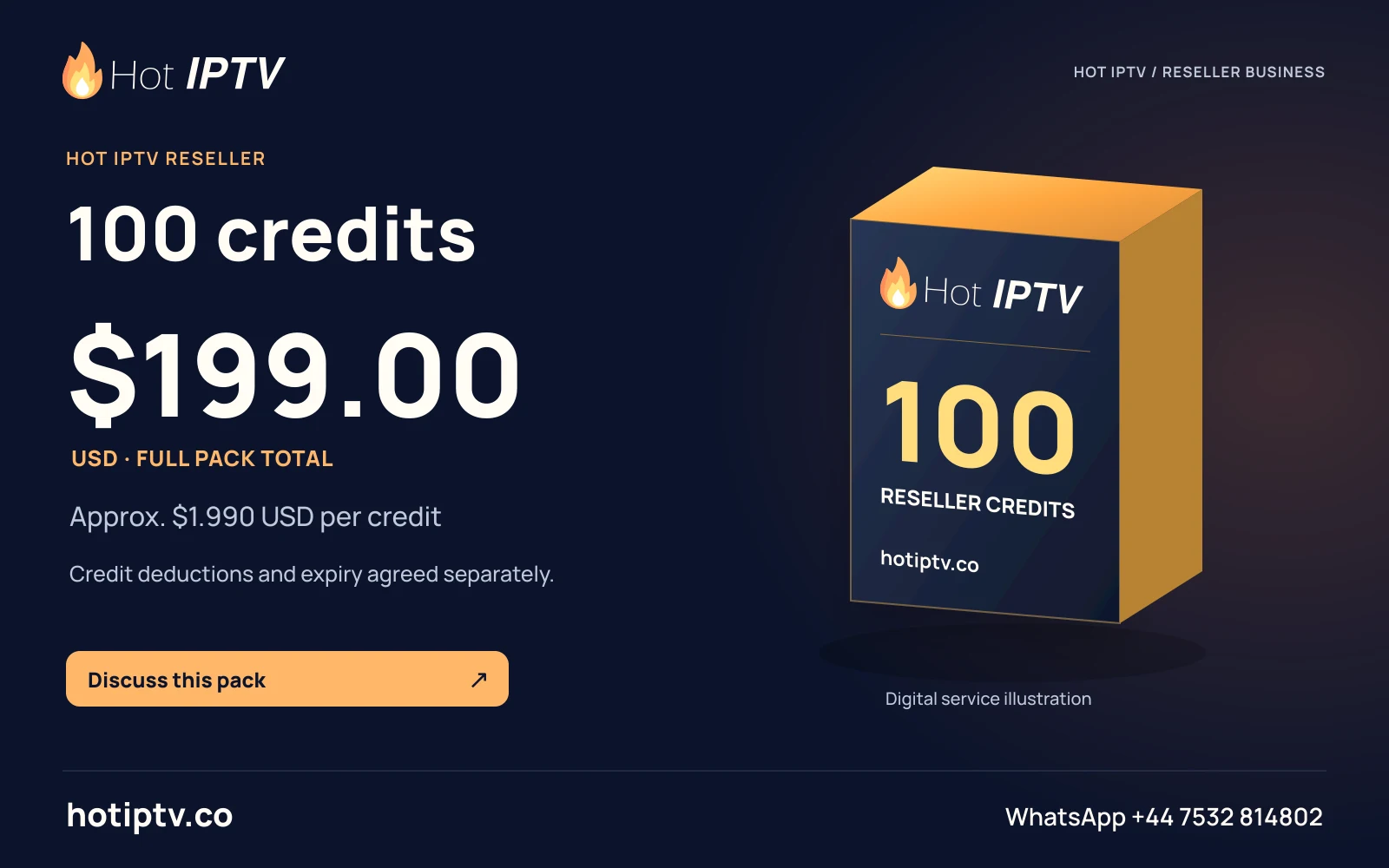
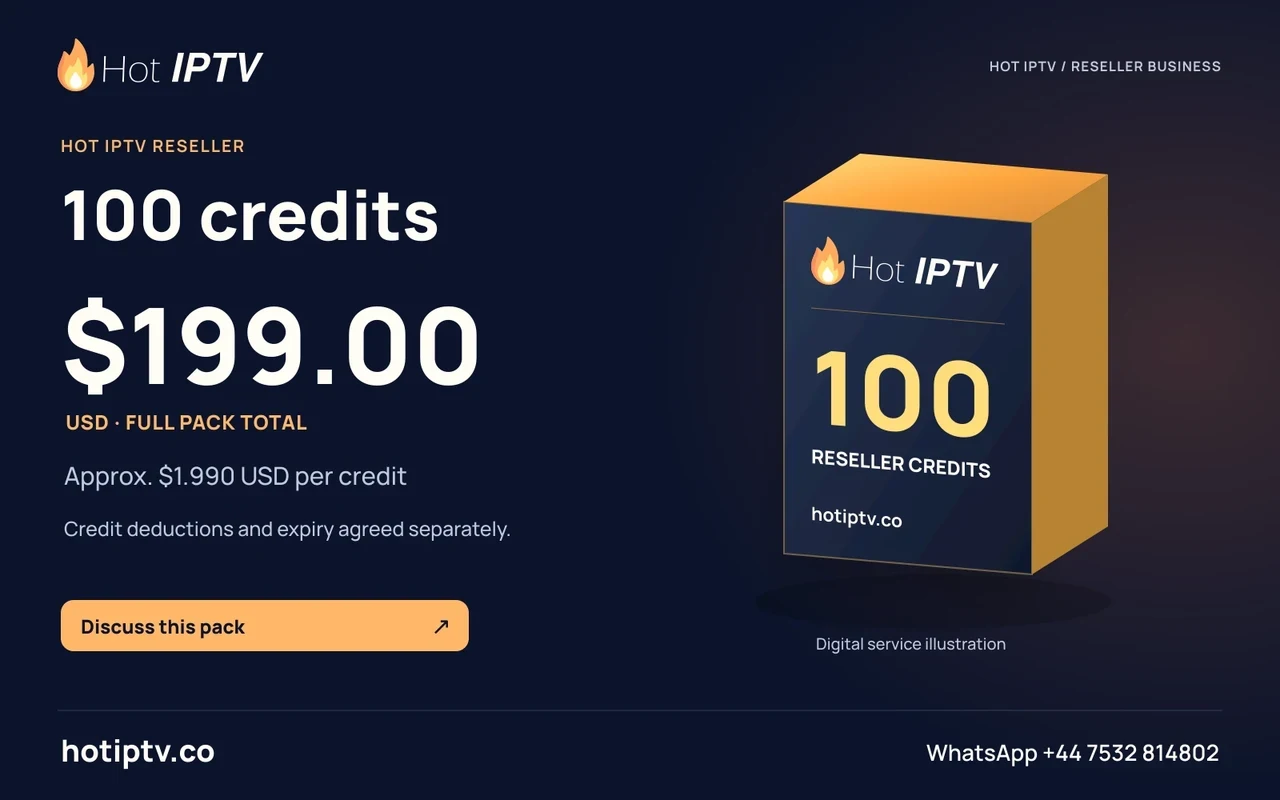
The /4k/ business page lists one hundred credits for $199, three hundred for $499 and one thousand for $999. These are complete USD pack prices on the dated page. Earlier material indexed under the broader domain can show different currency wording. If a live quote arrives in a different currency, ask which offer it belongs to and what total will actually be collected. Do not silently translate the symbol or treat a euro amount as a dollar amount.
| Credits on current /4k/ pack | Full price | Exact or approximate price per credit |
|---|---|---|
| 100 | $199.00 USD | $1.990 |
| 300 | $499.00 USD | About $1.6633 |
| 1,000 | $999.00 USD | $0.999 |
For three hundred confirmed credits, three one-hundred packs would cost $597. The single three-hundred purchase costs $98 less. For 400 credits, a three-hundred and a hundred together cost $698. A one-thousand-credit order costs $301 more upfront. If the first four hundred are the only committed demand, those extra six hundred units represent a separate decision. A lower unit price on the largest pack does not on its own make the larger payment a good fit.
Try the situation at five hundred credits. One three-hundred and two hundreds would provide exactly five hundred for $897. Two three-hundred packs would provide six hundred for $998. One thousand costs $999. The one-dollar difference between those last two options is striking, yet a buyer who needs only five hundred can still limit cash committed by choosing the $897 combination if repeat pack purchases are permitted. The appropriate comparison depends on what must be delivered by a real date.
Hot IPTV asks buyers to confirm deductions and expiry. Until the assigned operator has explained the credit cost of each customer term and connection type, these calculations are about inventory units alone. They cannot establish the cost of a one-month activation, profit on a retail account or the number of households a particular pack will cover. A business that plans to quote a customer for a year needs an answer in units per year before it can put dollars against that promise.
Start with one concrete incoming order. For example, one household has requested six months on one active connection and will use its existing player. Ask the operator how many credits the assigned panel would deduct for a new account matching that description. Then ask how an extension of an existing household account would be treated. This gives the operator something specific to confirm. A broad question about “how many customers a pack includes” leaves out the very duration and connection rules that determine the answer.
Ask who can correct a mistake and whether a reversal returns credit. This matters when a customer enters the wrong term, the seller selects the wrong account or an interface times out during submission. Treat every possible correction as subject to the operator's applicable policy. A screenshot showing a remove button does not demonstrate that deleting an entry returns any balance or restores an earlier customer expiry. Ask for a documented route to the person who can check a disputed operation.
Look at the life of the stock. Is there an expiry date, minimum activity requirement or restriction on carrying remaining credits into another month? Who owns the balance if a staff member leaves the business? Does the assigned role permit a second employee to view account histories without making changes? An operator in a one-person shop may accept limits that a business with weekend cover cannot. Resolve those questions before moving from the smallest $199 commitment to a larger tier.
Ask about the support boundary for software as well. The Hot IPTV purchasing and trial routes distinguish the player from the viewing subscription. A business supplying customer accounts may still spend much of its time identifying the right player, tracing a forgotten app-store account or helping a viewer find the correct HDMI input. Estimate the staff hours for this work alongside the credit costs. An apparently attractive spread between retail and wholesale numbers can disappear when half the day is spent resolving issues outside the business's direct control.
An American household asking for a “local channel” may mean a specific city affiliate, a local newscast, a regional sports broadcast or the national network it associates with a familiar logo. Write the requirement down in a form a support agent can check. Name the city, station or call sign where known, favorite program and the expected local start. If a particular language or audio track matters, include it. In ordinary shopping this level of detail feels fussy until a national feed arrives instead of the local one.
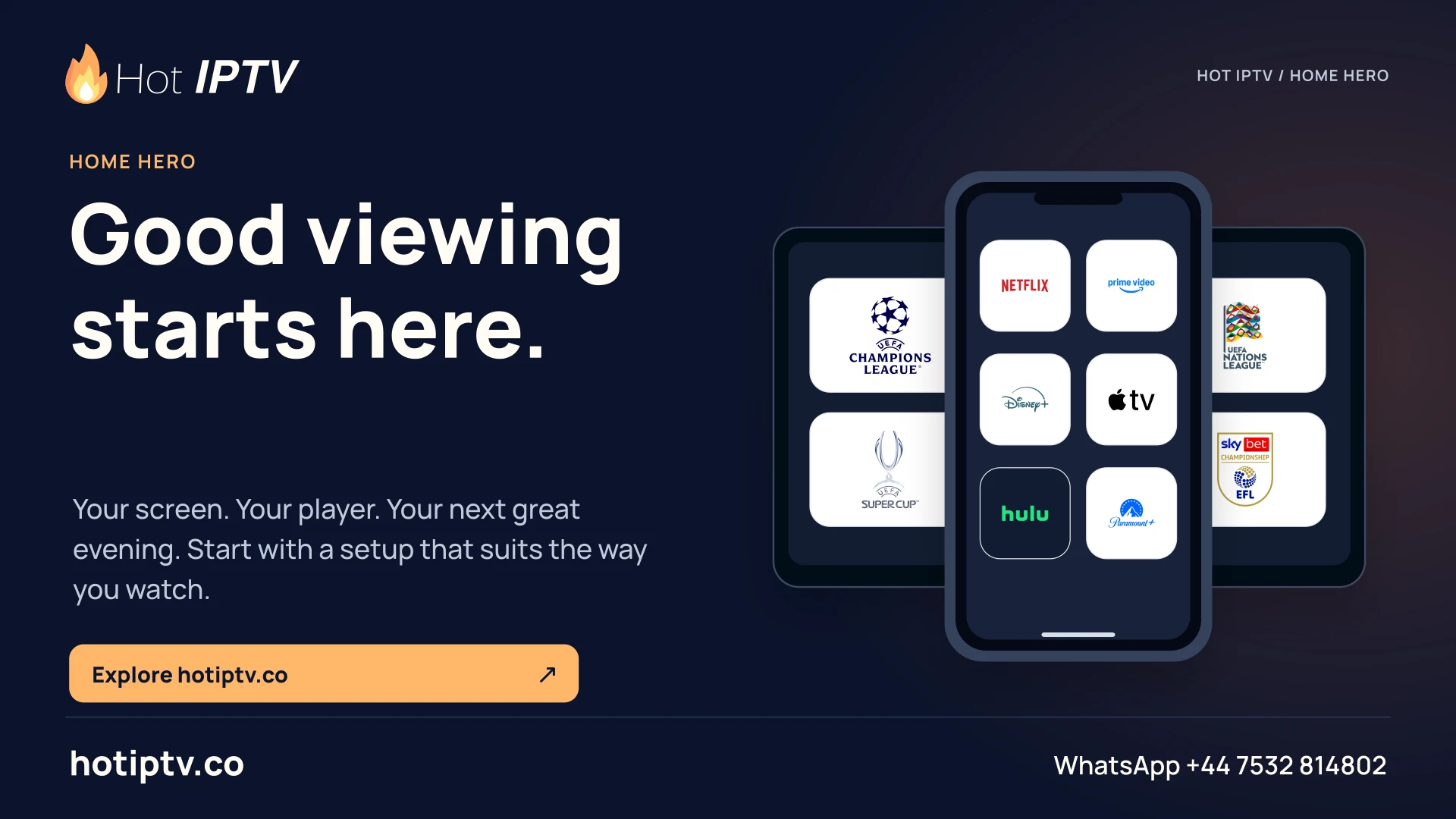
Look up the broadcaster's schedule for the viewing address and date before interpreting a trial result. A televised game available in one market may be carried differently in another, and a listed channel name does not settle event rights. Ask the seller about the relevant legal viewing route in the region. Avoid making a purchase on the strength of a league logo or an old promotional poster. A photograph on a storefront identifies the subject of a guide. The account and market determine what the buyer can actually watch.
For a household with two languages, test the language feature in its intended setting. A menu written in the desired language, a program with a dubbed audio track, and closed captions in that language are three separate requirements. A program can satisfy the first two and still lack suitable captions. Record which item was checked and what choices the player offered. A seller receiving an exact program title and the desired accessibility feature can give a more reliable answer than one receiving a blanket question about support for a language.
A buyer may care more about program-guide quality than sheer catalogue size. During the trial, see whether an actual future program has its expected title and local time, whether the favorites list makes the station easy to reach and whether tomorrow's entries are usable. If the data is partial, ask whether the limitation belongs to the guide, the station or the current player. The answer could support a useful device change or a decision to postpone the purchase. Either is a better outcome than paying for more months of an unresolved problem.
Picture a viewer who has just paid $39.99 for six months. On the television, Hot Player suddenly shows a screen about activation. The first useful question is whose activation it means. Check whether the message comes from the installed software, the television's app store or the viewing account. Look at the app publisher and payment reference. If the viewing account is current and the player wants its own license, the appropriate conversation may be with the software publisher. If the app is licensed and the viewing account fails to load, Hot IPTV has a different question to answer.
For a playback interruption, note whether one station, one account profile or all applications on the device are affected. Try another permitted program, then another known working application on that device if appropriate. Log the time and whether the normal connection was in use. One buffer event under different equipment and network conditions is poor evidence for a general statement about a provider. A repeated failure on the same item under reproducible conditions gives the support desk a concrete starting point.
If the television displays a no-signal message before the application appears, start at the input and external device. Check that the correct source is selected and that the external player is powered. Record which device supplies the error screen. A subscription change cannot restore a physical input that the television cannot see. If the player opens normally and displays a valid guide but rejects one account, changing HDMI cables is equally unlikely to resolve the specific issue.
Keep support correspondence private when it involves a customer account. A forum post can identify a device family, software version and the words of an error after removing private details. It should not include a working playlist, a device code, the payment recipient's private conversation or a full picture of an account page. A useful public question asks whether other users of a particular app version have seen the same menu behavior. A billing or account dispute belongs with the parties able to inspect the actual transaction.
The purchaser should be able to answer three questions a month later. Which business supplied the viewing account? Which store or developer provided the software? When does each arrangement require a new decision? Keep the dated Hot IPTV plan and total beside the seller's activation confirmation. Record the independent player receipt separately where one exists. A payment amount alone rarely tells a relative enough to handle a renewal without disturbing the television.
For example, the household may pay Hot IPTV $50.99 for a year but have previously bought software through an Apple account. A relative receiving a player reminder should be able to establish whether the viewing account is still valid. Conversely, a functioning software license does not keep an expired viewing term active. Give the person who manages bills access to the appropriate receipts without granting every household member access to private credentials. Shared understanding of who paid is often all the practical coordination required.
Hot IPTV's /4k/ refund page describes a request window for eligible first-time subscription purchases and lists exclusions, including reseller credits and renewals. Read the policy actually offered with the transaction and preserve its date. A published opportunity to submit a request is not a promise of approval. If the delivered term differs from the confirmed one, include the order reference, the specific term agreed and what the account shows. Ask the business receiving the payment to confirm the available correction.
If nobody plans to renew, determine what the seller and any independent player publisher require from the purchaser. Removing the app tidies the television. It does not demonstrate that a separate billing instruction was cancelled. A blank screen after uninstallation tells the buyer nothing about the state of the seller's account. Keep the final confirmation beside the receipt, particularly when the television will move to a new owner or remain with a departing tenant.
Imagine two households considering the same three-month Hot IPTV offer. Both start from the published $24.99. The first already has a compatible, licensed player and knows its way around the remote. The second has a new television with an unfamiliar app store and may need an independent software purchase. The subscription figures match. The first evening's bills and the amount of setup work may differ substantially. Write down the added items by name, using the prices actually offered to each household.
An equipment purchase can change the decision more than a subscription discount. If an existing native application supports the authorized account and the viewer can use it comfortably, an external box may add no value for this particular purpose. If the television's native store lacks a supported player, identify an actual compatible alternative and its full cost before assuming the $11.99 monthly term is the total cost of trying it. A family considering a box for several other uses may make a different decision about how to allocate that cost.
The same logic helps a relative who wants to give several months as a present. Establish who will hold the account, keep the order confirmation and handle any future renewal. Ask whether the proposed recipient can use the service at their own address and on their own device. A well-intended gift purchased under a distant relative's region or linked to their private app-store account can be difficult for the recipient to maintain. One clear agreement about ownership can be more useful than paying extra for a longer term.
Before passing the setup over, ask the recipient to show where the guide opens, where captions live and how to return to normal broadcast television or another ordinary app. If they use a hearing aid, headphones or a soundbar, check the actual audio path while they are present. A video playing through the technician's temporary television speakers is weak evidence that the household can use its normal arrangement. Record the result in the handoff note in a way that a helper arriving next month could understand.
A common mistake in business budgeting is to multiply desired credits by the most attractive published unit rate and put that result into the cash-flow sheet. For two hundred Hot IPTV credits, multiplying two hundred by $0.999 produces $199.80. There is no published two-hundred-credit purchase at that rate. The $0.999 quotient comes from buying one thousand credits for $999. A business seeking at least two hundred units at the published smaller tiers could cover them with two one-hundred packs for $398, subject to the terms for repeat purchases.
For six hundred credits, two three-hundred packs would cost $998. The thousand-credit pack is one dollar more and delivers four hundred additional units if the quantity and terms match the published offer. This is a genuinely interesting comparison for an operator able to use six hundred units. It tells a smaller business almost nothing about whether spending $999 in its first week is prudent. Ask whether the opening balance, documented debit schedule, shelf life of credits and confirmed renewal demand give those four hundred extra units a practical use.
For eight hundred credits, two three-hundred packs plus two one-hundred packs would cost $1,396. A thousand credits at $999 would cover the requirement for $397 less even with two hundred remaining. The surprising result follows from whole packages, not a special offer for eight hundred. If the operator offers a written custom quotation for exactly the required quantity, compare it separately. Match the currency, units, any business permissions and delivery terms before deciding which offer covers the same obligation.
Now consider a requirement of 1,100 credits. The published thousand and one hundred combine to $1,198. Divide only if you need a blended cost for those 1,100, about $1.0891 per credit before any other charge. The original $0.999 unit comparison remains correct for the thousand-credit purchase by itself. It would understate the cost of the full mixed order. Carry the paid amounts on the two receipts into the books. Rounding a unit figure in advance and multiplying it back into an invoice creates avoidable discrepancies.
One more limit applies to every example here. These calculations say nothing about what one credit can do on a particular customer account. Use actual deductions in a second step after the operator identifies them. If the debit for a six-month term is still unknown, the correct entry is pending. A zero in that cell is an error masquerading as a bargain. The question to resolve is whether the proposed panel and terms make the stock commercially usable, including who supplies support when a customer needs help after activation.
A finished setup is one another person can pick up after the original helper goes home. Suppose the next morning the spare-room television opens to a player registration screen. The person holding the remote should be able to identify the app and say whether the private viewing profile remains visible. The purchaser should be able to find the original seller confirmation. The helper should know whether the software came from Apple's store, a Fire TV device's store or the native television. Nobody needs to guess at which of the three paid items has failed.
If the problem is that the preferred station changed its schedule, put a local time and a date in the report. If the problem is that a confirmed six-month term shows a much earlier end date, attach the private order reference to the seller enquiry. If the problem is that another household member is already watching on the same account, find the agreed connection allowance before spending more money. Three superficially similar complaints about a blank or unexpected program lead to three different next steps.
A modest purchase can be the right conclusion even when every technical test passes. A family unsure how frequently the spare room will be used might start with one month while keeping the installed compatible player. A family using it nightly and happy with the trial may compare the annual total directly. A shop with repeat customers considering business stock has a separate decision once it has obtained the missing operating terms. Each buyer should have enough information to say what the money buys, whose receipt to keep and who will answer the next question.
A final point about the phrase “first evening”: the family pays to watch under the agreed conditions, not to complete a perfectly polished installation ceremony. If one wanted program remains unconfirmed, a written reply from the seller may matter more than tidying the menus. If the account works clearly but the elderly viewer cannot find the back button, another fifteen minutes with the remote may be worth more than another enquiry about catalogue size. Spend the remaining trial time on whichever uncertainty would genuinely change the purchase.
Put the result somewhere the family will find it. A private note with the selected model, app, term, seller reference, activation date and next decision date is sufficient. Avoid keeping every promotional screenshot or copying credentials into shared messages. The aim is to make the arrangement easy to understand in a month, when the person asking the question may be someone who never saw today's player screen or order page.
Hot IPTV's current U.S.-dollar subscription store · The actual order and enquiry page · 24-hour trial instructions · Current reseller quantities and USD totals · Provider refund information · Fire TV identification guide · Amazon's device identification reference · Hot Player on Apple's U.S. App Store.
Suppose you expect to watch for six months. At the listed single-month amount, six separate purchases would total $71.94 USD. The six-month offer asks for $39.99 USD up front. That comparison assumes every new month is available at the listed amount. Check renewal separately before relying on it.
| Viewing period | Separate monthly purchases | Single matching term | Difference | Monthly purchases to reach term price |
|---|---|---|---|---|
| 3 months | $35.97 USD | $24.99 USD | $10.98 USD | 3 |
| 6 months | $71.94 USD | $39.99 USD | $31.95 USD | 4 |
| 12 months | $143.88 USD | $50.99 USD | $92.89 USD | 5 |
Read the final column as a spending threshold. If you expect to cancel sooner, compare the shorter commitment with the cash you would have paid up front. The figures exclude fees the seller has not confirmed.
Check Hot IPTV subscription termsThe smallest priced pack in this register holds 100 credits and costs $199.00 USD. The largest holds 1000 for $999.00 USD. Their displayed unit costs are $1.99 and $1.00 respectively. A written deduction schedule is needed to turn those units into customer months.
The image link identifies the exact file served by the provider.
Choose a matchup to see the actual currency, term and outcome.
Open the caption on a website-sourced image to see its original. The remaining captions identify material supplied with the provider archive.