provider
IPTV Canada
Check the Canadian dollar total and request the exact English or French feed for your viewing location.
iptv-canada.app · Check exact market
Open the official IPTV Canada websiteThe 1 month plan is listed at CA$13.99 CAD. Check the account and app terms before choosing a longer term.

iptv-canada.app
The 1 month plan is listed at CA$13.99 CAD. Check the account and app terms before choosing a longer term.
The 1 month plan is listed at CA$13.99 CAD. Check the account and app terms before choosing a longer term.
Check the Canadian dollar total and request the exact English or French feed for your viewing location.
iptv-canada.app · Check exact market
Open the official IPTV Canada websiteIPTV Canada maintains the site at iptv-canada.app. Check who issues the invoice and who replaces the access if the app or TV changes. The buyer needs both answers before paying for a long term.
Document review · November 19, 2026. Playback performance, service rights and ZIP-level access require separate evidence.
The 1 month plan is listed at CA$13.99 CAD. Check the account and app terms before choosing a longer term.

iptv-canada.app
A viewer in Detroit may have Windsor in mind when asking for Canadian television. Someone in Buffalo may be thinking of Toronto. A third viewer wants French-language current affairs from Montréal and would be disappointed by a perfectly good English-language feed from the same city. All three could type “IPTV Canada” and reach the same price page. None has yet said enough for a seller to confirm the purchase.
IPTV Canada lists four personal terms on iptv-canada.app. The whole-term figures are CAD 13.99 for one month, CAD 34.99 for three, CAD 55.99 for six and CAD 76.99 for twelve. The first useful question for a U.S. buyer is whether the named service, language and regional edition can be supplied for the actual viewing location. The second is how the seller will charge the payer. Keep both questions on the same order. A good price for a French-language national service may be irrelevant to someone who needs an English-language local bulletin from Windsor.
The country label serves a practical purpose if you use it as a starting point for a conversation. It tells you which currency to read the price in and which broadcasting records to consult. It cannot identify the household's Canadian station or move a Canadian broadcaster's domestic permissions across the border. Describe both sides of the trip in a sentence. “I live in the United States, want a specific Ottawa edition and use an existing Apple TV box” gives the seller something it can actually answer.
The Canadian Radio-television and Telecommunications Commission publishes decisions and station lists identifying Canadian television services. One CBC/Radio-Canada decision lists CBLT-DT for Toronto, CBET-DT for Windsor, CBOT-DT for Ottawa, CBUT-DT for Vancouver and CBNT-DT for St. John's among English-language television stations. The same source distinguishes French-language services, including CBOFT-DT in Ottawa and CBFT-DT in Montréal. These are examples of how to name a service. They are not a lineup sold by IPTV Canada.
| What a viewer initially asks for | A more precise enquiry |
|---|---|
| CBC near Detroit | Is the permitted U.S. option the Windsor service associated with CBET-DT? |
| Ottawa local news in English | Which feed corresponds to CBOT-DT, and is the local edition carried? |
| Ottawa programming in French | Can the seller identify the French-language Ottawa service associated with CBOFT-DT? |
| News from Toronto | Which city and language edition appears in the proposed guide? |
| Television from St. John's | Which Newfoundland source and programme date are intended? |
There is a reason the Ottawa rows stand next to each other. A station code differing by one letter can refer to a different language service. An order asking for “CBO” or a screenshot of the national broadcaster's logo leaves that difference unresolved. Spell out the desired language and name one programme the family knows. If the seller uses a channel label instead of a call sign, ask it to connect that label to the city and programme. Save the provider's version of the label for whoever will use the remote.
Station records and programme listings answer different questions. The public register can identify an undertaking or service at the time of its decision. The broadcaster's current guide can identify the programme scheduled on a particular date. A subscription seller has to establish which edition is on an authorized offer at your location. Keep the date on older records, especially when a channel may have changed its presentation or distribution. A correct historical identifier can still be a useful clue when it is handled as a clue.
Take a hypothetical programme beginning at 7 p.m. local time in six Canadian cities on November 19, 2026. A U.S. viewer's reminder changes with the source city. In St. John's, the half hour is real. In Vancouver, the 2026 change to British Columbia's time arrangements matters. A guide written for an earlier winter may contain a conversion that worked then and fails now.
| Source at 7 p.m. that day | In New York | In Los Angeles |
|---|---|---|
| St. John's, Newfoundland and Labrador | 5:30 p.m. | 2:30 p.m. |
| Halifax, Nova Scotia | 6 p.m. | 3 p.m. |
| Toronto, Ontario | 7 p.m. | 4 p.m. |
| Winnipeg, Manitoba | 8 p.m. | 5 p.m. |
| Edmonton, Alberta | 9 p.m. | 6 p.m. |
| Vancouver, British Columbia | 9 p.m. | 6 p.m. |
British Columbia's government describes its transition to year-round Pacific time, UTC minus seven, for places following the new arrangement. Vancouver is the example here. On the November date above, Los Angeles is on UTC minus eight. A schedule entered as though the two cities always share the same wall clock will be an hour late or early depending on the direction of conversion. The National Research Council's web clock also directs readers to provincial and territorial authorities for up-to-date rules. That detail is worth checking when a household in the Pacific Northwest reports a recent guide problem.
Newfoundland exposes another sort of mistake. Suppose the intended start is 7 p.m. in St. John's and the family in Boston sets a 5 p.m. reminder. They can see a working channel and still miss the beginning by thirty minutes if they make the opposite correction later. Set an alarm using the named Newfoundland time zone rather than rounding to an Atlantic province's hour. When filing a guide issue, include the date and expected times in both places. A seller who sees both clocks can check the mapping without guessing which side did the arithmetic.
For an ongoing series, attach a programme to its source city instead of telling a family calendar “every Tuesday at this fixed U.S. time” for the whole year. Time rules and schedules can change. Also ask whether the stream is an actual live regional feed, a delayed service or a replay. An apparently stable one-hour offset may be the expected behavior of a different feed. Changing the device's time zone to make one station look right can spoil reminders for every other station.
The one-month amount is CAD 13.99. Four monthly purchases at that price would total CAD 55.96. A three-month term and one additional month come to CAD 48.98. The published six-month term is CAD 55.99. Those values are surprisingly close in one place and quite far apart in another. Four monthly payments and six months prepaid differ by only three cents, while the three-plus-one combination is CAD 7.01 below the six-month term. A four-month assignment deserves a look at the middle combination if the seller allows straightforward renewal.
Three individual months add up to CAD 41.97. Compare that with the CAD 34.99 quarter. The difference, CAD 6.98, buys the flexibility to decide month by month if the buyer keeps choosing the monthly route. A parent whose children are arriving in different weeks can decide whether flexibility matters. Someone who already knows the family's three-month stay and has confirmed the viewing setup may prefer the quarterly amount. The term is a decision about calendar and risk as much as a price comparison.
For a full year, two six-month purchases total CAD 111.98 at the recorded prices. The annual card is CAD 76.99, a difference of CAD 34.99. Twelve monthly payments total CAD 167.88. None of this is a prediction about future renewals. A seller can change a quoted rate or sell a different account configuration. Request the current total and number of active screens for the purchasing address before agreeing to a long term. Do not assign a financial value to a second screen until the operator actually includes it.
| Personal term | Whole-term CAD amount | Approximate CAD per month |
|---|---|---|
| One month | 13.99 | 13.99 |
| Three months | 34.99 | 11.66 |
| Six months | 55.99 | 9.33 |
| Twelve months | 76.99 | 6.42 |
For an American cardholder, the exchange rate is a separate line. Put down the seller's CAD price, the currency checkout offers to take, any quoted conversion or foreign-transaction fee and the amount on the eventual receipt. Converting every price with an arbitrary round number might be useful for private mental budgeting, but it is not a payable USD quote. Take particular care in a comparison table that uses the same dollar symbol for American, Canadian and Australian prices. Write out the currency even if the amounts look familiar.
A household can use English menus and prefer French audio, or use French menus while relying on English closed captions. The language chosen for the device home screen does little to settle the account question. Write down three fields separately. What language should the programme be in? Which caption or audio description track must be available? What language does the person need for the guide and remote menus? Ask for the exact service that meets the most important requirement.
Take an Ottawa-based source programme as an example. An English local item and a French-language service from the same city can both report on the same event. That does not make them interchangeable. One viewer may want a particular newsroom, presenter or treatment. A seller can answer the service identity before the buyer sends a payment, while the household can verify during an authorized trial that the programme actually matches the description. The independent CRTC identifiers help both people avoid talking past one another.
For a family interested in federal proceedings, distinguish the language of the actual floor speech from a separate interpretation feed or a subtitle track. Ask what the broadcaster offers for the specific programme and what the account carries. A bilingual logo cannot tell a viewer whether the audio menu exposes both choices. If the family's requirement is educational, preserving the original language can matter more than having the most widely understood translation. Give support a programme title and example passage time if a track is missing during a permitted test.
Test accessibility with someone who uses it. Turn captions on, move to another station and return. Check whether the player remembers the preference, whether a ticker obscures the bottom line, whether the viewer can read the size from the usual chair and whether the text is actually in the chosen language. Repeat on any confirmed replay that matters. A live feed and a separately packaged replay can expose different tracks. The family can accept a limitation for one and decline it for the other.
The Canadian station across the river, an American cable lineup in a border city and an internet subscription are three distinct routes to a picture. A viewer who receives a signal with an antenna at one house can use that signal as an independent reference for the channel identity, if it is available there. That physical reception tells us nothing conclusive about what a named IPTV operator may sell or what will be received several streets away. Terrain, building orientation and the permitted distribution route each matter in a different way.
Imagine a household moving from Detroit to Arizona. The family may still want the Windsor bulletin and can keep the same television. The address change removes the old antenna reference and introduces a different distribution territory question, an internet connection with a different provider and a new local clock. Take one written enquiry covering the new location to the seller before renewing. A confirmation for the original Detroit account does not automatically answer the Arizona request.
Now consider a family spending winter in Florida and summer in Ontario. They need a plan for two locations at different times, and perhaps different hardware in each home. If nobody remains watching at the first address while the account is moved, explain that. If a family member does stay behind and still needs access, describe concurrent viewing instead. The seller has to specify device-switching and location permissions for the actual arrangement. Neither question is answered by the number of people who know the sign-in details.
A written answer should cover what happens on return. If the service can be paused, ask how the unused time is treated and how the date of expiry changes. If it cannot be paused, count the months the residence is empty when comparing annual and seasonal purchases. For example, two separate quarters would cost CAD 69.98 before additional charges at the recorded price. A continuous year is CAD 76.99, just CAD 7.01 more. A small annual difference may suit a family that wants predictable access and has an authorized arrangement for both stays. Without those location permissions, the extra money solves nothing.
The provider describes a one-day trial. Ask whether it applies now at the intended location and when the clock starts. One useful test window can cover the Canadian evening programme, a language change and a routine restart the next morning. A day spent waiting for a replacement remote or for an answer about permissions is a poor use of a trial. Settle the prerequisites first. Where the broadcaster offers a permitted official way to identify the programme, note that source separately.
During the first session, use the normal living-room setup. Write the actual Canadian label in the guide and select one expected programme. Give the playback time in both places. If the guide displays local U.S. time, record exactly that. If it displays source time, do not correct the screenshot in an editor and forget which time the software presented. The original observation is what lets support distinguish a display preference from incorrect programme data.
On the second task, give the remote to the person who needs the alternate language or caption setting. Watch how they find the service. If search recognizes “Montreal” but misses “Montréal,” make a favourite that the household can recognize and reopen later. An accent issue in search can be a genuine usability problem even when the account itself streams properly. Note which spelling worked in the player and which spelling appeared on the broadcaster's schedule.
For the third task, close the app and let the device sleep normally. Reopen the app the next morning, find the same favourite and look for a listing later that day. Time zone changes can be revealed by an overnight date boundary even if the evening test appeared fine. If the family needs catch-up, ask for the permitted trial of a named replay at this point. A successful return to live television, a successful playback of a replay and a restored caption preference are three different results. Keep them as three lines on the decision sheet.
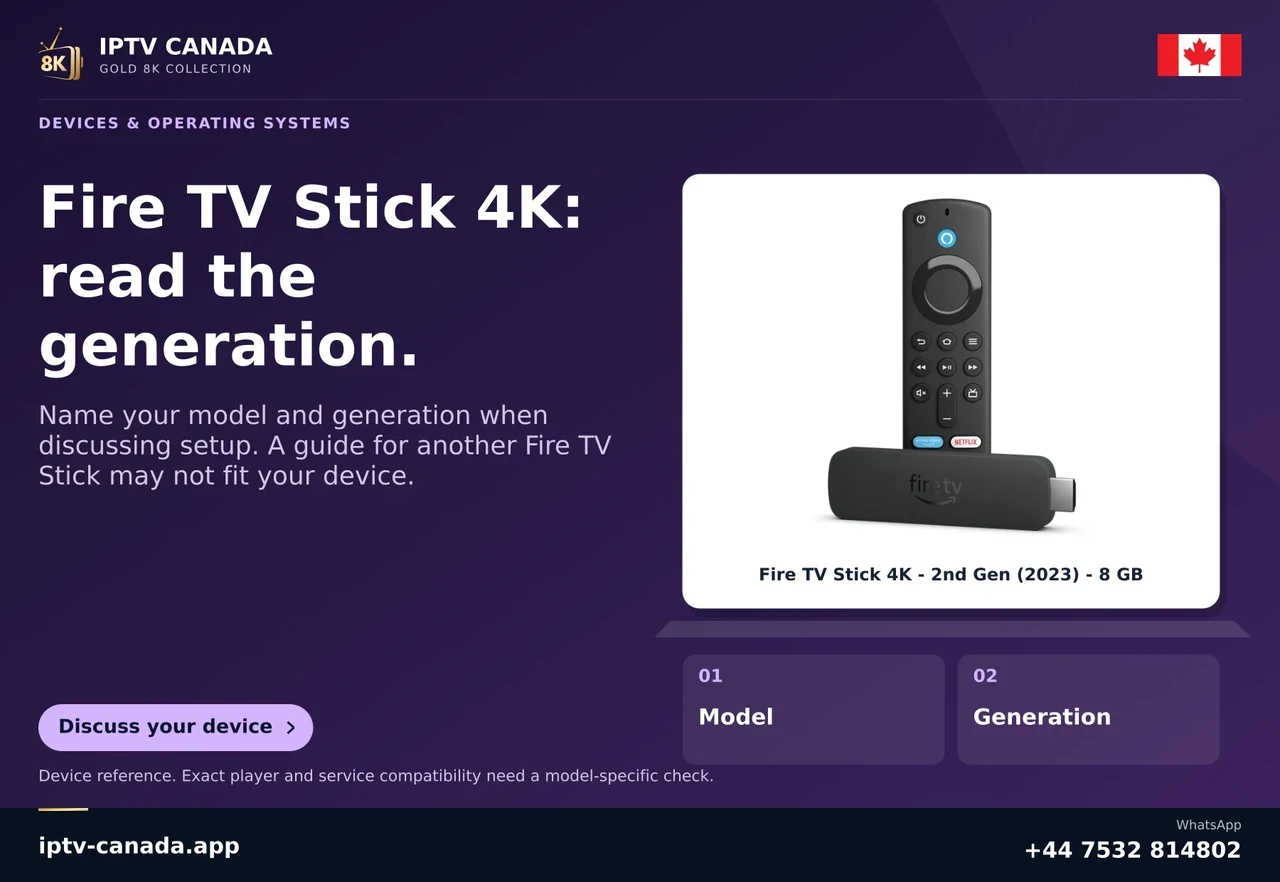
The seller's material includes an Apple TV reference. Some customers own an Apple TV device connected by HDMI. Others have the Apple TV app built into a Samsung, LG or other television. Others subscribe to a separate streaming service that uses Apple's name. Only the first statement directly identifies the operating system of a potential player on the external box. Begin with the hardware model, then name the app you intend to use and its publisher.
If the television uses an external box, put the television input name on the household instruction card. A parent may press the manufacturer's home button and end up on the TV's built-in platform, where the installed external player is nowhere to be found. This looks like a disappeared subscription even though the account and apps on the box are intact. Ask the parent to reach the player from a cold start and then switch back to ordinary television. The test is as much about finding the right input as installing software.
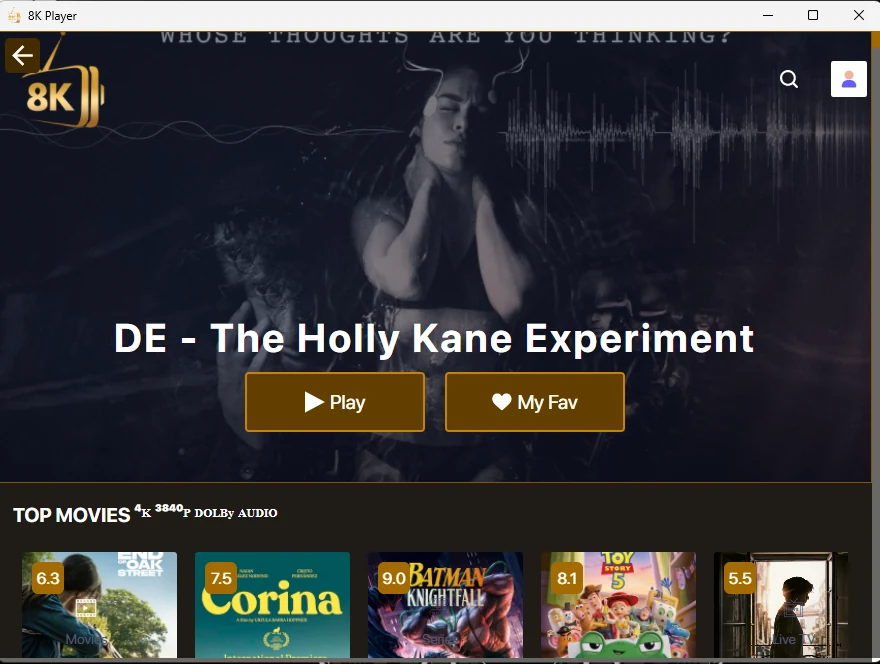
A licensed player can have its own sign-in, payment and renewal. Ask whether a separate charge is necessary and who will own the licence after the device changes hands. When relatives set up a television across the border, the app store account used for installation may belong to the helper rather than the viewer. The person who will pay or cancel later needs to know that. Give them a list of the two receipts and the route to each provider. Leave passwords, activation codes and full playlist addresses out of the note by the television.
Sound and captions can depend on the actual playback chain. Check a French and an English example through the television speakers, then through the normal soundbar or receiver if one is used. If a track is present from the television speakers and inaudible through the receiver, tell support about that observation before requesting a new provider account. If neither path exposes the required track on that programme, give the seller the service identity, date, language and exact symptom. Good notes can prevent a viewer from replacing perfectly usable hardware.
IPTV Canada's operator page invites discussions using quantities of 60, 120, 300 and 600 credits. Those numbers are enquiry choices. The verified material does not give a current pack cost or a deduction schedule for this provider. Compare that with your private business forecast before putting numbers on a customer quote. A panel image can show an interface and a balance. It cannot tell a buyer what one unit will purchase, when that balance expires or what support the operator has contracted to provide.
Write the forecast in customer terms first. Suppose the business expects twelve quarterly accounts and six annual accounts. It is forecasting 36 plus 72 customer months. If the operator supplies distinct credit deductions for those two account types, the customer mix can then be translated into an inventory requirement. The answer is twelve times the quoted quarterly deduction plus six times the quoted annual deduction. Assuming one credit per month without authority would erase the very condition that needs confirming. Keep the calculation symbolic until the operator fills it in.
Ask the operator to quote the complete pack price in its stated currency, any minimum top-up, panel access conditions, territory, trial treatment, renewal rules, expiry, correction process and what happens to unused stock. Ask separately who invoices the customer, who receives an incoming issue in English or French and who can make a refund decision. A bilingual business can offer excellent first-line help and still need a reliable upstream route when an account fails to activate.
The shop's cost assessment can include the work of that support desk. A reseller who quotes only a converted monthly credit cost may find that private activation queries, player licences, a handful of failed orders and currency fees consume the apparent margin. Start with one written operator answer, price the customer mix the business can actually serve, and reconcile a small permitted order before treating a larger enquiry quantity as an obvious purchase. Wholesale or distributor discussions need their own written authorization and terms.
A Windsor request belongs in the first envelope. “I would like to see the regional coverage I remember from Windsor” describes an editorial need that a national bulletin may not meet. Identify CBET-DT from the public record, find the broadcaster's current programme listing for the relevant day and specify the U.S. viewing location. If the seller says its permitted account carries a national channel rather than the local edition, the buyer can make a straightforward choice. There is little point sending a complaint later about receiving exactly the national service that was described before purchase.
The second envelope is for a family learning a specific Indigenous language. APTN's own APTN Languages page identifies programming in Indigenous languages and provides programme-level detail, including examples listed in Mi'kmaq. Use the exact programme and language from that source. A vague promise about “Canadian channels in multiple languages” tells a learner little about whether the episode, original audio and requested subtitles will be available. Ask whether the broadcaster itself offers an authorized path for your location, then ask the subscription seller about its independently documented offering. The cultural and language requirement deserves a more precise check than a tick in a country filter.
The third envelope belongs to a viewer of parliamentary proceedings. CPAC identifies itself as a bilingual public-affairs network and maintains its own FAQ on language choice. A viewer following a specific proceeding can check its public schedule or programme page to establish what was happening and in what form. If a player carries only a translated soundtrack, a viewer who wants to hear the original speech may still have an unmet requirement. Tell support which language was audible and which choice the on-screen controls offered. An entry in an electronic guide cannot prove that every audio channel from an original source was delivered to the home.
Use the fourth envelope for a household with children or students. They may be interested in one Ontario educational programme and have no wish to maintain a general Canadian channel package. Look up the actual producer or broadcaster, the intended age or subject, and an authorized way to view the particular programme in the United States. An official programme page can be perfectly adequate for identifying an episode without carrying every episode in every territory. Be willing to use a direct official option where it meets the need. The subscription price becomes relevant when the household wants something additional that its seller can identify and supply.
Take the annual CAD 76.99 price and call the card issuer's actual effective U.S. dollars per Canadian dollar R. Before separate transaction charges, the U.S. cost is 76.99 times R. If the payer receives a checkout quote already in U.S. dollars, compare that quotation with the expected converted total from the same moment. A currency widget from last week is a poor substitute for the two actual amounts. Readers with an account that settles directly in Canadian dollars can set conversion aside and compare the CAD totals as printed.
A fixed fee makes the term comparison more interesting. Imagine, purely as a budgeting exercise, that the payer incurs an additional fixed fee on each transaction. Twelve monthly purchases create twelve opportunities for that fee, while one annual payment creates one. If the fee were two Canadian dollars per payment, the twelve-month pay-as-you-go example would rise from CAD 167.88 to CAD 191.88. A single annual payment under the same hypothetical rule would rise from CAD 76.99 to CAD 78.99. The operator does not quote that example fee here. It demonstrates why a payer should ask their own provider about a charge before multiplying sticker prices.
Now consider a card that charges a percentage but no fixed fee. If the percentage applies to every exchange on the same basis, splitting the same underlying total into several purchases has a different effect from paying a fixed fee every time. The dates of those conversions can still differ, and so can the exchange rates. A household selecting a quarter because it will be staying for a quarter does not need to predict an entire year's currency markets. It needs the amount due for this transaction and a reasonable way to compare the alternatives available today.
Keep the service receipt in the settlement currency and the card entry in the account currency. In a later billing query give the seller the figure it issued, the date and its order reference through the proper private route. If the converted bank entry seems wrong but the Canadian amount matches the receipt, the payer has narrowed the next question to the conversion or card stage. That simple division can save a long exchange with a television provider that never received the dollar amount printed on the American side.
Suppose a programme is shown at 7 p.m. in St. John's and the viewer's New York guide displays 5:30 p.m. The half-hour difference in the conversion above makes the entry plausible on the November example date. Suppose instead that the guide displays 6 p.m. The household sees the right programme begin at 5:30 anyway. The facts now point to a guide display or mapping that is thirty minutes away from the observed content. There is no need to claim the whole Canadian account has the wrong time. Name the feed and the two observations.
Try an independent source on the same player whose local time can be confidently identified. If every channel appears thirty minutes late, note the device time zone, manual guide offset and time settings. If just the Newfoundland service is affected, an adjustment to the whole device would sacrifice the entries that are already right. Ask the player or seller whether the affected guide entry has been assigned a different source zone. Send a cropped image of the date and title only if that adds something more than the written report.
What if the picture also appears at the unexpected time? Then identify the programme actually being shown using an on-screen identifier or the broadcaster's public schedule. It could be a delayed version or a different city feed with the same national programme. It could also be an unannounced schedule change. Collect two consecutive programme identities when practical. They help distinguish a one-off substitution from a persistent wrong mapping. A household can make that observation without possessing a private stream address or a special diagnostic tool.
The purchasing decision may be simpler than the diagnosis. A viewer who relies every day on timely Newfoundland reminders needs a clear and working answer before an annual commitment. A viewer who opens an English national service occasionally and checks the time elsewhere may accept a known guide flaw for a short term. The same observation can lead to two different sensible decisions because the two households use the account differently.
One family member may live in Canada and know the broadcasters. Another may live in the United States and own the player and payment method. Give each a task that they can answer reliably. The relative in Canada supplies the public name, local edition, programme and date. The person in the U.S. supplies the viewing address, model, country of the app store and any access needs. The payer requests the amount, currency, term, renewal and responsible merchant. No one needs to send a copy of a private login across the group chat to combine those facts.
If an older relative is the regular viewer, write the channel or favourite exactly as it appears on that screen. The family's nickname for the programme can go beside it. Ask the viewer to reopen the favourite the next day. A name copied from a printed schedule may have an accent or regional abbreviation the player search handles strangely. A short note matching the visible spelling can be more useful than another page of generic installation instructions. Give the household the seller's support route and keep the private receipt with the payer.
On renewal day, invite the regular viewer to name the service they actually watched last week. A household can discover it originally set up the account for Toronto local news but now uses one weekly programme from a different source. Look up the current authorized options for today's need and compare them with the new quoted CAD amount. Decide whether the old account still offers something the household values. This prevents a yearly renewal from becoming a payment for a viewing habit the family no longer has.
A complete short-term trial of the arrangement ends with a useful record. Put the original quoted CAD total alongside any actual additional fee, the exchange applied by the payer, the named feed, the player and the trial date. Identify whether any allowance or permission needs checking again after a move. Give an unresolved issue a plain description such as French captions unavailable on the named replay or concurrent use at the second home awaiting confirmation. Someone reading this at the end of the quarter can tell what still needs a decision.
The customer can renew, change equipment, choose another authorized route or allow the term to expire. The register of Canadian stations will still be useful whichever choice the family makes. It gives the next enquiry a specific place, language and programme. A clear CAD receipt gives it a price to compare. A relative who can open a favourite without waiting for someone in another time zone gives the household the most practical test of all.
Imagine the original television develops a fault halfway through the quarter. Before buying a second subscription, establish which part of the account was attached to the old equipment. A viewing term may have remaining calendar time while a separately licensed player needs to be reassigned, or the seller may require a private device change. Ask the operator whether the move is permitted, what information it needs, and which existing sessions should be closed. Give it the order reference and original expiry through the private support route.
On the replacement screen, check the actual Canadian favourite rather than stopping when the player home page appears. Re-select the language and accessibility preferences, reopen the correct regional programme and confirm that the guide uses the device's intended local time. If the device is in Vancouver or serves someone watching a Vancouver listing from the United States, check that its software understands the current time arrangement. A replacement that kept an old clock database may be the source of a new one-hour problem even though the viewing account transferred successfully.
Put the new device model and player version next to the original record. Add the date the account was moved and whether the paid end date stayed the same. If the family later sells or returns the old equipment, remove personal accounts and use the provider's normal route to end any remaining sessions. The paying relative then has one coherent record of the term through the hardware change, and the viewer has the right channel and captions back on the new screen.
Suppose you expect to watch for six months. At the listed single-month amount, six separate purchases would total CA$83.94 CAD. The six-month offer asks for CA$55.99 CAD up front. That comparison assumes every new month is available at the listed amount. Check renewal separately before relying on it.
| Viewing period | Separate monthly purchases | Single matching term | Difference | Monthly purchases to reach term price |
|---|---|---|---|---|
| 3 months | CA$41.97 CAD | CA$34.99 CAD | CA$6.98 CAD | 3 |
| 6 months | CA$83.94 CAD | CA$55.99 CAD | CA$27.95 CAD | 5 |
| 12 months | CA$167.88 CAD | CA$76.99 CAD | CA$90.89 CAD | 6 |
Read the final column as a spending threshold. If you expect to cancel sooner, compare the shorter commitment with the cash you would have paid up front. The figures exclude fees the seller has not confirmed.
Check IPTV Canada subscription termsThe image link identifies the exact file served by the provider.
Choose a matchup to see the actual currency, term and outcome.
Open the caption on a website-sourced image to see its original. The remaining captions identify material supplied with the provider archive.