provider
Lion OTT
Ask about the authorized territory and volume requirements on a distributor enquiry.
lion-ott.app · Check exact market
Open the official Lion OTT websiteThe 1 month plan is listed at $7.99 USD. The operator also lists 7 reseller pack sizes.

lion-ott.app
The 1 month plan is listed at $7.99 USD. The operator also lists 7 reseller pack sizes.
The 1 month plan is listed at $7.99 USD. The operator also lists 7 reseller pack sizes.
Ask about the authorized territory and volume requirements on a distributor enquiry.
lion-ott.app · Check exact market
Open the official Lion OTT websiteLion OTT maintains the site at lion-ott.app. Check who issues the invoice and who replaces the access if the app or TV changes. The buyer needs both answers before paying for a long term.
Document review · November 19, 2026. Playback performance, service rights and ZIP-level access require separate evidence.
The 1 month plan is listed at $7.99 USD. The operator also lists 7 reseller pack sizes.

lion-ott.app
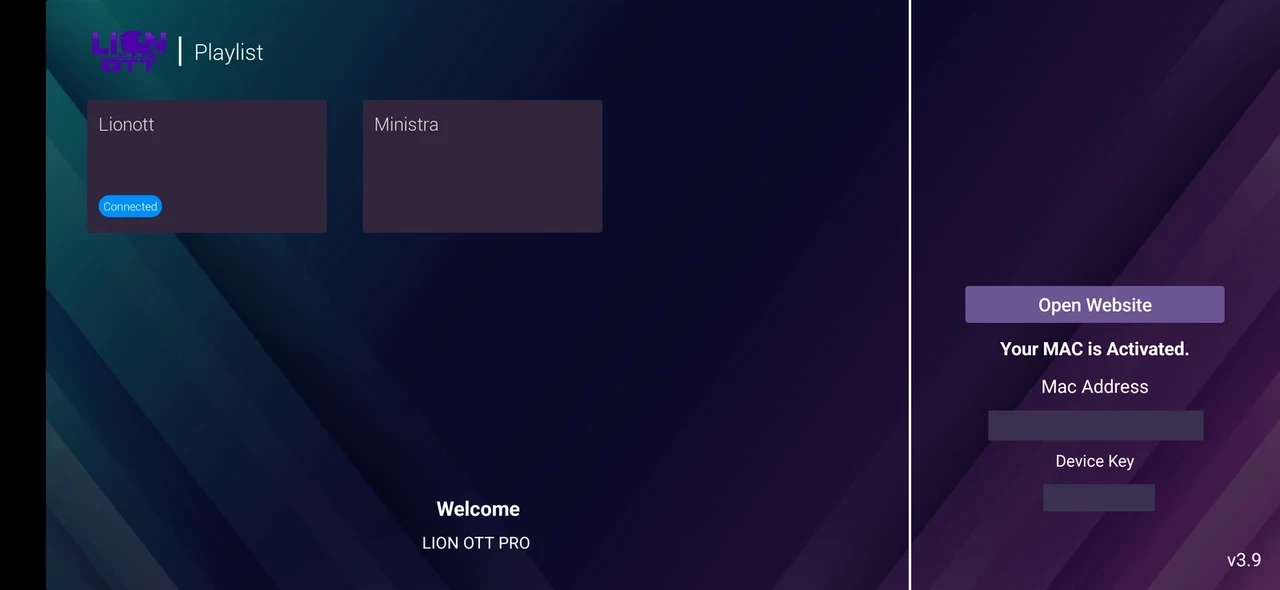
The most useful part of Lion OTT's business site is a walkthrough showing a sign-in screen, dashboard, line form, customer list, mobile view and support ticket. For someone considering a reseller pack, the photographs offer something more tangible than a large promise about managing customers. They show the kinds of work an operator is expected to do. They do not tell a prospective seller what permissions their own account will receive, how many people use the service or how quickly a ticket will be answered.
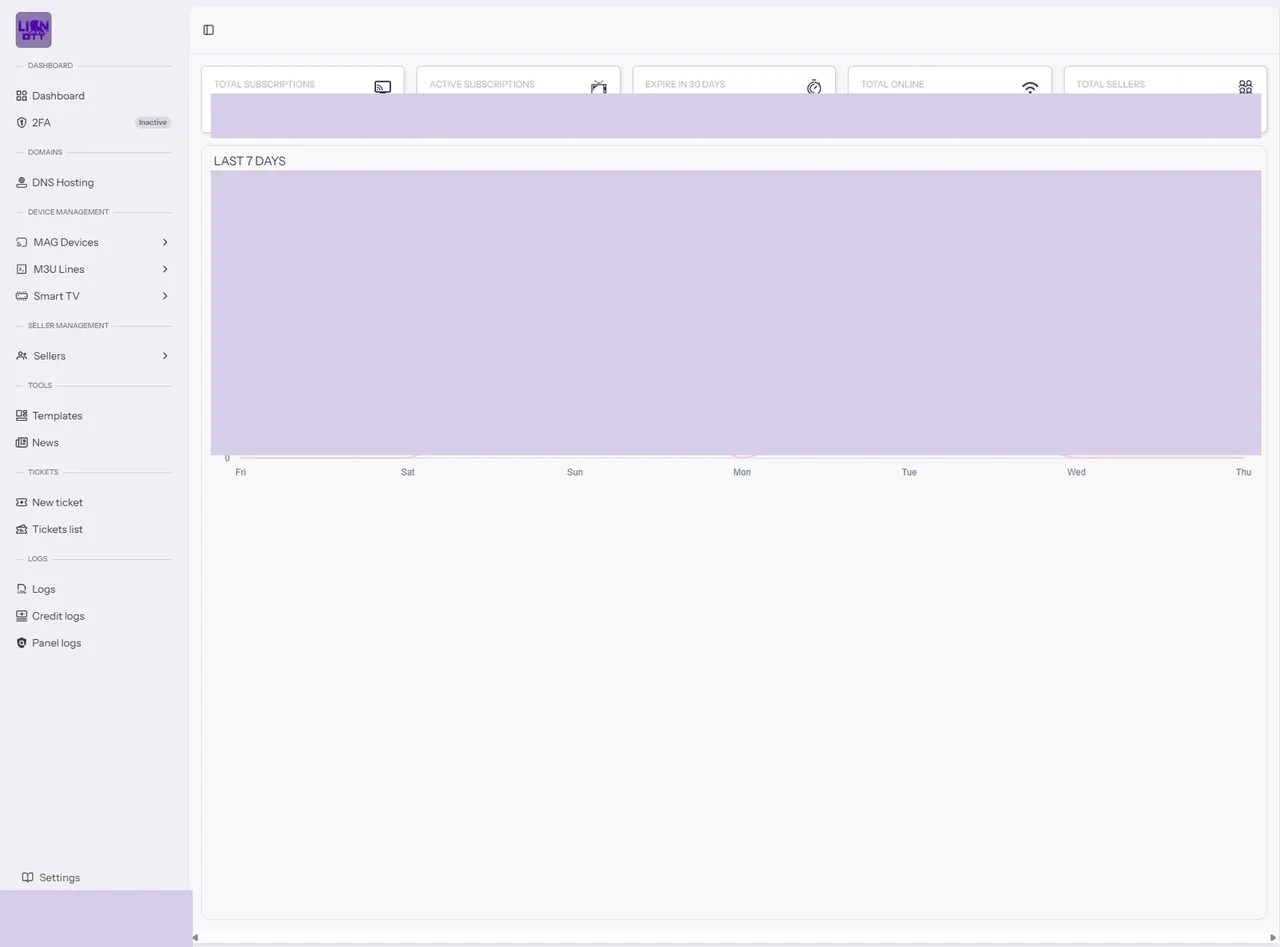
Begin with the person who would receive the first customer call. If that person cannot say how they would identify the right account, see its promised expiry and ask for a correction, the business needs more information before buying credits. On the other hand, a household that merely wants one television account can skip the panel entirely. Lion lists its viewing terms separately, starting at $7.99 USD for one month with one active connection unless another arrangement is confirmed.
This profile reads the information published on lion-ott.app and its dedicated order routes on November 19, 2026. It follows the private handling of a customer account from enquiry to renewal, then works through the numbers needed for a small reseller. The examples are operating scenarios. The photographed interface belongs to the provider. We have no basis to present figures in its dashboard as customer counts, to claim access to a private account or to promise that the depicted controls are enabled for a particular buyer.
A sign-in photograph answers a narrow question. It identifies the kind of portal the provider has pictured. It does not supply a private panel address for a new reseller. Lion tells an operator to use the address issued for its assigned account. Obtain that address through the contact associated with the actual business agreement and keep it private. A customer browsing a household plan should not be searching the internet for another operator's access panel simply to install a viewing application.
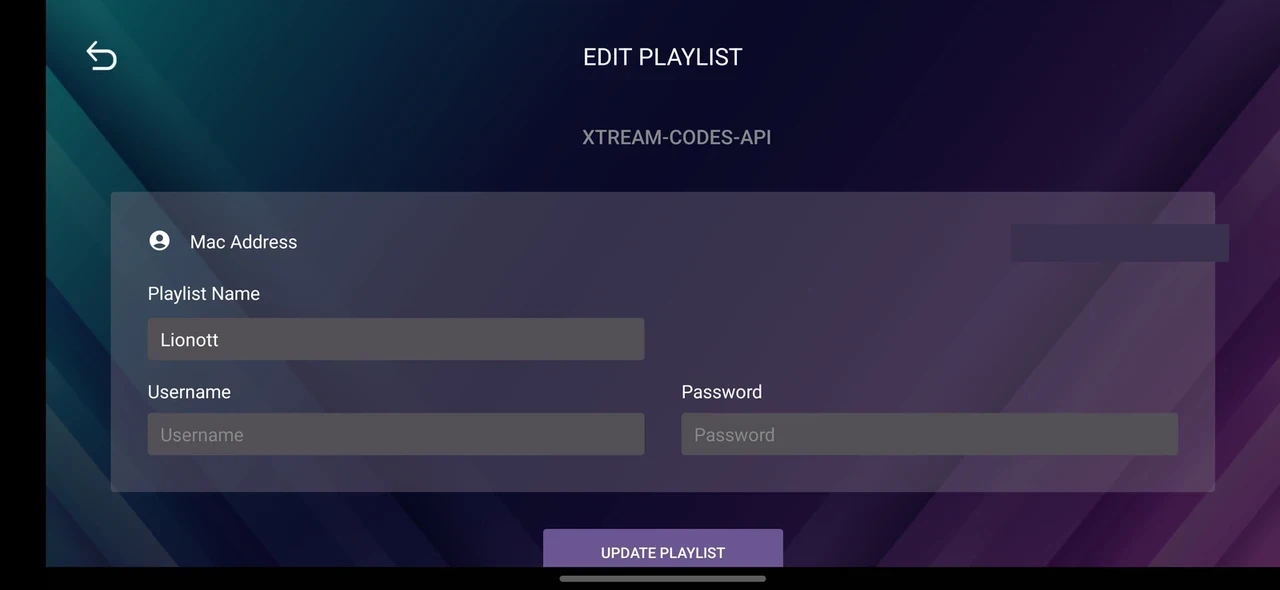
Ask how the operator assigns privileges if more than one person works in the shop. A colleague handling evening enquiries may need to read a status or open a ticket. The person approved to allocate paid credits needs other powers. If separate users or roles are available, request ones that match actual duties. If only a single privileged account is offered, design a handoff that fits the arrangement. A screenshot of a username field settles nothing about employee roles or transfer of responsibility.
Before placing the first pack order, agree on the contact route for access problems. Who can confirm the correct account identity, replace a departing employee's permitted access or resolve a sign-in issue? Keep the purchase reference and business contact details in a place authorized staff can reach. A small operation in which only one person knows which provider issued the account can lose a full evening's service even when every customer line remains active.
A family watching at home gets a different kind of sign-in. They may be looking at their independent player's settings or a supported viewing account form. Describing “the Lion login” without naming the screen invites confusion. The business sign-in, customer account and software license can appear under similar branding in helper guides. A clear support conversation starts with one sentence identifying which device is in front of the caller and whether the caller is a viewer or an authorized reseller.
A dashboard offers a quick view of operational information. Lion's walkthrough says sensitive values in the reference capture have been removed. A static picture cannot tell a reseller how many accounts are active today, how much stock the new operator has or how many households use Lion worldwide. The only balance relevant to a shop's spending decisions is the one in its own assigned account, reconciled against its actual invoices and customer actions.
At the beginning of a shift, note the opening balance and the cutoff time used for the check. If a different employee handled the previous evening, identify any orders that were paid but not yet activated. Pull out the customers whose existing access is due to expire. There may be more work waiting than the dashboard's most prominent number suggests. One unresolved renewal for a customer who already paid deserves different priority from three speculative enquiries about future service.
A simple handoff can be written in three sentences. The day began with a stated credit balance from the assigned panel. Two customer renewals are authorized and await assignment. One earlier order needs the operator to confirm its effective expiry. Use internal references for customers and keep the handoff private. The person taking over can now distinguish an inventory question from a customer-support question before touching any controls in the panel.
At the end of the shift, compare those opening facts with the completed operations and closing balance. A correct balance is important but insufficient. If an operator assigns a six-month term to the wrong customer, the debit could still match perfectly. Reconcile the account identifier and resulting date as well as the arithmetic. The shop can maintain a reliable customer record without copying every field visible in a dashboard into a shared note.
Lion's gallery identifies a form for creating a particular type of line. A visible form indicates the site has illustrated that workflow. Ask the operator which account methods your role is permitted to create, which require operator intervention and what the customer must install. A shop should be able to explain to a buyer whether they are receiving a viewing term, a software purchase or an appointment for installation. An account form on the business side does not join those items into one product.
Take a proposed six-month customer order. Before submitting it, read back the seller's agreed term, the customer's existing account reference if any, the intended effective date and the agreed connection allowance. If the customer is renewing, find out whether the extension begins after the old expiry or immediately. The same six-month term can have two materially different outcomes for someone who already paid to watch for the next three weeks.
The published standard six-month allocation uses 0.6 credit. This can help an operator see a wrong selection before finalizing the action. If the form shows a different deduction or the account has a nonstandard connection arrangement, pause and get confirmation from the assigned operator. A printed price schedule and an account-specific rule may refer to different account types. Never assure the customer that a discrepancy will work itself out after the business has spent the credit.
Once the operator confirms the action, check that the account appears correctly and the new end date makes sense. Then send the customer the agreed setup information privately. Someone helping with a viewing problem may need to know which player and login method the account supports. For a public discussion they generally need only the form type, device and error message after personal values are removed. A machine-readable code, full playlist address or photograph of a completed line form can disclose far more than the household intended.
A list of customer records makes ordinary support less dependent on a reseller's memory. It also brings a duty to handle the records carefully. Lion's published capture removes account and customer details. Follow the same principle when learning from a problem or asking a public question. Use private internal references in the accounting system. A forum reader can explain the difference between a renewal and a new line without seeing a customer's login, phone number or program preferences.
Look at an example involving two customers with similar names. One bought three months on Monday. The other bought a year on Tuesday. A note saying “John renewed” leaves too much room for error. Match a private order reference to the account, named term and prior expiry. The operator can then verify that the correct line has changed and the ledger entry corresponds to the service delivered. It is possible to have a numerically correct balance and two unhappy customers if identities are mixed up.
Keep the latest confirmed expiry beside the term originally sold. If a customer says “my guide is empty,” an account that expired yesterday warrants a different investigation from an active account that can play several channels but has missing program titles. Having the service date quickly available keeps the shop from suggesting a replacement player or taking money for a new term before establishing what the existing account is doing.
The list should also distinguish customers who have authorized renewal from those who merely received a reminder. An old order gives the seller a legitimate reason to help its existing customer under the agreed arrangement. It does not by itself authorize spending more inventory or charging that customer again. If the buyer changes term, record the explicit request and confirm the new total. A reliable record protects the business just as much as the viewer when a family member asks why a line was extended.
A mobile panel image can help a small operator see how a task might be handled away from the main desk. It does not create another kind of account or increase the buyer's permissions. If the customer phones shortly before an event, working from a narrow screen may be the only practical option. Think about what information is easy to miss there. A selected account name, full expiry, denomination or confirmation message can sit out of view even when a large action button is obvious.
Before committing a customer operation on a phone, read the summary screen carefully and verify that the displayed quantity is credits rather than months. Compare the customer reference with the private order. If the panel offers a confirmation step, use it to verify the intended action rather than tapping through from habit. A retail order for one year and a pack purchase of one hundred credits are separated by their units and context. A narrow display should not be allowed to hide that distinction.
If a submission appears to stall, avoid pressing the button repeatedly. Check the customer record and recent balance movement through the authorized interface or operator support. A request can have reached the server even when the phone failed to display the confirmation. A second blind submission can produce a second charge or allocate a second term. A single record of the time, target account and intended action gives somebody the evidence to determine what actually happened.
If the mobile interface omits fields the operator needs to verify, defer the action to the full desk or ask the assigned provider for assistance. A promise to the customer should respect the real equipment and access available to the staff member. Mobile access is convenient when it supports a complete, checkable operation. A photographed small-screen menu does not guarantee that all desktop functions or records are practical on a particular device or role.
Lion's panel guide pictures a ticket form for a subject and description. The useful skill here is writing a message that a person can investigate. State one observed discrepancy, identify the authorized account by its private support reference, give the previous and expected end dates, and say what the operator saw after the action. If the issue concerns a unit deduction, include the opening and closing balances relevant to that action without attaching the rest of the customer list.
A subject such as “Three-month renewal, correct debit but unchanged expiry” is easier to route than “urgent problem.” In the description, explain that the customer had an active line, requested a specific extension and has the payment confirmation. Say whether the panel recorded the action and whether the problem remained after an ordinary refresh. Ask the operator to confirm the effective date or correct the discrepancy. It is possible to report this precisely without sending credentials that should remain private.
Respond to the customer with what is known. The renewal was requested, the issue has been raised with the operator, and the customer should keep the existing profile until an answer arrives. If no response deadline has been agreed, do not invent one. A ticket form in a gallery does not establish a particular response time or around-the-clock staffing. The honest promise is to update the customer with the result of the case under the support arrangement they actually bought.
Close the ticket and the household record together. If the issuer adjusts the account's end date, verify what the customer now sees and explain whether they need to change anything in the player. If the issuer supplies replacement access, clarify which earlier profile should be left alone or retired. Record the outcome in a neutral way for the next employee. A private resolution that never reaches the viewer leaves them believing the original fault remains.
Lion's current fixed packs are twenty-five credits for $249.75, fifty for $449.50 and one hundred for $799.00. The resulting unit costs are $9.99, $8.99 and $7.99. There are also enquiry routes for sixty, 120, 300 and 600 credits. Those routes ask the operator to supply a written quote. They do not establish totals at the fixed packs' unit rates. Multiplying sixty by $7.99 would estimate a price using the hundred-credit rate, not identify a sixty-credit product the seller has priced.
For a shop that genuinely needs at least sixty credits, consider the published alternatives while it waits for a quote. Three twenty-five packs would give seventy-five for $749.25. One fifty and one twenty-five would also give seventy-five, for $699.25. The hundred-credit offer is $799.00, an additional $99.75 against the mixed seventy-five purchase and twenty-five further units. All combinations assume repeat or mixed pack purchases are allowed under the same conditions. That $699.25 reference gives the buyer something real against which to compare a private sixty-credit quotation.
At 120 needed credits the same discipline matters. One hundred plus twenty-five would supply 125 for $1,048.75. A pair of fifties plus one twenty-five would also supply 125 but cost $1,148.75. If the operator offers exactly 120 on custom terms, compare the quantity, expiry, permissions and full payable total with those public choices. A private quote could include additional responsibilities or a minimum volume. Treat it as a separate agreement which belongs to the named recipient.
The buyer should also say when the stock is needed. A publicly documented pack available under agreed conditions could be more practical for an immediate authorized renewal than a marginally lower private quotation that has yet to be confirmed. Conversely, a shop whose work begins next month can use the time to clarify a larger proposal. Write the required date and the underlying term mix beside the units. The lowest apparent unit number should not be allowed to hide a delivery or authority problem.
Lion publishes deductions of 0.1 credit for one month, 0.3 for three, 0.6 for six and 1.0 for twelve. A credit in this program is not automatically a customer month. A shop that imported the one-credit-per-month convention from another operator would misprice its stock and misunderstand what a pack can cover. Set the term table up explicitly for the Lion account, confirm that the assigned program follows it and check the first completed transaction against the written rules.
| Fixed pack | Full total | Cost allocation for one month | Three months | Six months | Twelve months |
|---|---|---|---|---|---|
| 25 credits | $249.75 | $1.00 | $3.00 | $5.99 | $9.99 |
| 50 credits | $449.50 | $0.90 | $2.70 | $5.39 | $8.99 |
| 100 credits | $799.00 | $0.80 | $2.40 | $4.79 | $7.99 |
Use the full unit price before rounding each allocation. At the twenty-five tier a quarter costs 0.3 times $9.99, or $2.997, rounded to $3.00 for display. Ten such assignments use three credits with an underlying inventory cost of $29.97. Multiplying ten screen-rounded $3.00 examples gives $30.00 and creates a tiny difference. The invoice and actual unit movements support the ledger. Rounded examples help a reader compare offers. It is perfectly possible for both presentations to be correct when their purpose is understood.
Suppose the business has seven monthly activations, five quarterly renewals, four half-year renewals and two annual activations to perform. The expected use is 0.7 plus 1.5 plus 2.4 plus 2.0, or 6.6 credits. From a fresh twenty-five pack the closing balance should be 18.4 after those approved standard operations. The 6.6-credit allocation at $9.99 is $65.934, or $65.93 when rounded after aggregating the group. The full purchase was still $249.75.
Take a different window with twenty annual customers. They need twenty credits. A twenty-five pack can cover the work, leaving five. Buying fifty at a rate one dollar lower per credit reduces the allocation to the twenty identified customers by $20. It also requires a $199.75 larger payment at purchase and leaves thirty spare credits. The lower per-credit figure can be valuable for an established operator with ongoing demand. For a new desk it is worth quantifying exactly what extra cash must be committed to get that figure.
For a viewer, Lion publishes one month for $7.99, three months for $19.99, six months for $34.99 and twelve months for $44.99. The schedule describes one active connection unless another allowance is confirmed. A family may install a compatible player on several pieces of equipment, but its entitlement to use multiple screens at the same moment still depends on the agreed account. Ask how a permitted change of device works before expecting a room-to-room handoff to be instantaneous.
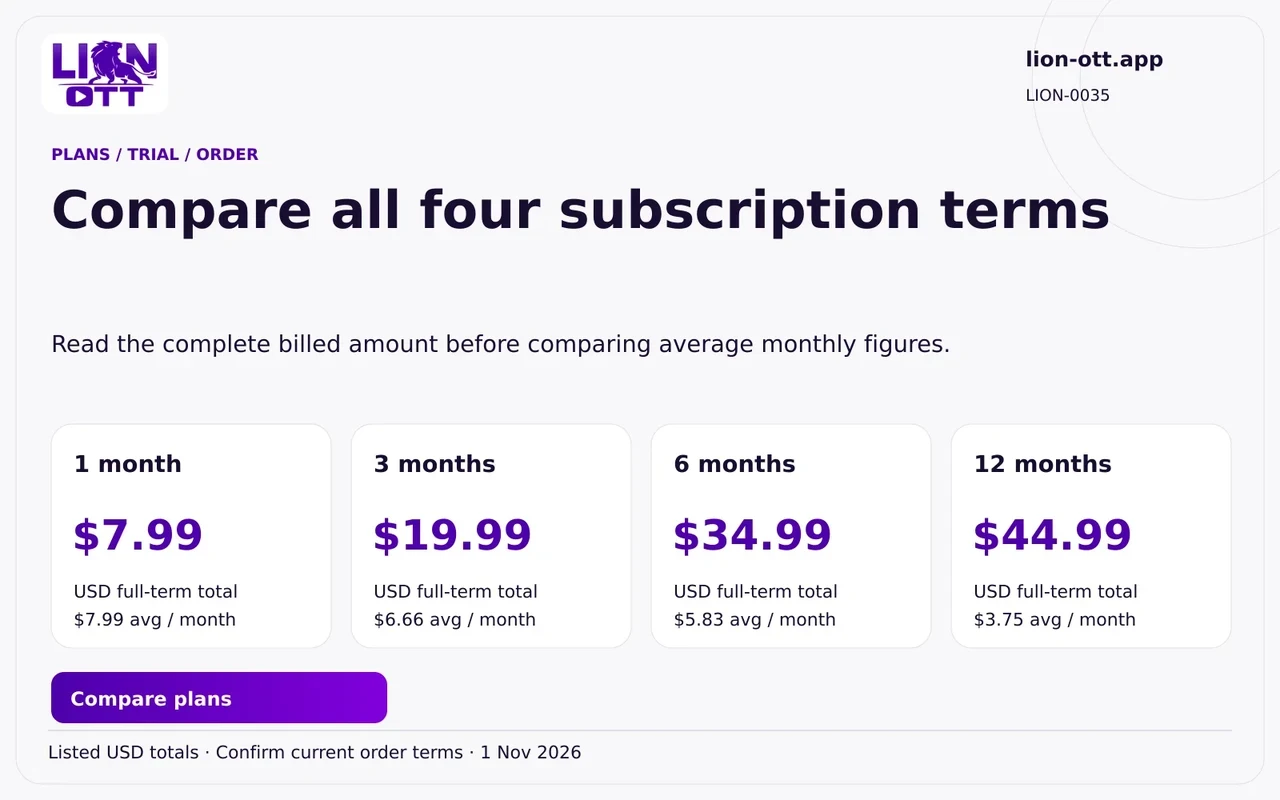
A buyer who knows they will stay six months can compare two quarters totaling $39.98 with a single $34.99 term. The six-month difference is $4.99. An annual term is ten dollars above the single six-month price. A household moving at midyear can keep the smaller commitment if continued use at the new property is uncertain. A year-round family that already knows the player and local lineup can compare $44.99 against the $69.98 two six-month terms would total at unchanged prices.
A seven-month stay adds an interesting detail. Six months plus one costs $42.98. The full year costs $44.99, just $2.01 more. A household that might stay an extra month may value the longer period. A household whose access must cease on a fixed departure date may value keeping the money. None of these calculations establishes that mixed terms can be stacked freely, that a renewal brings over unused days or that an external app license lasts the same length of time. Confirm the applicable dates with the seller.
If the order is placed with a reseller, the purchaser should know the merchant who issued the receipt and who can investigate the account. A pack image from Lion's provider site identifies the commercial program. It is not the household invoice and does not by itself establish the authority of an unrelated person offering a discount. Buy through the named, confirmed route and ask who will help if the account is active but the player asks for another software payment. The answer can save a great deal of confusion later.
Picture a family that watches together after dinner in the living room and later moves to a bedroom television. The immediate question is whether Lion allows the purchased account to move between the intended devices while only one stream is active. This differs from a family wanting two simultaneous programs. Describe the two rooms and the actual pattern. Ask the seller about any switching procedure, wait time or separate device-registration requirements for the permitted account.
During the trial, if the seller authorizes device switching, stop playback and exit the player on the first device before starting on the second. Changing the television's HDMI input might leave a stick running out of sight. Note whether the first application was actually closed or merely hidden. If the second room reports a connection limit, provide the time and which device last had playback. Never test an additional simultaneous stream beyond the confirmed allowance simply to see what happens.
Ask the regular viewer to navigate the move independently. Is the supported app installed on both permitted devices? Does the same nonsecret local display name identify the correct account on each? Are captions and favorites remembered separately? Two players may handle the same authorized account differently, particularly when one belongs to the television and the other to an external box. A household that values easy room changes should find out whether its real setup is tolerable before paying for a long term.
If two people really do want to watch together in separate rooms, a planned handoff does not solve the requirement. Ask for the availability and full price of the appropriate concurrent arrangement, including any separate software costs. Do not multiply the one-connection retail table and present it as a quote for a package the seller has never described. A second independent retail purchase and an approved multi-connection account could have different maintenance, billing and support implications.
Lion's site offers setup routes for smart TVs, Fire TV, Android and Google TV, Apple devices, Windows, macOS and receiver families including MAG and Formuler. These categories give a buyer a way into the documentation. They do not guarantee that a specific app version, hardware model or account format works on every item in the family. Identify the exact model and software running the player. A smart television attached to an external receiver involves both a display and a separate source device.
For a receiver, record the account format the device actually expects. A portal-based setup, an application requesting separate login fields and a player accepting a complete playlist address are different arrangements. Ask the seller which is authorized for the assigned account. Give support the method and model without exposing the private address or device-specific identifiers in a public post. The person selling a subscription can supply the account instructions. The hardware maker and player publisher may answer a different question about a device feature or a software update.
For a television player, check the app store edition and whether it has a separate fee. A generic screenshot of an app in an article does not tell the household whether that device's current storefront offers it. Confirm the publisher where possible and test with the remote normally used in the room. If a viewer relies on captions, audio description or a specific language, try a permitted program known to carry the relevant feature. The existence of a menu item does not decide whether the actual program provides the desired track.
Choose the shortest path to an accurate diagnosis if setup fails. A no-signal screen before the receiver starts is a different symptom from a working player with one missing station. A successful login with an empty guide differs again from a single program lacking audio. Tell the support desk what happened before the failure and whether another permitted item works. The answer may be a device setting, an account correction or a station-mapping investigation. Replacing the account should follow evidence rather than being the default response to every black screen.
A 120-credit proposal provides a good test of a buyer's concentration. One simple public combination would supply 125 credits for $1,048.75. Dividing that total by 125 gives the blended acquisition rate for the combination, $8.39 per credit. That figure should not appear as an official price for 120. The buyer would have to pay for all 125 to obtain it. If a private quotation for exactly 120 arrives, compare whole amounts, usable remaining stock and the conditions the operator attaches to each route.
A larger business might ask about a 300-credit quantity. Three published hundred-credit packs would total $2,397. For 600 credits the corresponding six-pack total is $4,794. These are sums of existing fixed purchases assuming repeats are available. They provide negotiation references, not official price quotations for the dedicated 300- or 600-credit request pages. State the assumption whenever showing those amounts to a business partner. It prevents an estimate made at one desk from becoming a customer-facing offer the operator never made.
The comparison changes if stock expires too soon for the intended workload or if a negotiated quote covers a different support role. A proposed credit that must be spent within a short window is worth evaluating against the actual renewal calendar. A large pack that requires managing downstream sellers may carry work a small installer never planned to take on. Ask the operator to spell out the unit, validity, account permissions, revenue responsibilities and any customer support duties in writing.
A final check concerns delivery. A request page can prepare a message before any agreement exists. A payment confirmation can exist before any usable stock reaches the assigned panel. An agreed pack is not ready to allocate until the reseller can match the invoice's stated quantity and currency with the actual private account. Do this before booking several customers for an installation evening. A balance expected later today and a balance already available create different promises the reseller can make responsibly.
Imagine two messages arrive just before closing. One customer has paid to extend a current three-month order; a second wants to know whether tomorrow's game is available locally. The first needs an operational check on an existing commitment. The second needs information on a program, date and market before deciding whether to buy. A busy reseller can address both efficiently by keeping their questions separate, instead of opening the panel for both and hoping a dashboard image can answer the broadcast question.
For the renewal, identify the account, existing expiry and authorization. If the assigned standard rule applies, the quarterly debit is 0.3. Check the opening balance and the term displayed before the action, then record the actual ending date and balance. If the customer later says only that the player asks for a payment, read who issued the prompt. A separate player license can expire while the new Lion term is active. The confirmed account record keeps this enquiry from turning into a second, unnecessary renewal.
For the game enquiry, ask for the event, date, expected local time, viewing area and whether the customer needs live coverage. A broadcaster carrying highlights and a station carrying the full live event are different answers. A competition mark in Lion's directory helps the buyer identify the subject; a rights or availability answer still has to come from the responsible authorized provider. If the seller cannot confirm the particular game, leave that point open. A one-day trial at a different time might test the device while leaving the event question unresolved.
At the end of the shift, confirm who now owns each conversation. For the first customer that could mean the reseller has checked the new expiry and is waiting for the customer to reopen the existing approved profile. For the second it could mean the prospect is awaiting an answer from the provider about the local live feed. A handoff reading merely “two Lion enquiries answered” conceals the obligations actually outstanding. Good service records show what happened, which part remains and who can do something about it.
Show a new colleague the public mobile and desktop reference images together, keeping any real business account closed during the exercise. Ask them what they would need to identify before spending a single credit. The correct answers concern the authorized customer, requested term, prior expiry, applicable debit and confirmed action. If their answer focuses entirely on the position of a particular on-screen button, ask what they would do if an updated panel moved the button but retained the same decision.
Then show the published ticket example and ask them to describe a case with an unchanged expiry after the correct quarterly debit. A good description contains the order reference held privately, previous account date, attempted term, time and result. It avoids a claim that the operator lost every renewal or that every customer is affected. The trainee can practice writing a useful message using a fictional private reference. There is no reason to copy genuine customer data into a training presentation.
Finally ask them to explain the retail price to a household and the unit price to a business in two separate sentences. The $7.99 monthly retail entry is one published household term. The $7.99 per-credit figure is the unit rate for the $799 hundred-credit pack. These two numbers happen to match. They describe different buyers, payment amounts and units. This coincidence is perhaps the best quick test of whether somebody understands the Lion offer well enough to explain it to another person.
A colleague who understands that example can handle a new quote with far less risk of confusion. Ask what the unit is, what the whole order costs and which account or customer action the amount covers. Check the scope the customer actually needs. Then use the published photographs to point to the relevant workflow, the private account for actual balances and the issued receipt for the financial record. Each source is useful for a different purpose. A customer should leave the conversation knowing exactly which of them answers the next question.
Before the real first shift, decide where the employee can see the current edition of the provider's term table. A saved photograph might show an earlier schedule. The business should be able to point from a customer operation to the relevant current or contracted rule, and from a stock purchase to its dated invoice. If the program later changes, retain the old document for transactions that actually used it and identify when the new rule took effect.
For the household on the other side of the counter, the closing detail is much simpler. Make sure the person who will watch knows how to open the right player and where to ask a private billing question. A client who leaves home on a work trip should know whether the permitted arrangement covers moving the device and what happens to a viewer remaining at home. A shop that can answer with the agreed allowance and actual account dates has done more for the family than any expansive claim about the number of icons in a gallery.
Lion retail schedule and one-connection description · Fixed reseller packs · Reseller credit deductions · Six illustrated panel workflows · Example of a quote-only 60-credit order · Trial procedure · Receiver setup · Provider and program enquiries.
Suppose you expect to watch for six months. At the listed single-month amount, six separate purchases would total $47.94 USD. The six-month offer asks for $34.99 USD up front. That comparison assumes every new month is available at the listed amount. Check renewal separately before relying on it.
| Viewing period | Separate monthly purchases | Single matching term | Difference | Monthly purchases to reach term price |
|---|---|---|---|---|
| 3 months | $23.97 USD | $19.99 USD | $3.98 USD | 3 |
| 6 months | $47.94 USD | $34.99 USD | $12.95 USD | 5 |
| 12 months | $95.88 USD | $44.99 USD | $50.89 USD | 6 |
Read the final column as a spending threshold. If you expect to cancel sooner, compare the shorter commitment with the cash you would have paid up front. The figures exclude fees the seller has not confirmed.
Check Lion OTT subscription termsThe smallest priced pack in this register holds 25 credits and costs $249.75 USD. The largest holds 100 for $799.00 USD. Their displayed unit costs are $9.99 and $7.99 respectively. The published deduction for a standard twelve-month customer is 1 credits. Check the operator’s treatment of additional screens and renewals.
The image link identifies the exact file served by the provider.
Choose a matchup to see the actual currency, term and outcome.
Open the caption on a website-sourced image to see its original. The remaining captions identify material supplied with the provider archive.