
provider
MegaOTT.io
Read the 4K provider’s personal term and reseller credit routes separately before ordering.
megaott.io · Check exact market
Open the official MegaOTT.io websiteThe 1 month plan is listed at $6.99 USD. The operator also lists 3 reseller pack sizes.

megaott.io
The 1 month plan is listed at $6.99 USD. The operator also lists 3 reseller pack sizes.
The 1 month plan is listed at $6.99 USD. The operator also lists 3 reseller pack sizes.
Read the 4K provider’s personal term and reseller credit routes separately before ordering.
megaott.io · Check exact market
Open the official MegaOTT.io websiteMegaOTT.io maintains the site at megaott.io. Check who issues the invoice and who replaces the access if the app or TV changes. The buyer needs both answers before paying for a long term.
Document review · November 19, 2026. Playback performance, service rights and ZIP-level access require separate evidence.
The 1 month plan is listed at $6.99 USD. The operator also lists 3 reseller pack sizes.


megaott.io
Two tabs in a browser can both say “MegaOTT” and still leave you looking at different sellers. This guide follows the operator whose address ends in megaott.io and whose store sits under /4k/. The provider directory also contains a separate megaott.app entry. These names make a good test of a buyer’s paperwork. Put the actual domain in the subject of a support note and beside the receipt. A similar logo, familiar colour or common service name cannot establish that another operator sold the account.
The distinction becomes particularly important for resellers. The megaott.io programme describes its inventory in yearly credits and assigns a fraction to short customer terms. Applying a one-credit-per-month formula from a different seller would overstate the amount needed for a monthly MegaOTT.io term by a factor of ten. Even within this programme a simple monthly multiplication gives the wrong result for six months. Recheck the current mapping before pricing any renewal.
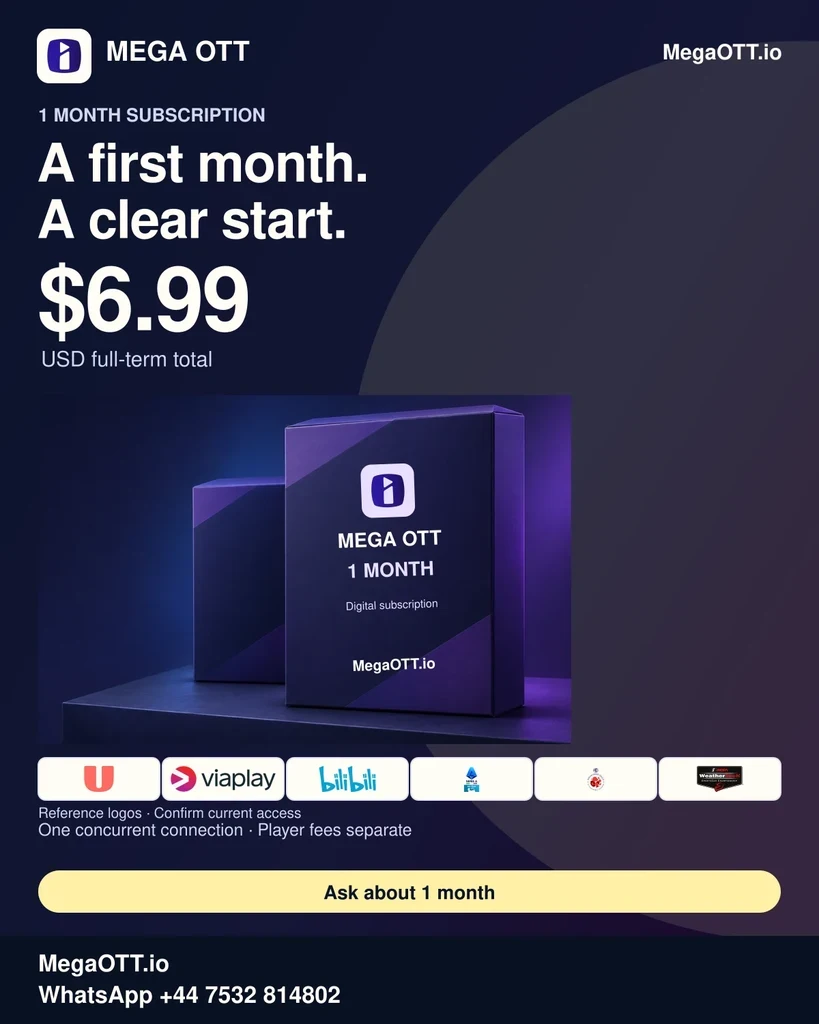
For a U.S. household, the immediate attraction is the published total. One month costs $6.99, and twelve months cost $44.99 on the November 19, 2026 price record. The provider’s own pricing guide describes one concurrent connection on each of the four retail terms. A flat one-screen allowance makes the decision clean for a single viewer. It also means a family needing two rooms at once has another question to settle before taking any of the four amounts as its household price.
Choose the reading route to match the purchase. A family needs the retail term, local availability, app route and conditions of renewal. An installer managing several customers needs the reseller pack, deduction schedule, account permissions and a way to reconcile a private balance. A person whose new player opens to an empty home screen might need only the correct account configuration. Those situations all begin on the same branded site and lead to quite different invoices.
| MegaOTT.io term | Payable base total in USD | Equivalent per month |
|---|---|---|
| One month | $6.99 | $6.99 |
| Three months | $16.99 | $5.66 |
| Six months | $29.99 | $5.00 |
| Twelve months | $44.99 | $3.75 |
The equivalents are rounded calculations. Someone buying the six-month option needs $29.99 for the term on the recorded schedule. The rounded equivalent of $5.00 is useful for comparing household spending, particularly where other subscriptions bill monthly. It does not describe a five-dollar payment taken six times. A buying conversation should use the full amount first and identify any separate app charge or transaction fee before comparing the result with the household budget.
Think of a college student who has an apartment until the end of the current semester. Six months come to $29.99. Two quarters would be $33.98 if the second quarter remained at today’s rate. The $3.99 difference buys the option of stopping after one quarter. An annual purchase requires a further $15 today compared with six months. Whether that is attractive depends on the address and equipment the student will use after moving. The apparent saving can disappear if the service cannot be used in the next place.
A person who needs four months has another choice. A quarter plus one month would total $23.98 where the seller permits that sequence and holds the second price. A six-month term would cost $6.01 more up front and run for two additional months. Four separate monthly purchases would add to $27.96. The three-month line makes an attractive intermediate option that a simple comparison of the cheapest monthly and annual stickers misses.
For nine months, a six-month plus a three-month term would cost $46.98 with unchanged rates. The annual total on the same schedule is $44.99. It is quite possible to pay $1.99 less for the full year than for those two shorter terms. The result follows from the specific combination, and it may be a poor choice for someone who must defer part of the payment. A cash budget and a total-cost budget can point in different directions without either calculation being wrong.
Record assumptions in ordinary words. The mixed-term examples assume the provider will extend the right account, preserve any unused days and continue to offer the later price. Ask how early renewal works before buying the next term in advance. If the reply cannot commit to a future price, use the calculation as a rough planning limit and leave the second payment open until closer to expiry.
MegaOTT.io’s four retail terms each describe one active connection. Buying twelve months extends the period. A reader who expects the annual option to add another simultaneous stream should take a second look at the table before checkout. Record whether two people will actually watch at the same time or simply use two devices at different hours. That one detail can outweigh every difference in the price column.
A useful example is a family that streams the evening news on the television and takes a tablet upstairs afterward. Ask whether the account may be configured on both approved devices and what the seller expects when switching. Use the player’s normal stop and exit process on the TV before trying the tablet. If the next device reports that a session is already active, note the time it took to release the first session and the exact message. Support can explain the normal behaviour for that account and app.
Compare that household with one where a teenager regularly watches on the tablet while a parent uses the TV downstairs. Their needs cannot be met by relabelling two simultaneous sessions as device switching. Ask for a written offer expressly covering both active screens at the intended address. If the operator proposes two accounts or an additional connection, request the combined total, renewal dates and support arrangements. Only then compare the proposed household price with another suitable service.
A single-person household may still run into this issue when casting. Some players hand a stream to another device, while other configurations can keep a local session running. The precise behaviour depends on the player and receiver. Tell the seller which phone, casting method and screen you intend to use. A trial should show whether the usual play, pause and stop controls behave predictably within the purchased allowance. Avoid experimenting past the stated connection limit.
On moving day the question changes again. A stream can work on the old Wi-Fi and fail at the new address for reasons unrelated to the number of screens. Ask about permitted use away from home, local channel eligibility and any steps required to move a device-bound app licence. Preserve the old working configuration until you understand which part of the setup needs changing. Deleting the only saved account before that conversation can create more work than the move itself.
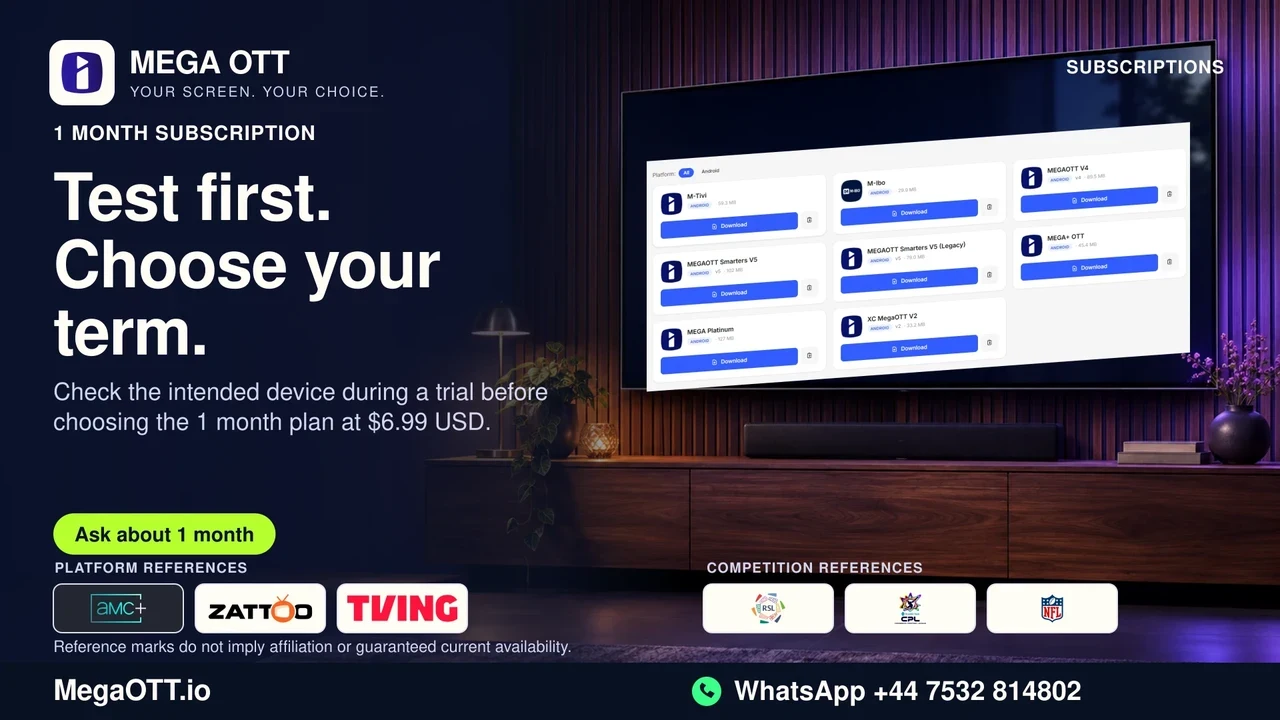
A photograph of a remote, a capture of an app and a broadcaster logo make three different claims. The remote helps a buyer identify a device family. The capture shows a particular interface or vendor illustration. A broadcaster reference identifies a name someone may wish to ask about. None of those images alone identifies the exact lineup, account state or customer permissions that will arrive with a payment. Read a picture alongside its caption and the seller’s actual offer.
The megaott.io site has guides for devices including Android TV, Fire TV and Windows. Choose the guide for the device that performs playback. A television used as an HDMI display for a Fire TV Stick is not necessarily running the television manufacturer’s native app. A laptop plugged into the same set puts the player controls on Windows. Asking what software runs on the large panel without naming the attached box can lead support to recommend the right app for the wrong machine.
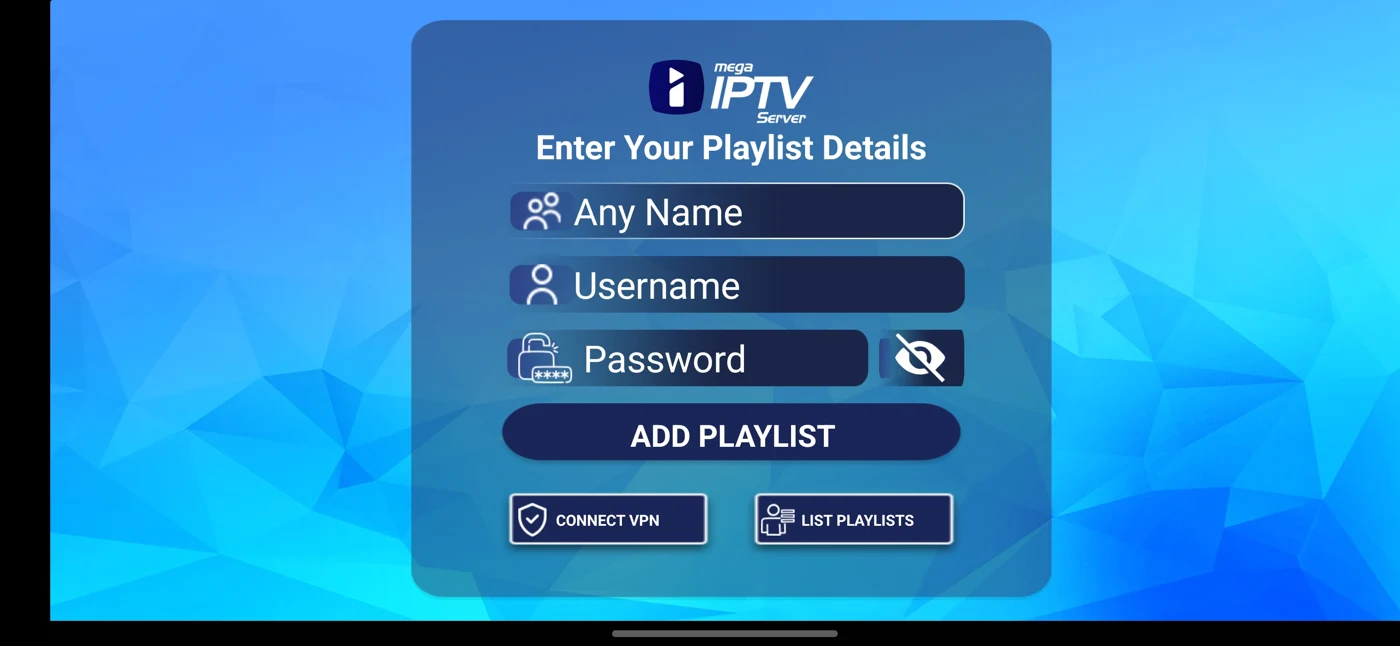
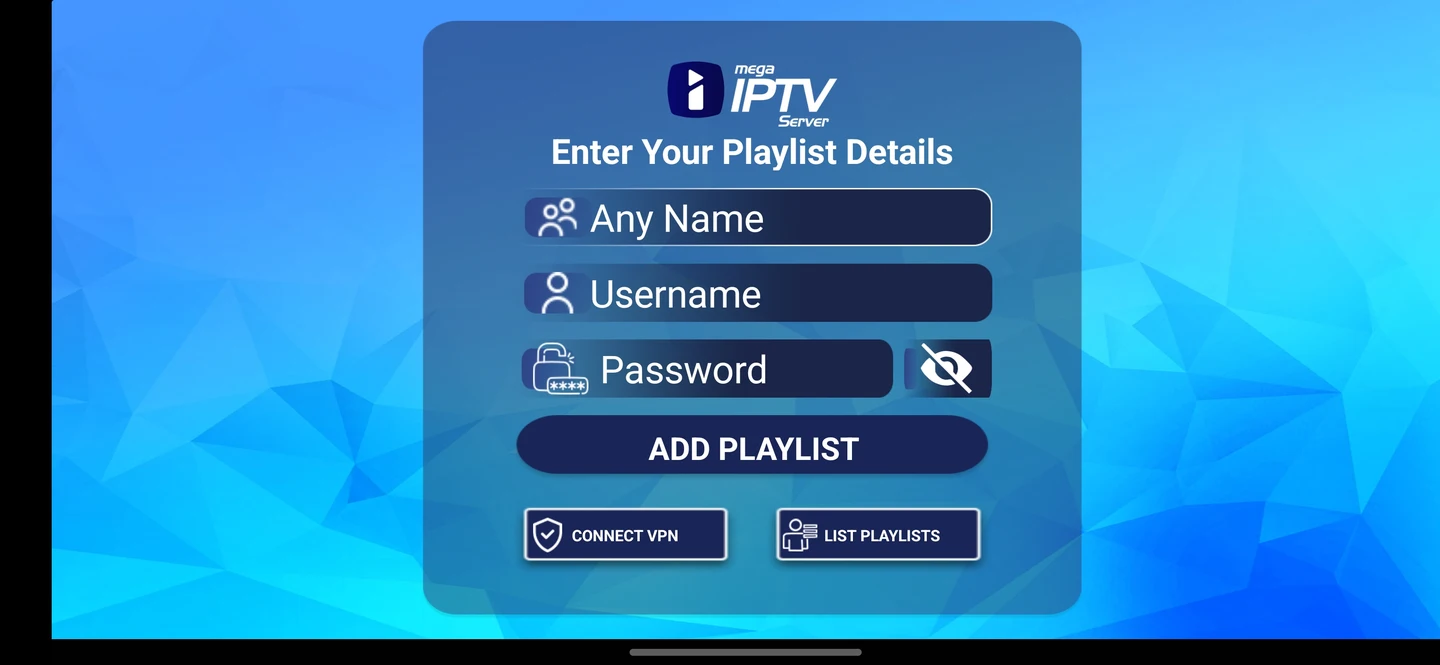
A useful setup inventory consists of a device model, software version, chosen player and the screen at which you currently stand. For example, a new Android TV buyer may already see the player’s account form. That person needs the account format supported by the named seller. Another buyer may be staring at the TV’s general search screen, unable to find the player. They need the correct app name, publisher and store availability for their region. Sending them subscription credentials does little to solve that stage.
Independent streaming services, app platforms and the hardware used to access them can appear near each other in a visual directory. If a particular service or piece of programming is the reason for shopping, name it and ask the provider how access would be supplied for the relevant location. Check whether a separate membership is required. Several recognizable logos in a picture can identify a reading topic without becoming a list of paid entitlements.
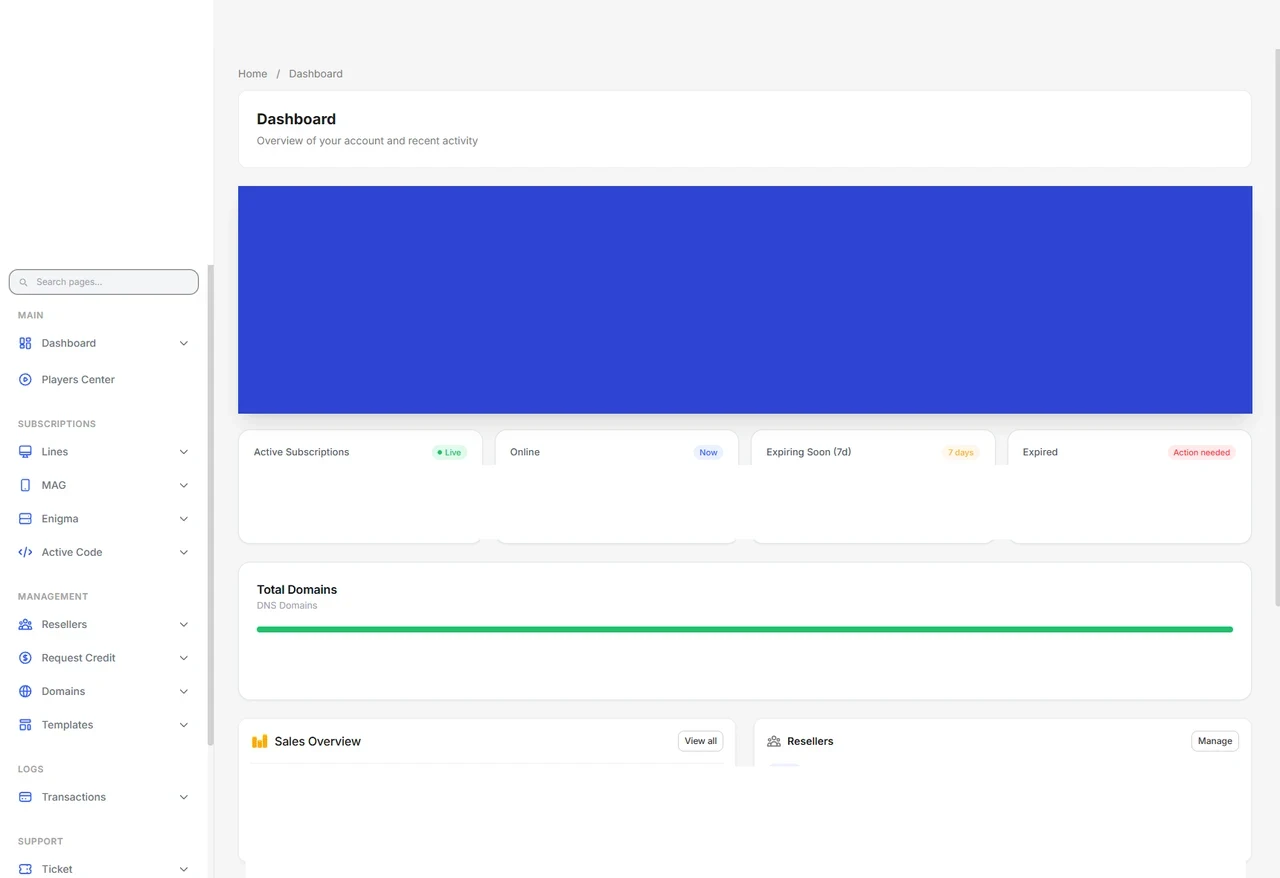
A reseller can adopt the same discipline when handing over a customer account. Mark a screenshot “example interface” unless it actually shows the agreed account and can be shared privately with that customer. Remove names, device IDs, playable addresses and credentials from help material. Where a guide uses somebody else’s product or mark for identification, give the owner credit and avoid representing the picture as a certification of the reseller.
MegaOTT.io describes a one-day viewing trial. Ask when the clock begins and whether the trial can use the same account format and regional setup proposed for the paid term. Beginning the trial after the device and player are ready gives the family most of the day for the activity it actually cares about. Starting a trial on a work computer at lunchtime is less informative for a buyer whose only screen at home is an older television operated with a remote.
Give the first half-hour a short list of tasks. Open one programme everyone recognizes, find the guide entry for the next familiar show, and return to the starting screen using the normal remote. Write down which part was easy and which part took instructions. The facts are usually more informative than assigning stars. A readable guide with no easy way for the regular viewer to get back to it after closing the player can be enough reason to reconsider a setup.
Give the second test to the person who actually watches the programme. A buyer who values live sport may want to see how motion and the on-screen score look from the sofa. A viewer who follows dialogue may care more about the available audio track, subtitle legibility and whether the selection survives changing channels. Describe the results in terms of the selected feed and time. A good result on one programme cannot establish a service-wide bitrate or subtitle guarantee.
Include one ordinary interruption. Switch off the television normally, leave it for a few minutes and start the exact route the family will use tomorrow. A one-day trial can reveal a player that starts in an unexpected category, forgets a selected guide or directs the user to a separate licence screen. Identify whether the publisher or the subscription seller handles the issue. Knowing that route before purchasing six or twelve months has practical value even if the seller eventually resolves it.
End the trial with three sentences. One should state the account and device you tested. The next should name the decisive observation. The last should name the unresolved condition and who can confirm it. A household may discover that everything it regularly watches fits a single stream and a three-month purchase is sensible. It may equally learn that two simultaneous screens are essential. Both are successful outcomes for a well-used trial.
A local programme is a good example because it exposes a common ambiguity in a national catalog. A network name can be shared by stations in different cities, and a guide entry can refer to another time feed. Ask for the station call sign, the programme you want to see, the viewing ZIP or service area and the local starting time. The station database on this store can help identify the relevant broadcaster. Final confirmation for a specific MegaOTT.io account comes from the operator.
If support says that the network is present, ask a precise follow-up. Does the listing refer to the local affiliate at that ZIP, a national feed, another region or an on-demand programme? Avoid treating one answer as confirmation of all four. A household that wants the local weather forecast may get little benefit from a different affiliate of the same network, even if the programme guide and picture look excellent during a national show.
During the trial, compare a known schedule with the actual feed on the intended device. If the picture is the right local broadcaster and the guide is one hour out, inspect the device’s clock and time-zone settings before changing the whole account. If the guide is correct but the picture identifies another station, record the two distinct names and the time. A support message with both pieces is more useful than a photograph of a familiar logo without context.
A missing sports event deserves the same level of specificity. Name the competition, particular fixture, date, expected broadcaster and viewing area, then ask about authorized availability for that event. An event listed in a visual sports directory is an invitation to research its distribution. A customer who cares about one team can often settle the issue more quickly by checking the exact game than by asking for a complete channel count.
When the purchase depends on one unresolved feed, use the price schedule accordingly. Paying $6.99 for a month while waiting for a better confirmation limits how much is committed. A person who will not use the service without that particular programme may choose to wait altogether. The sensible choice follows from the household’s requirement, even if an annual card happens to offer an attractive monthly equivalent.
MegaOTT.io’s reseller explanation uses a yearly credit as the unit. Twelve months for one standard customer consume one credit. A six-month term consumes half a credit, while a quarter uses 0.3 and one month uses 0.1. The unit matters for both stock planning and cost calculations. Using the price of one whole credit for a single monthly line overstates the direct cost tenfold. Dividing every term by twelve also gives wrong answers for the monthly and quarterly deductions.
| Customer term | Published deduction | Number of these terms using exactly 3 credits |
|---|---|---|
| 1 month | 0.1 | 30 |
| 3 months | 0.3 | 10 |
| 6 months | 0.5 | 6 |
| 12 months | 1.0 | 3 |
Three credits can fund different numbers of standard terms because the customer periods are different lengths. The important surprise is that ten monthly terms use one credit, while a single annual term on that credit covers twelve customer months. Ten quarters on three credits give thirty customer months. Six half-years on the same three credits cover thirty-six. This follows from the seller’s specific mapping. It is not an argument for giving customers a different term from the one they purchased.
The distinction comes up when somebody wants to change the term midstream. Suppose a customer has just paid for three months and a reseller issues a quarter at a 0.3 debit. The customer calls the next day asking to convert to six. Do not assume the operator will debit only the difference between the two scheduled amounts. Ask whether the panel can amend an existing term, extend from its current expiry or require a separate issuance. The written operator response determines the actual cost of that change.
Use tenths to do simple stock arithmetic on paper. A credit can be represented by ten units in your working sheet. Then the four deductions are one, three, five and ten units respectively. A total of eleven quarter terms amounts to 33 tenths, or 3.3 credits. Keeping whole tenths in the working sheet avoids confusing a displayed rounding artefact with a real balance change. Retain the operator’s original credit notation in invoices and customer records.
For a reseller with several provider relationships, label the column “MegaOTT.io yearly credits.” Another operator may call an entirely different unit a credit. Adding balances from two operators into a single total creates a figure that can be spent in neither panel. Separate the domain, currency, stock unit and term mapping before building any combined dashboard for the business.
| MegaOTT.io reseller pack | Total to acquire | Cost of one yearly credit | One-month direct allocation | Six-month direct allocation |
|---|---|---|---|---|
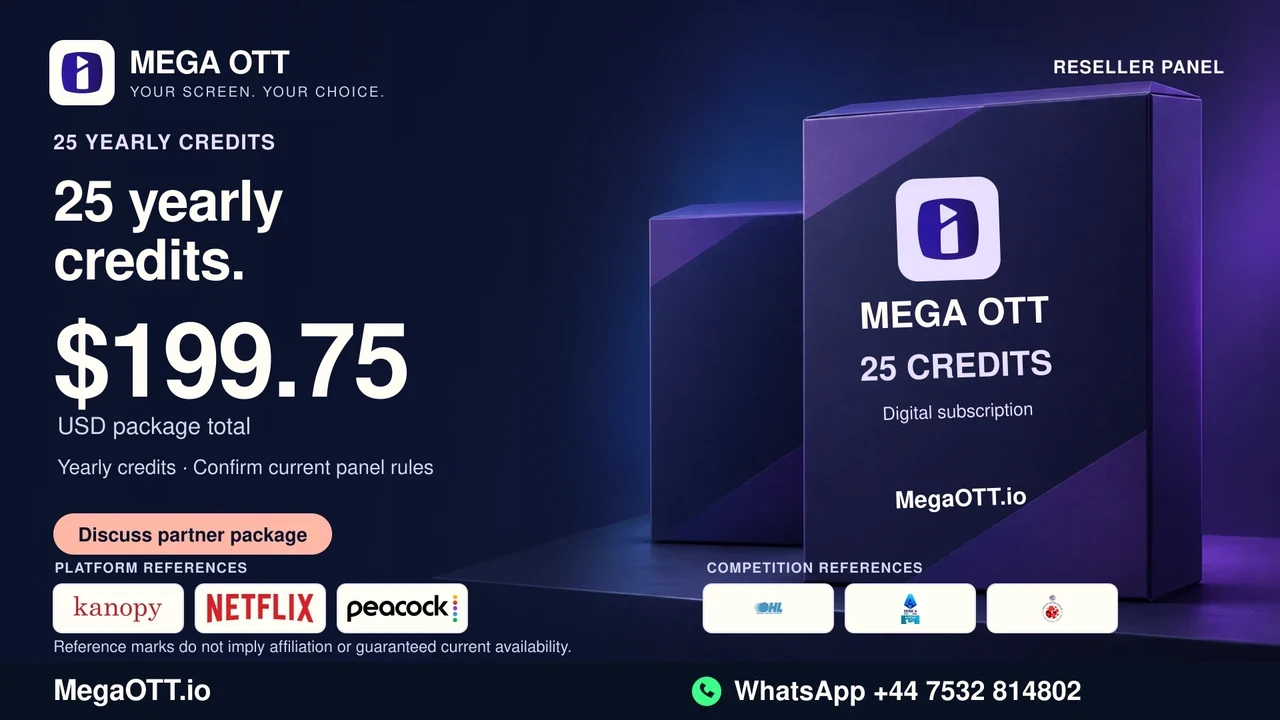
| 25 credits | $199.75 | $7.99 | About $0.80 | About $4.00 |
| 50 credits | $375.00 | $7.50 | $0.75 | $3.75 |
| 100 credits | $699.00 | $6.99 | About $0.70 | About $3.50 |
Work the rows both ways. Twenty-five times $7.99 gives $199.75. A standard six-month term on that pack consumes half a credit, which allocates $3.995 before display rounding. One hundred credits at $6.99 each total $699. A year on that rate allocates one $6.99 credit. Neither amount tells a reseller what price it may charge or what it earns after payment costs, support, tax treatment, refunds and unused stock.
There is a revealing coincidence in the published numbers. The one-month retail price is $6.99. One credit in the largest reseller pack also works out to $6.99. These are different products measured in different units. A consumer pays $6.99 for the one-month retail term. A reseller must acquire the entire $699 pack to obtain the displayed $6.99 unit rate, and standard monthly issuance consumes a tenth of that unit. Copying the number into a spreadsheet without its label makes an expensive error easy.
Consider a small desk planning eight annual renewals, nine six-month renewals and five quarter terms. The standard deductions are 8, 4.5 and 1.5 credits. The full confirmed demand is fourteen credits. A 25-credit purchase would leave eleven once the work is completed. At the $7.99 acquisition rate, the fourteen credits allocated to that work cost $111.86. The seller still requires $199.75 for the whole pack. That leaves $87.89 of the original acquisition cost represented by stock subject to the operator’s conditions.
Now consider buy-in timing. Two 25-credit packs would cost $399.50 at today’s list prices. One 50-credit pack costs $375. Buying the larger quantity together saves $24.50 if the business actually needs fifty credits on comparable terms. Buying a single 25-credit pack first leaves $175.25 more cash available that day compared with purchasing fifty. A reseller whose next instalment of demand is uncertain has two concrete figures to weigh up.
The comparison between fifty and one hundred follows the same principle. Two 50-credit packs total $750, against $699 for a single 100. The difference is $51 if all the credits are needed under identical rules. Ask how long balances remain available, how frequently top-ups can be requested and whether another pack can be added to the same account. A lower unit rate can be a poor business choice when those conditions remain open.
Suppose the opening balance is 25.0. A new twelve-month line brings it to 24.0. Three standard six-month extensions consume another 1.5 and leave 22.5. Two monthly terms reduce the balance by 0.2 and leave 22.3. An enquiry for four new annual customers changes none of these figures until the operator performs the allocations. Keep a separate column for amounts reserved in anticipation of a promise you have actually accepted.
There are good reasons to keep planned and actual movements side by side. A customer might ask for a year, discover during setup that the device requires a separate licence and settle on one month. Another might pay late, allowing a renewal to cross its previous expiry. If your sheet blindly deducts a whole credit at the enquiry stage, it will disagree with the panel even when every actual operation was correct. A reconciliation should reveal a difference in actions, rather than hide it behind an adjustment.
For each completed action, ask the operator or panel to identify the customer reference, service term and resulting expiry. Record the opening and closing balances and calculate the difference. Where one six-month update changes a balance by 0.5, the observed debit matches the published schedule for a standard term. If a different amount appears, record the configuration and ask a specific question before processing a second change. The customer deserves the term purchased, and the reseller needs to know what the operator actually did.
Imagine the customer reports a missing month. Check the original promise, the account expiry before the change, the expiry afterward, and the amount of the debit. A renewal from the date of the new payment and a renewal from the former account expiry can yield different end dates. A 0.3 entry in the ledger can tell you the operator debited a quarter. It cannot by itself confirm from which date that quarter started. Keep both parts of the transaction.
A good private handover record is brief. Use a customer reference, a contact method under the customer’s control, the seller, device, named player, term, active allowance and private receipt. Give general support staff access only to the details needed for their job. Login details, paired device identifiers, unredacted panel screenshots and working playlist links belong in the protected route designated by the operator. A clean training example can show the sequence without containing any customer’s access.
The .io and .app domains can be especially troublesome for a support desk receiving short messages such as “Mega account expired.” The first reply should ask for the merchant name or seller domain printed on the receipt, along with the service period and order date. That establishes which business can look up the transaction. Avoid asking the customer to paste private playback details simply to identify the seller.
If the customer sends a store screenshot, check the address and label before relying on the artwork. A card can travel between comparison sites or be saved long before purchase. The purchaser’s confirmation and payment record identify the actual transaction more directly. Include the correct domain in the private ticket title, then direct the person to the matching official contact route. An operator on another domain may have no access to fix the account even if the two sites display similar names.
The issue can arise during renewal too. A customer who discovers your store through a search may choose the right brand word on a new website and assume it will extend the existing account. Before asking for payment, determine whether the named operator can renew that specific account and whether an existing term will survive. If the prospective seller can only issue a new account, explain what happens to stored preferences, access details, devices and any time remaining with the original seller.
Keep the buyer’s two jobs separate. One is recovering or extending an existing account. The other is comparing offers for a future purchase. Someone with a paid term still running may be better served by resolving a player issue through the original seller than by replacing the account altogether. Once an existing problem is understood, the buyer can make a future comparison with the real switching cost in view.
For teams running their own spreadsheets, a plain domain field is worth more than colour-coded rows. Domains travel with exports, survive printing and remain legible to staff who use a screen reader. Use a separate name field for the label shown to customers. Search by either field, but reconcile payment and panel actions using the operator identity attached to the transaction.
Read the order confirmation once while the transaction is fresh. Find the amount, currency, term, merchant, renewal arrangement and the date at which access actually ends. If the seller gave a price through a private exchange that differs from the public listing, keep that quote with the receipt. A present-day screenshot of the website may show a newer price by the time the household returns to the order.
Set the renewal reminder a little before the confirmed expiry. That gives the viewer time to check the next amount, whether the household still needs the service and whether device or location requirements have changed. A child leaving for college can turn a comfortable one-screen household into two households with separate needs. A replacement television can move the family from a Fire TV Stick to a native Samsung or LG application with a different licence model. Reopen the equipment question when it matters.
If the receipt is held by the person who installed the television and the account belongs to someone else, arrange a controlled handover. The viewer should know the seller, support route and renewal date. The installer can keep a technical record with the customer’s agreement. A household should be able to change provider or stop a renewal without depending indefinitely on the friend who first set up the television.
When a promised change is delayed, give the operator a compact timeline. Identify the previous expiry, order time, current expiry and the term shown in the private confirmation. A reseller should also compare the expected and observed panel debit. This evidence can settle whether a service operation is pending, a renewal hit the wrong account or the date was interpreted differently. Keep payment data and private credentials away from public discussion while the operator checks.
Consider a small MegaOTT.io reseller that has exactly 3.0 credits available on Monday morning and several different customer promises to keep. One customer has agreed a half-year, three customers need a quarter each, and six require one month apiece. The half-year consumes 0.5, the three quarters consume 0.9 and the six monthly terms consume 0.6. The total is 2.0 credits and the week would close with one full credit available. If a new buyer then wants a standard year, the balance happens to fit that single term exactly.
At the 25-credit rate, the direct inventory cost of the ten completed allocations is $15.98. Try calculating the same total by adding displayed customer costs. A half-year rounds to $4.00, three quarters round to $2.40 each, and six monthly terms round to $0.80 each, for a displayed sum of $16.00. The two-cent difference has a simple cause. Rounding each displayed number before adding changes the result slightly. Keep the operator’s exact deductions and the original acquisition rate, and round the final aggregate once for a planning total. The panel account itself is tracked in credits.
Now imagine the next customer asks for an annual renewal plus an additional month for a relative. The first request would consume the remaining credit, and the second requires another tenth. The fact that the combined retail value seems small does not create the missing 0.1 in the panel. Ask whether a different funded balance or top-up is available on written terms. Until then, the reseller can promise only what its actual permissions and inventory cover.
This example also exposes a support bottleneck. Ten allocations in one week mean ten account records, ten expiry confirmations and potentially ten device enquiries. Moving to a larger pack reduces the unit acquisition price but does nothing to increase the number of conversations one operator can handle on Friday evening. A desk serving viewers in different time zones should schedule time for both the account operation and the customer’s first successful check. Count that labour when deciding what the service can realistically offer.
A family account can be reviewed with the same habit of working from exact events. Record when the paying period began, when the viewer first obtained a usable picture and when the seller says it will expire. Ask for clarification if a paid period started before the family could use the account. A dated answer settles more than a generic promise to “add time” later. The household then knows which date governs renewal, and a reseller supporting that household has a clear record of who owes the next action.
Keep a final copy of the unit rule with the staff member who actually enters renewals. An easy check is to ask them how many credits six standard half-year customers use. The published answer for these accounts is three, because six times 0.5 equals three. If the sheet instead returns 3.6, somebody has applied six-tenths per half-year from a different provider. If it returns 36, the sheet has treated each credit as a customer-month. The three answers are far enough apart to catch a problem before anybody issues an order.
A check like this is particularly valuable when a business adds a new supplier or hands work to a colleague who already knows another panel. The colleague may understand every step of a renewal and still import the wrong unit definition. Give the check a real-world outcome as well. After completing one authorised six-month renewal, compare its actual debit and customer expiry against the expected pair before processing the rest of the batch.
Choose the one-month listing when the main uncertainty is whether one active stream fits the household or whether the proposed device can handle a must-have feature. The cost of obtaining that answer is easier to accept at $6.99 than at a longer prepaid amount. A previously confirmed second-screen requirement calls for a specific quote before buying even the monthly term. A low base price alone does not fulfil missing permissions.
Choose the quarterly or six-month option when the viewing dates are reasonably defined. A three-month stay at $16.99 and a half-year at $29.99 give the buyer a usable total to compare with the actual period at the address. Separate renewal arrangements still matter if the end date is uncertain. Keep the receipt and any app licence while the trial setup is fresh in memory.
Consider the annual $44.99 term after checking the intended location, screen allowance, app costs and a representative programme. Someone comparing nine planned months with a year may find the annual listing cheaper than a particular mix of terms. Someone whose viewing requirements may change after six months might choose the smaller upfront total. A sensible answer follows the dates and household, even when another buyer can legitimately choose differently from the same table.
For a reseller, start with confirmed need in tenths of a yearly credit. Multiply each agreed customer term by the published deduction, add reserved renewals, then compare how whole packs cover that amount. Keep purchase total, direct allocation cost and remaining inventory on separate lines. With that simple separation, a customer can see the significance of a $6.99 monthly retail price, and a reseller can see what a $699 wholesale outlay actually buys. Neither has to guess which MegaOTT business or which unit the number belongs to.
Suppose you expect to watch for six months. At the listed single-month amount, six separate purchases would total $41.94 USD. The six-month offer asks for $29.99 USD up front. That comparison assumes every new month is available at the listed amount. Check renewal separately before relying on it.
| Viewing period | Separate monthly purchases | Single matching term | Difference | Monthly purchases to reach term price |
|---|---|---|---|---|
| 3 months | $20.97 USD | $16.99 USD | $3.98 USD | 3 |
| 6 months | $41.94 USD | $29.99 USD | $11.95 USD | 5 |
| 12 months | $83.88 USD | $44.99 USD | $38.89 USD | 7 |
Read the final column as a spending threshold. If you expect to cancel sooner, compare the shorter commitment with the cash you would have paid up front. The figures exclude fees the seller has not confirmed.
Check MegaOTT.io subscription termsThe smallest priced pack in this register holds 25 credits and costs $199.75 USD. The largest holds 100 for $699.00 USD. Their displayed unit costs are $7.99 and $6.99 respectively. The published deduction for a standard twelve-month customer is 1 credits. Check the operator’s treatment of additional screens and renewals.
The image link identifies the exact file served by the provider.
Choose a matchup to see the actual currency, term and outcome.
Open the caption on a website-sourced image to see its original. The remaining captions identify material supplied with the provider archive.