provider
Smarter 8K
Compare the listed USD total with the written offer for your exact app and account setup.
smarter8k.app · Check exact market
Open the official Smarter 8K websiteThe 1 month plan is listed at $11.99 USD. The operator also lists 4 reseller pack sizes.

smarter8k.app
The 1 month plan is listed at $11.99 USD. The operator also lists 4 reseller pack sizes.
The 1 month plan is listed at $11.99 USD. The operator also lists 4 reseller pack sizes.
Compare the listed USD total with the written offer for your exact app and account setup.
smarter8k.app · Check exact market
Open the official Smarter 8K websiteSmarter 8K maintains the site at smarter8k.app. Check who issues the invoice and who replaces the access if the app or TV changes. The buyer needs both answers before paying for a long term.
Document review · November 19, 2026. Playback performance, service rights and ZIP-level access require separate evidence.
The 1 month plan is listed at $11.99 USD. The operator also lists 4 reseller pack sizes.



smarter8k.app
At 7 p.m. one person wants the news on the living-room television, another wants a programme on a laptop and a third is finishing something on a tablet. There may be five installed players in that home, but the number that matters at this particular moment is three. Smarter 8K’s current consumer pricing gives that household an unusually concrete buying question. Its four paid terms carry different simultaneous connection allowances. Choosing a period changes both the length of commitment and the number of streams the provider lists.
Start by drawing the actual overlap. For two or three ordinary evenings, write down when each person starts and stops a viewing session, using broad labels such as lounge, laptop and tablet. A family with several devices may never exceed one stream because everybody watches together. A single large TV in a shared apartment may coexist with three personal screens. Buying according to the number of physical televisions can therefore lead to too little capacity or needless spending.
Smarter 8K uses the brand 8K IPTV on smarter8k.app. This review follows that exact seller. The prices and connection counts come from the provider’s current pricing and support pages checked on November 19, 2026. The one-month term lists one connection, three months list two, six months list three, and twelve months list four. Those allowances describe concurrent viewing. Ask about a particular address, device combination or use away from home before treating the screen allowance as permission for that arrangement.
The reseller side works differently. Smarter 8K’s current partner page lists four starting quantities for enquiries, and asks buyers to obtain the price and debit schedule in a written quote. A household can make a numerical choice from the public retail table. A reseller needs an additional document before it can calculate how many customer terms a pack will cover. The two decisions meet in the same storefront but require different evidence.
| Period | Published term total in USD | Approximate monthly equivalent | Simultaneous connections listed |
|---|---|---|---|
| One month | $11.99 | $11.99 | 1 |
| Three months | $24.99 | $8.33 | 2 |
| Six months | $39.99 | $6.67 | 3 |
| Twelve months | $50.99 | $4.25 | 4 |
The easiest way to misuse these prices is to sort by the rounded monthly equivalent and stop there. The annual equivalent comes to about $4.25 after division. The bill for the annual term is $50.99 before any separate charge disclosed for the order. An annual buyer obtains a longer period and a four-connection listing on the seller’s current page. The effective monthly price alone tells you neither how much must be available today nor whether those extra connections have any value to the household.
Look first for the smallest term whose listed capacity covers the known need. Somebody who must accommodate two simultaneous viewers can begin with the three-month listing at $24.99. Three simultaneous viewers point to at least six months on the published table. Four point to twelve months. This is a reading of the four public options, not a claim that no custom arrangement exists. A family needing three streams for a single month should ask for a written short-term alternative before deciding its only option is six months.
Now look at the incremental cash amounts. Moving from one month to three costs $13 more at these prices. From three to six adds $15 and one more listed connection. From six to twelve adds $11 and another listed connection. The last jump is the smallest additional payment between adjacent rows. It can be attractive for a stable household that expects to use four screens. It may buy little practical benefit for someone with a short lease and two people who share a single television.
If the household wants two streams for a full year, compare the same requirement across the available terms. Four quarters at unchanged prices total $99.96, with up to two simultaneous streams listed on each quarter. Two six-month terms would total $79.98, with up to three on those terms. A single annual term is $50.99 with four listed. Each option can cover the stated two-stream need, subject to the provider’s actual address and account terms. Treating twelve one-month subscriptions as an equivalent choice would lose the required concurrency along the way.
Consider a household that has written down four regular uses. A parent watches the early bulletin from 6:00 to 6:30. A child watches a permitted programme on a tablet from 6:20 to 6:50. Another adult watches an evening show on a laptop from 6:40 to 7:30. A grandparent joins the parent on the same living-room screen for a later show. There are four people and three devices, yet only two streams overlap in this example. The ten-minute overlap early and the ten-minute overlap late both matter, but they never overlap each other.
The quarterly two-connection allowance is a plausible starting point for that pattern. A buyer can improve the chart by writing the actual days and considering weekends separately. A family that fits two connections on weekdays may regularly reach three during a Saturday game. A home that reaches three only once in a holiday week might prefer to coordinate that hour or ask for a temporary option. Count normal use and essential exceptions, then decide what convenience is worth paying for.
Do not substitute a total number of viewing hours for simultaneous capacity. A household can watch thirty hours in a week on one connection if the sessions happen sequentially. Another needs three connections for twenty minutes when everyone returns home, even if its weekly total is much smaller. This is why a common monthly cost per viewer can be a misleading shortcut. It assumes all listed streams are both needed and allowed in the arrangement the customer has in mind.
For a shared home, agree who will administer the account. The person who pays should know the seller’s location restrictions, the contact route and the account’s terms for installed or replaced devices. A term that lists four connections does not specify four separate households, permission to share logins publicly or the ability to transfer the account between addresses. Put the real arrangement in the question presented to Smarter 8K. Buying a bigger number of streams cannot settle a separate use condition.
A practical chart can change a hardware decision as well. A household considering a new bedroom stick might discover that the only overlap is a programme already watched together in the living room. Another may find the laptop is the third essential screen but no one has checked its operating system or player. Buy the service and equipment for the viewing pattern that actually exists. The gold boxes make the choices visible, but the small chart tells you which row deserves your money.
A four-person home might be tempted to divide the $50.99 annual price by four and write roughly $12.75 per person for the year. That division is arithmetically useful if the household shares the expense. It assumes four people contribute and receive value, and it does not create four independent accounts or specify which locations are allowed. The person placing the order still faces a $50.99 payment for a single listed product.
Now imagine only two members actually pay. Splitting evenly requires one to contribute $25.49 and the other $25.50 if the household wants the contributions to sum exactly to $50.99. A casual split into two $25.50 transfers would produce a one-cent surplus. The point is not the cent. It is that a household should keep its private cost-sharing arrangement separate from the seller's account terms, receipt and named renewal contact. Those records matter when someone moves out before the end of the year.
A six-month stay makes a more interesting comparison. Two quarterly terms would cost $49.98 if both stayed at $24.99. Each quarter permits two simultaneous connections on the current schedule. The six-month term at $39.99 covers three and costs $9.99 less than the two-quarter sequence. The annual listing at $50.99 is only $1.01 more than those two quarters, but it requires the money at once. A household leaving after six months should compare its actual need with $39.99 before celebrating how close the annual price is to the cost of four quarterly screens counted incorrectly.
The same figures tell a different story in a home that needs a fourth simultaneous stream for only one month. The public one-month term lists one connection, so it is not a straightforward substitute for the annual four-connection listing. Ask whether the seller offers a documented short-term arrangement covering the requested capacity. Get the proposed total, date range, permitted address and the exact way the additional streams are provisioned. Compare that written figure with the annual commitment and a plan for avoiding overlap. An attractive hypothetical price is not a quote.
When comparing Smarter 8K with another provider, copy both the price and the capacity into the same row. A cheaper annual term that permits one stream answers a different requirement from a four-stream household account. A more expensive term with a separately confirmed local feed or an accessible player already owned by the family may still provide better value. Put the features that can actually change a decision next to the amounts, and leave unconfirmed items open.
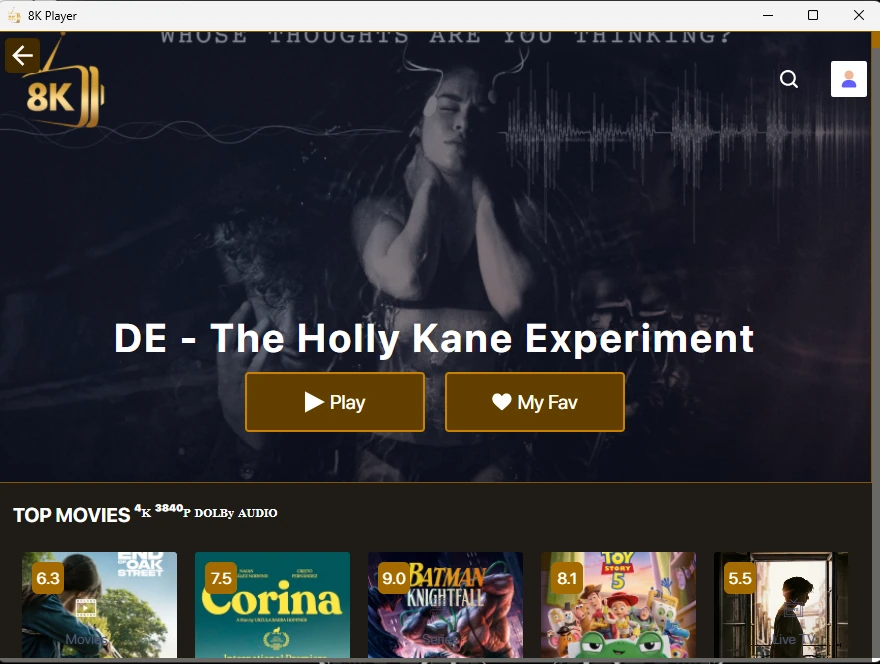
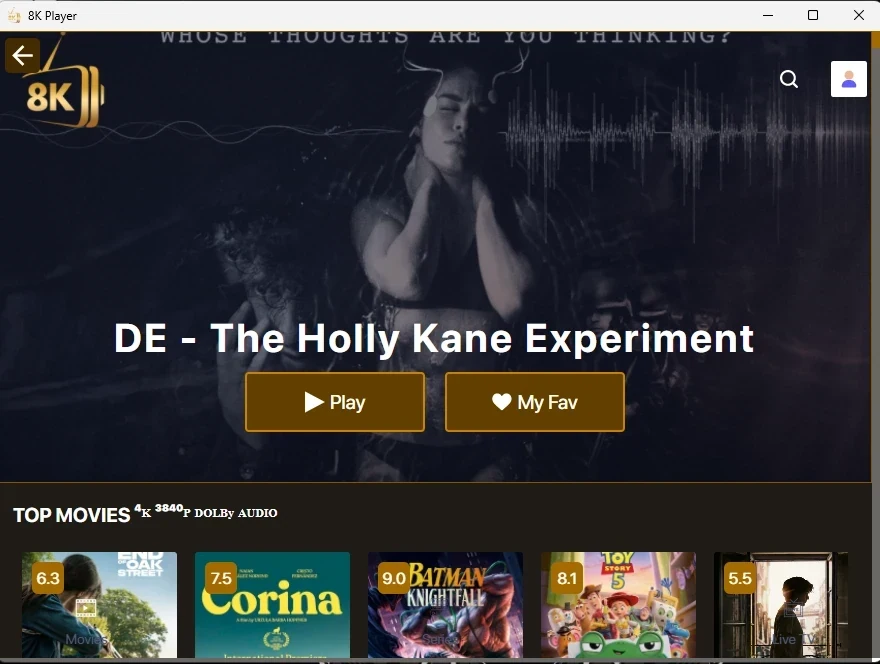
The Smarter 8K Windows page provides separate Windows 10 and Windows 11 installer entries. It shows an add-playlist screen and a desktop home view. First check which version of Windows is actually running on the intended computer, then use the route for that version and verify the publisher and source. A shortcut on an old desktop may point to a different product with a nearly identical name. Before changing anything, identify the particular player whose home screen and account entry form you expect to see.
This distinction matters in a family where the laptop is sometimes borrowed for work. Check whether the device owner or administrator permits installing a personal television player. If software installation is restricted, another supported household device may be simpler and more appropriate. Account capacity does not grant permission to install software on an employer’s equipment. Ask the seller about a legitimate route for the devices the household controls before paying for a term on the assumption that all four screens can be used.
Once the app opens, identify its stage. Seeing the application start with empty account fields establishes that the desktop software reached its setup screen. The viewer still needs the correct private access details from the service provider. A featured programme in a demonstration screenshot shows how the desktop layout is presented. It cannot establish that the purchased account carries that programme in the family’s region. Keep installation success and content availability as separate checkboxes in the trial notes.
A laptop connected to a television introduces additional details. Identify where the sound comes from, whether the desktop is mirrored or extended and whether text remains legible from the sofa. Run the ordinary route after disconnecting and reconnecting the display. Some households are happy to use a keyboard and mouse. Others expect a handheld remote to navigate from the couch. A Windows player that is comfortable at a desk can feel awkward on a television ten feet away.
Test one change at a time. If sound comes from the laptop while the picture reaches the television, check the chosen Windows audio device and television input before asking the viewing seller to issue another account. If the player loads and the guide appears but one channel has no audio, compare a second authorized item and the available audio tracks. A support message that names the stage and affected output gives the recipient a concrete first step.
Smarter 8K directs customers to install their chosen player and then request a one-day trial with the device and app identified. Ask what connection allowance the trial itself will have. A demonstration capped at one stream can test a desktop player and a local feed sequentially. It cannot establish that the particular paid four-connection arrangement will work across four intended devices or locations. The seller’s written paid allowance and the trial’s actual configuration should be recorded separately.
Pick one everyday use for each intended device. The television could be used for the local evening bulletin, a laptop for a familiar programme with captions and a tablet for navigating the guide. Where the seller expressly permits simultaneous trial playback, test only within that allowance. Otherwise run the checks in sequence and ask for confirmation of the untested concurrency requirement. Neither approach calls for trying to exceed the stated account limit.
Test the devices from their ordinary positions. A laptop beside the broadband router is a poor proxy for the far bedroom where it normally sits. Household Wi-Fi conditions, display settings and player versions can differ even when the service account is identical. If a problem appears only in one room, write down the device and connection before changing the account. The household may need to improve local connectivity or choose another player. More simultaneous account capacity will not improve a badly placed access point.
Set an explicit viewing requirement for the paid term. If someone relies on captions for a particular language, use a feed known to offer that track and check it in the selected player. If an older viewer needs high-contrast guide text, let that person read it from their usual chair. If an athletic event is the reason for buying, verify the competition, fixture, authorized broadcaster and viewing area through the seller. A catalogue number or name printed in a graphic does not settle a specific local availability question.
The trial should finish with a practical outcome. A note such as “Quarterly term covers our two expected streams, both intended devices reached the account screen, one essential station still needs written confirmation” gives the family a defensible next action. It is also honest about what the trial did not cover. If a critical question remains open, saving the actual result makes it easier to revisit the purchase when support replies.
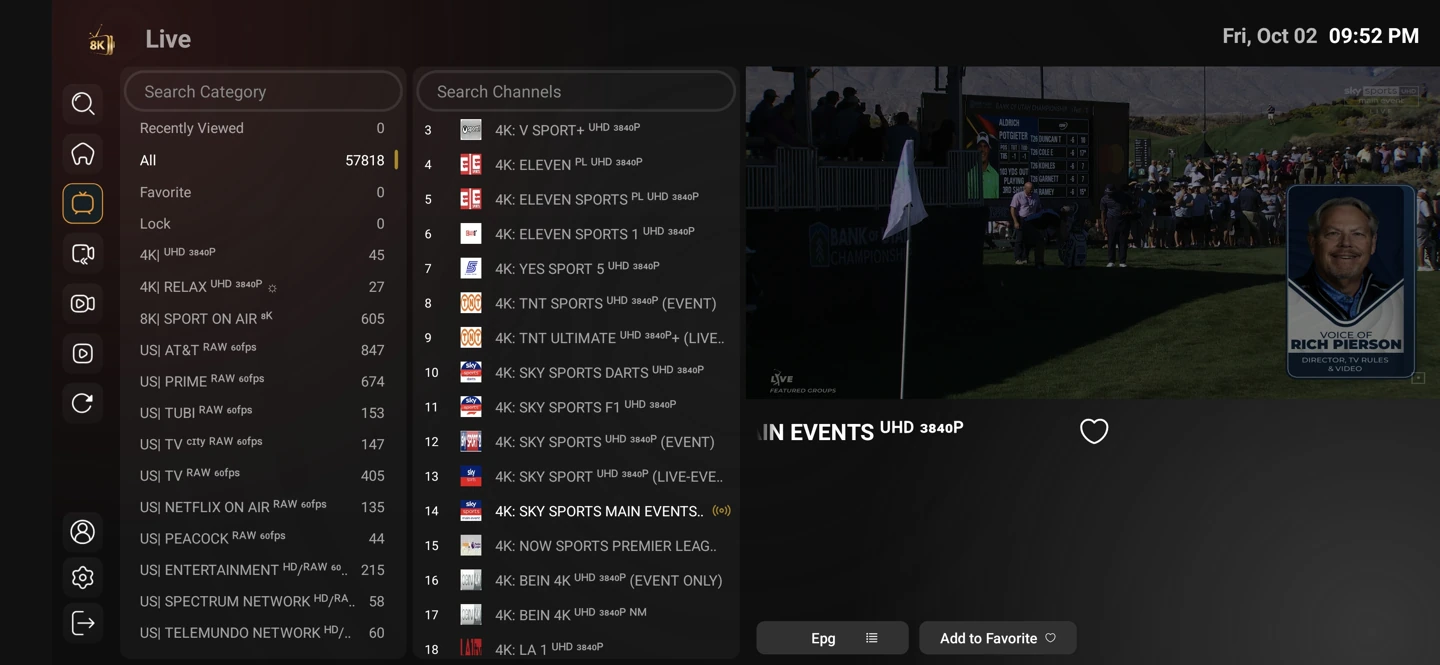
The seller itself explains that the 8K name does not guarantee the resolution of every stream. Treat that as a useful purchasing distinction. A household can pay for four simultaneous connections and still receive a particular programme produced or distributed at a lower resolution. Conversely a single connection might be enough for a viewer interested primarily in a particular high-quality source. Connection capacity, source quality and display capability are independent dimensions.
Use a known programme to assess the picture. From the normal seat, look at fine text in a score graphic, faces during motion and dark or low-contrast scenes. Keep the television picture mode, input and source as consistent as possible when testing different player behaviour. If the device offers reliable playback details, note where those details came from and what they represent. A TV reporting the resolution of an HDMI input may be showing the output chosen by a box that already scaled the picture.
Make audio and captions part of the same observation. A sharper picture can be less useful than an accessible caption track or clear speech for the regular viewer. Try normal volume, the household sound system and the remote controls used every night. Record whether the chosen audio language and captions remain after changing stations or restarting the player. Those are properties a viewer can test directly without making claims about service-wide performance.
Two simultaneous sessions can also reveal a local network bottleneck. A family on a paid term may observe that one screen works smoothly but two active screens compete with an unrelated download. Before blaming the account limit, distinguish an explicit connection error from visible buffering on otherwise authorized streams. Ask the seller about the error message and check which applications in the home are using the network at the time. Keep any troubleshooting within the account’s documented allowance.
When reporting the result in the forum, include the player and device, named programme or station, time of day and a description of what happened. Leave the service password, customer reference and working media endpoints private. Nobody reading a public thread needs them to help distinguish a local display setting, guide problem or account-limit message.
Smarter 8K’s current reseller page names 60, 120, 300 and 600 credits as four enquiry options. Its wording puts the cash price and debit rules into the individual quote. That is enough evidence to identify a route for a prospective reseller. It is insufficient to publish a unit price, how many annual lines a particular pack can create, a discount percentage or a profit figure for this programme. A seller must supply those facts for the chosen arrangement.
The distinction is easy to miss because consumer pricing is unusually explicit about both total and simultaneous capacity. The $50.99 annual household option and its four listed connections describe a retail purchase. A proposed reseller package of 60 credits uses a different unit of account. Dividing 60 by twelve, four or $50.99 would yield a number, but none of those calculations has a documented relationship to the operator’s reseller debit schedule.
Ask Smarter 8K for a comparable quote across the quantities that match the business need. Each row should have a quantity, price, currency, the standard debit for one, three, six and twelve months, how connections affect that debit, top-up process and the conditions applying to unused balance. Ask which customer and trial operations the panel actually permits. When the responses arrive, keep the original date and whether later top-ups follow the same price. An undated copied price cannot support a future customer commitment.
Older promotional snippets, saved graphics and pages belonging to similar 8K brands may show other pack structures. Compare them with the current exact-domain public reseller page and a current quote that names the seller and account. Staff should be able to say which record they used and why. A screenshot of a panel sign-in screen can help identify the product. It still leaves the debit schedule and permissions unspecified.
There is a legitimate answer when the seller provides only the full pack price. Divide that total by the quoted quantity to estimate cost per credit, assuming the fee covers those credits alone. Leave the customer-term cost uncalculated until the operator provides the debit for the particular term and account configuration. It is more useful to enter a visibly empty field than a made-up number that the next staff member mistakes for an approved rule.
| Needed field | What a usable answer should identify | Decision it supports |
|---|---|---|
| Pack quantity and payable total | Exact number of credits, currency, compulsory fees and quote date | Cash needed to buy the selected pack |
| One standard customer term | Term length, number of allowed connections and the operator’s debit | Direct credit allocation per activation |
| Renewal treatment | Start date, early renewal handling and any different debit | What can safely be promised to existing customers |
| Remaining balance | Expiry, rollover, transfer and refund conditions | Whether unused credits retain value for this reseller |
| Operating permissions | Trial creation, amendment, correction and escalation | Which tasks staff can complete themselves |
A worksheet remains useful even when the provider has not yet named a price. List the customer commitments the business is prepared to accept. For example, four standard annual renewals, three quarterly starts and two short monthly starts describe demand in terms the operator can understand. Ask the provider to show the debits for precisely that mixture on the proposed account. Once the operator identifies the annual, quarterly and monthly debits, multiply each by its corresponding number of customers and add the results.
This approach catches a hidden screen issue. A customer might request the four-connection retail configuration familiar from the annual consumer page. A reseller must know whether its panel allows the same configuration and what debit the operator applies to it. A one-screen annual example may not cost the same as a four-screen annual line. Ask for both examples where relevant. Keep the direct allocation separate from what the business quotes its customer and from what the public retail site happens to charge.
When several pack sizes have quoted prices, compare both the full amount needed today and the unused balance after confirmed commitments. A large pack may have a lower unit rate, yet leave unissued stock that cannot be used before it expires. A small pack may cover the immediate work but require a top-up during a weekend when the operator cannot guarantee immediate delivery. Ask how the seller confirms a top-up and how staff can validate it before promising an activation deadline.
A business owner can make one further calculation once enough information is available. Estimate the time spent discussing devices, setting up the chosen player, confirming customer access and responding to problems during the term. Keep that estimate as an operating cost specific to the business. A credit schedule describes a supplier cost. It does not automatically pay for live support, payment fees, corrections or the work involved in looking after a customer for a year.
Take a family on the quarterly Smarter 8K option. It chose two simultaneous connections because the television and a laptop were often active together. A relative moves in halfway through the term, and the household now needs a third stream several evenings a week. The public six-month option lists three, but the public table does not explain how an existing quarter converts midterm. Ask the seller whether the account can be changed, when the new allowance begins, how any remaining paid time is treated and the exact amount due.
Do not calculate a presumed upgrade by subtracting $24.99 from $39.99. The $15 difference compares two new public listings. A private upgrade quote might involve remaining time, a fresh term or a different account arrangement. Record the original expiry and allowance before considering the change. If the seller proposes a replacement, ask what happens to each installed player, saved preferences and private account details. A seemingly modest capacity change can affect several people in the household at once.
The opposite situation is just as important. Suppose someone leaves after two months of an annual plan. The family that remains may need only two streams. Confirm whether the original $50.99 term remains paid through its recorded expiry, what the provider permits with the active devices and what a future renewal should look like. A cost-sharing arrangement with a housemate is a private household matter. It does not establish a right to transfer or resell part of the account to somebody else.
Moving one person to another address adds a location question. Ask about the permitted geographic use and account conditions for the actual arrangement. The phrase “four simultaneous connections” names a quantity. It does not tell the reader whether four unrelated homes may share one account or whether all four can operate away from the original location. A private written answer can settle the case without requiring a viewer to test something outside the permitted terms.
Close the change with a private note to the paying household. State the new term, start, expiry, number of active streams, device or app changes and total amount the seller confirmed. If the seller could not offer an acceptable midterm arrangement, record that too. The note prevents a well-meaning family member buying a second subscription next month to solve an already understood capacity question.
When a viewer says “another screen cannot connect,” begin by asking which paid term appears on the current account. The public table makes different promises for different terms. Then identify how many sessions should already be playing, which devices they use and whether anybody recently left an app open. A clear connection-limit message points to a different issue from a Windows player that cannot open, an app licence prompt or a local picture that never reaches an HDMI input.
Use a permitted, controlled sequence. First check that the primary device works. Stop or exit its session as the player expects, then try the second named device within the account terms. If both work separately but the agreed simultaneous configuration fails, record the exact message, time, account allowance and number of active sessions. Send the private account reference to the provider through its own support route. A public forum needs only the non-sensitive technical summary.
If the second device is Windows, confirm whether its operating system matches the chosen installer entry and whether the app reached account setup at all. An installer mismatch is not a connection-limit fault. If the player opens and shows categories but a particular programme fails, compare another authorized item and identify the affected feed. If all playback is smooth but the guide has the wrong time, check local time-zone settings and the broadcaster’s schedule. Each of these checks tests a different component without resetting the whole household setup.
Keep the paying viewer in control of notices and receipts. A technically capable relative may be the best person to describe an error but have no authority to change the account or renew on different terms. Identify who can approve spending before asking support to make a billable change. A reply promising another connection has value only after the family understands its duration, scope and price.
Finish a support record with what settled the question. “Three devices played under the confirmed six-month allowance after the earlier session was released” is an example of the level of detail a household can record if that result actually occurs. A case that remains unresolved should say which device and condition still fail. Public readers gain little from a broad good-or-bad verdict with no account term or equipment attached.
A spare connection can solve a real annoyance or sit idle for a year. Consider a home that regularly uses three concurrent streams for six months. The family can buy its baseline need for $39.99. The twelve-month option would require another $11 today and leave capacity for a fourth viewer. To decide whether that difference is worthwhile, list the remaining six months and the actual occasions on which the fourth connection would be valuable. A visiting relative in the same permitted home might count. An imagined future sale to somebody living elsewhere certainly requires a separate operator agreement.
The six-month choice has a usable stopping point. Suppose the television is due for replacement in five months and the household has yet to choose its next platform. Waiting until after delivery keeps the option of reviewing the player, app fees and accessible navigation before paying for the second half of the year. A reader who is comfortable with the $11 difference may still judge that flexibility worthwhile. Another reader who will keep a tested external box with the new display may face little equipment uncertainty. The figures are identical while the equipment decisions differ.
A shared home can test the value of a spare stream without pretending every evening reaches the maximum. Mark the occasions over a week when someone had to wait, borrow a different service already owned or move to the main television because the current allowance was full. Record only the inconvenience and time, not private viewing choices. A family that never waits has little evidence for needing a fourth active stream. A household that regularly misses a local broadcast because every connection is occupied has identified a practical reason to request more.
There is also a reliability question that can be tested cheaply. Agree what the family will do if one device fails during a wanted programme. A spare allowed connection may make it easier to move a viewer to a working device, provided location and switching rules allow it. It does nothing for an unavailable station on every player. A written list of intended screens and fallback devices is more useful than assuming the largest plan removes all viewing interruptions.
Carry only the useful conclusion into the purchase note. One household might write that the fourth stream is a convenience for weekend overlap and that six additional months justify the extra $11. Another might say that the third stream is essential for the current semester, with the next device and address still undecided. Either conclusion is grounded in something the people in that particular home can recognize.
One last detail is the effect of ordinary household absences. If a third viewer leaves for a month but returns to the same home, the spare connection could become useful again within the term already paid. If a person moves to a different address permanently, their previous share of the household bill and their right to use the account are separate questions. Record the new arrangement and ask the operator how to remove an old device where necessary. A dated record of who controls renewal and how the account is used prevents an occasional convenience from becoming a permanent source of confusion.
A family can review this once at renewal using last term's actual overlap chart. Count what the family used, what it paid and which functions it valued. Then look at the new public term and capacity together. This is a far more useful comparison than deciding that the term last selected must remain the right choice simply because the same gold box is still visible.
Start a new order with the selected term, full USD price and published simultaneous allowance. Add the exact viewing address or general market the seller has confirmed, the intended devices, chosen players, any separate fees and the seller’s activation procedure. Mark which observations came from a trial and which came directly from the paid terms. If the trial used a different allowance or player from the one being purchased, ask the provider to account for the difference before payment.
A typical decision might be straightforward. Two people usually overlap for one evening hour, both named devices are supported, the household intends to stay for three months and the two-connection allowance matches its need. The quarterly $24.99 line answers the documented term and capacity questions. The remaining decisions concern eligibility, final charges and how to receive the paid account. There is little value in paying for four connections simply because the yearly equivalent looks economical on paper.
Another household might need three connections for ten months. At the current prices, a six-month term followed by another six would total $79.98 if renewed on the same terms. The $50.99 annual term lists four connections and covers the intended period. Where the address, devices, access and payment conditions are suitable, the annual row becomes an easily explained choice. The family should still check renewal and cancellation arrangements and retain the actual confirmation of its purchase.
A reseller has a different final order. Attach the written pack quote, debit schedule, currency, expiry terms, operational responsibilities and the operator contact used to resolve disputed changes. A pack with a quantity alone remains an enquiry. A fully documented quote becomes something staff can budget and a customer-facing business can plan around. That distinction helps both consumer and commercial buyers use smarter8k.app for the decision the current evidence actually supports.
Suppose you expect to watch for six months. At the listed single-month amount, six separate purchases would total $71.94 USD. The six-month offer asks for $39.99 USD up front. That comparison assumes every new month is available at the listed amount. Check renewal separately before relying on it.
| Viewing period | Separate monthly purchases | Single matching term | Difference | Monthly purchases to reach term price |
|---|---|---|---|---|
| 3 months | $35.97 USD | $24.99 USD | $10.98 USD | 3 |
| 6 months | $71.94 USD | $39.99 USD | $31.95 USD | 4 |
| 12 months | $143.88 USD | $50.99 USD | $92.89 USD | 5 |
Read the final column as a spending threshold. If you expect to cancel sooner, compare the shorter commitment with the cash you would have paid up front. The figures exclude fees the seller has not confirmed.
Check Smarter 8K subscription termsThe image link identifies the exact file served by the provider.

Choose a matchup to see the actual currency, term and outcome.
Open the caption on a website-sourced image to see its original. The remaining captions identify material supplied with the provider archive.