

Give the remote to the person who will use it
A television passes a useful accessibility test when the person who wants to watch can find a program, follow it, and return tomorrow without someone rebuilding the setup. A working CC button answers one small part of that question. So does a comparison chart showing that a streaming box has a screen reader. Neither tells an uncle whether he will be able to hear the next line after the kitchen door shuts, or a sister whether she can get back from the audio menu with the remote resting on her tray.
Start by asking what would make the evening work. One viewer may want large English captions on every program, including sound cues such as a doorbell. Another may hear dialogue clearly but need a description of what the camera shows between conversations. Someone who reads a caption track comfortably might have trouble locating the button that turns it on. A helper can solve the wrong problem quite elegantly if the viewer never gets their hands on the controls.
Pick one goal for a first sitting. It might be “watch the garden documentary with words I can read from this chair.” Let the viewer try the route once and ask permission before you take over. If you do handle the remote, give it back at the same screen. The second attempt, made by the person who will use the set, tells you whether you have found a repeatable route. Note anything that still requires two hands, an unfamiliar button, memorizing an icon, or asking somebody to read a label aloud.
Put an actual program at the top of the page
For a concrete example, PBS Nature has an episode called My Garden of a Thousand Bees. It follows wildlife filmmaker Martin Dohrn observing bees in his garden. The broadcaster's episode page gives you a title and a description you can check independently of a seller's program guide. Use that full title when looking for it. A trailer, a short clip about one bee, a local broadcast of the documentary, and an on-demand edition can all appear in a search for the same words. They are separate versions for this exercise.
Open a version your household is entitled to watch. If the full program is unavailable in your area or the app offers only a preview, choose another named episode you already have access to. Write down which one you used. The example identifies a real program. It makes no promise about the documentary's present availability, a particular audio track or its inclusion in a commercial subscription. A viewer who prefers the evening news should use the station's call sign, the name of the bulletin and that evening's date in place of the documentary title.
Record the route before adjusting anything. “PBS website on the family laptop” and “PBS app on the Roku attached to HDMI 1” are sufficiently specific for a home note. If the comparison is between a broadcaster's player and a seller's app, give each its own line. A working caption track in one player is a good reference if the second fails. It gives support a definite question about a version or playback path. It cannot establish that two services receive the same file, preserve the same tracks, or show the same broadcast feed.
Read the track labels slowly once
Before changing your television's settings, pause the program and inspect the controls supplied by the player. Look for a captions or subtitles button, then look separately for languages or audio tracks. Write down the labels exactly as they appear, including the language. A small English label under Audio might select the ordinary soundtrack. English AD generally identifies an English track with audio description. An English entry in the subtitle menu controls text. Those choices can sit within a couple of button presses of each other and change entirely different things.
Captions commonly include spoken words and useful sound information. A subtitle track intended for translation may handle dialogue without identifying speakers off camera or noting a telephone ringing. Titles and publishers use different labels, including CC and SDH. Inspect the actual text during a passage with more than one speaker. For someone following a scene without the sound, a line attributed to the person in the next room can make the plot intelligible. For someone watching a foreign-language film with the original sound, the preferred text might be the translated subtitles. Let the viewer decide which track works.
An option that mentions accessibility may apply to the menu itself. A screen reader speaks interface labels as focus moves. Audio description supplies additional program narration about visual action. One can work beautifully while the other is unavailable for the selected episode. Likewise, spoken system feedback when you turn up the volume says nothing about the soundtrack. Test each feature at the point where it is supposed to operate. Move between two menu items to check spoken navigation. Resume the actual story and listen for a description of what is happening on screen to check the program track.
Choose three moments you can find again
Use one stretch of ordinary conversation, one moment where something important happens visually, and one part with background sound. In a garden documentary those might be a filmed interview, a close-up revealing behavior before anyone explains it, and a sequence with music or insect sounds under narration. These are suggestions for moments to identify in the version you play. Write down the time displayed by your own player. An inserted introduction, sponsorship message or shortened edit can move the same scene to a different timestamp.
Listen or read through the first passage in its original state. Then change one option and replay that same passage. A viewer who could read most of a sentence may discover that a slightly darker caption background solves the problem without increasing the text size. In a scene with two voices, increasing the size might make matters worse by forcing every sentence into more lines. Comparing the same passage gives the viewer a fair way to tell. Ask what became easier, and what detail disappeared while they were reading.
A pause screen can hide a good caption beneath a progress bar. It can also make a briefly displayed caption appear perfectly readable because the viewer has unlimited time to examine it. Resume playback for the actual check. If the issue is timing, watch a short exchange at normal speed. Note whether words arrive after the answer, disappear before they can be read, or cover the same location where the program identifies its speaker. These observations are specific enough to send upstream, and they keep the evening from turning into an open-ended tour of picture settings.
Judge caption size from the chair, at the usual time
Choose a familiar seat and the lighting the viewer normally uses. A sunlit afternoon and an evening with one lamp on can produce quite different results. Try a sequence with pale scenery behind the text, followed by a dark scene. White lettering that looks enormous over a stationary black menu can disappear against a light shirt when the camera moves. A darker caption background, if the app honors the setting, may solve that more comfortably than another jump in font size.
Ask the viewer to read a complete short exchange in real time. Give them room to watch the picture as well. Could they tell who spoke, read a place name, and still notice what the camera revealed? Text can become large enough to crowd the image or force so much wrapping that following the words takes longer. There is no preferred size for every household. Record the smallest adjustment that solves this viewer's actual problem, including the background or window setting if that made the difference.
Now check something outside the program. Can the viewer find the highlighted item in the episode list? Can they tell which audio choice is selected? Caption styling, the size of the guide and the contrast of an app's menus may be controlled in different places. A clear documentary alongside an unreadable guide is a real result. Write it down in those terms. It can justify trying a different supported player on the television the family already owns. Buying a larger screen for a guide that simply has poor focus indication is an expensive experiment.
Take the PBS and Roku route one button at a time
PBS gives a particular instruction for its Roku app. Start the selected video, wait through the sponsorship message if one plays, then use the star button on the Roku remote to reach caption options. PBS identifies the persistent captions choice as On Always. Choose it and return to playback. Timing matters here. Pressing the button while a sponsorship message controls the screen may open a different set of options. Record whether you were in the actual program when you tried it.
Roku distinguishes several caption behaviors. A mode that displays captions only after using Replay can be valuable for someone who occasionally misses a line. It will be a poor fit for a viewer who needs the whole program captioned. Some Roku setups offer captions on mute. That too is a different result from continuous captions at the household's ordinary volume. When you see text after pressing Replay, allow playback to carry into the next exchange before deciding that captions are staying on.
Roku also documents an optional screen reader for navigation. The player's Options button has a screen-reader shortcut when enabled. A user who presses the star button several times quickly can therefore hear spoken menu feedback during what began as a caption adjustment. Tell the viewer where they are and let them finish one action before starting another. If a niece can reach the correct menu because she knows where the star is but her relative struggles to locate it by touch, give the relative time to find a position or description that works. “The small button below the directional area on the right” may be much more useful than repeating the word Options.
Separate Apple TV hardware from the Apple TV app
Ask what is connected to the physical television. An Apple TV 4K box plugged into an HDMI port has a system Settings app. The Apple TV app installed on a different manufacturer's television does not put that box behind the screen. Apple's Apple TV 4K instructions place Closed Captions and SDH in the accessibility settings under Subtitles and Captioning. The setting expresses a preference for accessible tracks when suitable tracks are supplied. If there is no Apple TV box in the home, begin with the actual device and player in use.
On the box, choose a program and open its playback controls as well. Look for the available subtitle and audio options on that title. Enable captions, return to the program and keep watching through the next change of speaker. If the setting appears to do nothing, check the available tracks before repeating the button sequence. A goal such as “English captions for this episode” is specific enough to decide whether the task is finished. “Accessibility turned on” leaves several different options unresolved.
Apple's audio-descriptions setting is a separate choice under Accessibility. The device can prefer a described track when one is available. If someone also uses VoiceOver for navigation, practice opening the track menu without losing the current program. A helper can describe where the audio button appears, but the relevant test is whether focus and its spoken label lead the viewer to the same control. Let the viewer close the overlay and play the scene themselves. If an update changes the layout, the known terms for the controls can still help them find the route again.
Check Fire TV against the app that actually plays the video
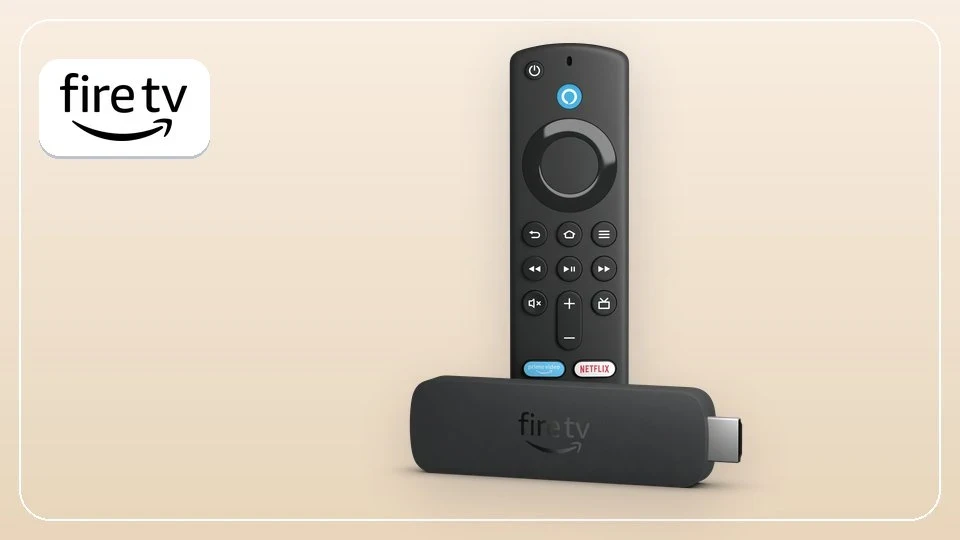
Amazon's Fire TV accessibility guide distinguishes VoiceView, closed captions and audio descriptions. VoiceView reads interface text as the person moves through menus. Amazon describes enabling it from the Accessibility area of Fire TV settings. For someone who relies on spoken navigation, an effective check starts at the home screen. Open the intended app, find the title and reach its play control. If the system speaks the home screen clearly and falls silent at a crucial button inside the app, write down the name of that button or the last label you heard.
Amazon also publishes a Fire TV subtitle procedure that uses the remote's Menu control during video playback. A particular player may present its own language or CC menu. Try the route documented for the app you are using, and do so while the chosen title is playing. A Fire TV Stick in one house may be a different generation from a Fire TV television in another. Record the model for a support request, especially when the labels or available features differ from the manufacturer's example.
The app can be the deciding detail for described content. In its audio-description instructions, PBS lists platform-specific availability and currently identifies limitations for the main PBS app on Fire and Android TV. PBS KIDS has its own instructions. Read the entry for the app and device you mean. Someone deciding whether to buy a Fire TV accessory solely for PBS audio description deserves that specific check before spending anything. A broad Amazon statement about Fire TV features cannot answer a broadcaster-specific question about one title, one playback application and one version of its software.
Follow focus through a Google TV session
Google's accessibility guide for Google TV describes TalkBack, caption preferences and Switch Access. TalkBack is the screen reader. Google locates its settings in the device's Accessibility area and documents speech options such as rate and verbosity. Begin with a speed that the viewer chooses. A helper who finds the voice too fast may be listening to it for the first time. The regular viewer may depend on that speed for efficient navigation. Change shared system settings only with their agreement and make a note of the starting choices.
Follow a short route with TalkBack enabled. Open an app, choose an episode and locate the language controls. Listen to what the software says when focus enters a row of alternatives. A clear spoken button name is more useful than a row of items all announced as “button.” Try returning to the previous level. If the viewer comes back to the beginning of a long list every time, this is a significant navigation cost, even if a skilled helper can reach the episode eventually. Record where focus lands on the return trip.
If a household uses a switch or another input, establish the viewer's existing way of selecting and moving before asking them to try a new shortcut. Google provides Switch Access documentation, but hardware, setup and preferred input vary. A reliable test can be quite small. Let the viewer move through the same sequence twice, then ask whether an unexpected dialog prevents getting back. A company could supply every required program track and still deliver an app that cannot be operated independently with the reader's controls. That is concrete purchasing information a channel-count chart cannot supply.
Listen for the action, then listen for the menu
Select a quiet moment with a visible change, perhaps a person entering a scene or the camera revealing a detail before anyone speaks about it. With the ordinary soundtrack selected, listen once. On a version offering audio description, select the described audio in the player's audio menu and try that moment again. Well-placed extra narration may be brief and fit between existing words. A continuous commentator in a sports program, or a documentary's regular voice-over, does not in itself establish that the described track is active.
PBS explains that its website exposes a headphones control on supported videos with an English AD option. It also publishes a filter for videos with audio description. Those two tools solve different jobs. The filter helps you pick a known comparison title when the availability of your first choice is unclear. The playback control tells you which track the current browser session offers. If a shortlisted commercial player lacks a described track for one program, try a known described title on its appropriate authorized source to establish that your television can reproduce narration at all.
After checking the program, return to its menu. Is extra speech still describing action, or is a voice reading the current button? Can the viewer tell which track is selected? In a mixed household, one person may turn off menu speech because a relative says a narrator has appeared during a film. That can remove the regular viewer's means of navigating without solving the soundtrack issue. Identify the source of the speech first. Restore each person's preferred controls when the session ends, and write down the working language-track label so it can be found again.
Deal with unclear dialogue as a separate problem
If words are difficult to distinguish from music, find a passage with a speaking voice that the viewer wants to understand. Check that the program uses the intended language and ordinary or described audio as preferred. Then choose one output path. It might be the television speakers, a soundbar or headphones. Ask the viewer for their usual comfortable volume, and keep the comparison at a comfortable level. Raising every sound together can make an explosion louder without making the following sentence easier to understand.
On supported Apple TV 4K setups Apple documents an Enhance Dialogue option and separately describes Reduce Loud Sounds. The first addresses the prominence of speech. The second changes the difference between louder sounds and the rest of the mix. Try one available option at a time. Watch the same exchange, then a scene the viewer usually finds too loud or tiring. If the voice becomes clearer but familiar music feels different, record both observations and let the viewer choose their compromise. Options and supported configurations vary, and a similar label on another manufacturer's TV can implement a different function.
Before assuming a viewing subscription is responsible, try an ordinary program the household already knows on the same output path. If voices are unclear across every app when the soundbar is selected, the soundbar or TV's audio settings deserve attention. If the same soundbar is comfortable for other programs and the problem appears only on one feed, give the seller that detail. No one needs to undo every audio adjustment in the house to pursue a single poor mix. Save the previous settings so the next person can put them back.
Find out who else hears the sound
In a shared room one person may want private listening at a different level while someone else wants the soundbar to continue. Do not assume pairing headphones will serve both. On some combinations selecting a headset changes the destination for everybody. With the familiar program running at a comfortable level, select the household's usual listening device and have both people describe what they now hear. Try the remote's volume buttons once. Do they change the TV, the attached audio system or the headset? Write the answer next to the names of the devices.
Listen to an exchange where a speaker's face is visible. If speech appears late on the headphones, try the same scene on the television speakers before adjusting a delay control. A feed may already have a timing problem. A wireless path can introduce a different delay. A viewer relying on both lip movements and captions may experience three signals at once. Record which pair disagrees, whether the gap stays consistent, and whether the symptom follows the headphones into another app. These are more useful facts than a general report that the stream feels slow.
Finish by disconnecting or putting away the private listening device in the ordinary way. Can everyone hear the TV again? This detail matters the following morning when the regular helper has left. Mark the final state in a short household note. If the headset requires a mobile app, also check whether the viewer can restart the connection independently and whether family members are comfortable with the phone being in that role. The convenience of a feature depends partly on whose phone needs to be charged for television night.
Test the remote after the helper has gone quiet
Daily accessibility includes the route into a program. Put the television in its normal off or standby state and give the regular viewer the remote they will use on their own. Ask them to turn on the set, choose the correct input, open the right app and return to the episode. Let them decide where to hold the remote and whether to use voice commands, directional buttons or another input. A helper should resist announcing every next step. A missed choice often shows where the interface or the handover note needs work.
Pay attention to movements the viewer must make repeatedly. A small button that can be pressed reliably once may become tiring after scrolling through a long program guide. A long press can be difficult to distinguish from a tap. A useful focus highlight might become faint against one particular poster. If the app offers favorites or a continue-watching row, save the episode or station and try the route again. Improvements in button count and confidence can matter more than adding another player to the set.
Try one ordinary mistake before finishing. Back out of the language dialog without changing the track, or select a different input and return. Ask how the viewer knows they are back in the right place. A television might remember its HDMI input while the streaming stick returns to its own home screen. In that case the note by the remote should name the app as well as the input. Use words the viewer already uses. A note saying “the little stick on HDMI 2” may be entirely effective if that is how they recognize the device.
Check live television without giving a clip too much credit
A carefully captioned on-demand episode gives a household a stable reference, but a live bulletin presents a different test. Pick a program the viewer watches regularly and record the station, the program name, the local start time, date and time zone. Check the ordinary local feed rather than an unrelated network tile with a similar name. If the guide offers an east and west version, save the exact label. It can be the clue that explains why a direct broadcaster stream and the seller's app show different interviews.
Watch a presenter, a recorded field report and a live exchange if the bulletin includes them. A delay can change when the production moves between those segments. Note whether captions appear throughout, identify speakers clearly enough, and stay readable over a lower-third graphic. A weather map or sports score near the bottom of the screen is a good test of text placement. Describe the practical consequence, such as missing the town name underneath the caption, instead of assuming all captions move or obscure the same area.
Be fair about what you have observed. A single minute of quiet without captions might contain no speech. A short interruption followed by recovery is different from an entire program without text. When feasible, record a later timestamp on the same program and one nearby channel on the same device. This is a way to narrow the fault, not a requirement that someone sit through an inaccessible broadcast before asking for help. If viewing the program is essential that evening, switch to a known accessible route first and keep enough details to investigate later.
Carry the settings through the changes a family actually makes
Return to the documentary on the next day or at the next available sitting. Open the app in the ordinary way and resume the same edition. Were captions still on? Was the preferred language still selected? Did returning from another household profile alter the selection? Repeat just the part that matters rather than rerunning an entire session. The difference between a setting that lasts and a setting that must be changed every night can outweigh a small difference in subscription price.
A separate device warrants a separate line in the notes. Captions selected on a laptop may not carry to the television app. When you cast from a phone, the playback controls may appear on the sending device, on the receiver or in both places. Record which screen actually changed the result. Try stopping the cast and watching again with the normal remote if that is part of family life. Mirroring, casting and opening the native television app can each present different controls even when the picture looks similar from the sofa.
Think about the other people in the house before settling on a shared default. One viewer may expect audio description on every supported title. Another may prefer the ordinary track and know how to change it for a single session. Where separate profiles are available, test the profiles the household actually has. If everyone shares one account, a short card beside the remote can explain how to restore the usual preference. Keep credentials off that card. Its job is to preserve an accessible viewing habit, not to double as the household's password notebook.
Read an interface photograph for what it can show
A provider screenshot can save a helper time. It may show the shape of a menu, the app name, a tile called Live TV, or the approximate position of a settings control. Open the artwork at its native size before deciding you recognize the feature. In a store packed with provider logos and subscription boxes, look for the picture specifically identified as a player screen. A reseller dashboard showing accounts and credits belongs to the person managing stock. It is a poor guide to the menu the customer sees on a television.
Use the screenshot as a map to the first question. If an illustration shows an audio control, ask the provider which release and platform it represents, and request the short route to a track selector on your exact player. A still image cannot tell you whether a highlighted control has an audible label, whether captions remain readable while a scene moves, or whether a particular episode includes description. Likewise, a large app logo on a product card says little about the number of remote clicks required to get back after a mistake.
For a support thread, an original photograph of your own menu can be helpful if you choose to share one. Capture only the relevant section. Close personal messages and crop out account names, access codes, portal addresses, device identifiers and payment references. Add a plain-language description of the part that matters so a reader using a screen reader can follow the question. “The audio menu offers English and Spanish. Neither option is labelled AD” conveys far more than an unlabeled picture of a complete television taken from across the room.
Decide what the seller still needs to answer
A trial or short term is valuable if it answers a question that could otherwise cost the household a year of the wrong service. Send the intended seller one specific enquiry. Name the device, app, program or station, language and feature. Say whether the question concerns an on-demand episode or a live local feed. If the important requirement is independent navigation, ask how the viewer can reach the control with their own remote. An answer about thousands of channels leaves the essential part unresolved.
Write the response next to the result from your own device. The seller may state that a feature is supported in a particular player, while your installed version labels it differently. It may offer an example title with a described track even though the documentary you requested lacks one. Both pieces of information can help a buyer decide. An available example proves something about the playback path. It still leaves the requested program open. Give that open question its own line so a family member doing the checkout does not mistake a partial answer for a completed test.
Choose a result the family can act on. “Ready for one month” can mean the viewer can independently play the service with the required settings and the household is willing to test its normal routine. “Wait for a reply” makes sense when essential audio is missing and the seller has offered to investigate. “Use the broadcaster for this program” can be the right answer where another authorized route already fits the viewer. When the subject is accessibility, a decision to keep the familiar working route is every bit as useful as choosing a new subscription.
Give support a short report someone can reproduce
Lead with the event and the impact. An example might read, “On the living-room Roku, English captions appeared during the introduction but disappeared for the first two speakers on the main program. Replaying that part gave the same result.” Add the date, local time, accurate title, station or source, app version if visible, and the label selected in the menu. If the audio track is the issue, describe the last point where you heard the expected description. These details let a support representative find the relevant program material.
Send the question to the maintainer most likely to reproduce it. If the Roku home screen has lost its spoken navigation across apps, Roku's own accessibility material is a sensible first reference. If the broadcaster's website offers an AD track but the same title in a specific television app does not, include both paths in the report to the app or service supplying that version. The FCC publishes captioning information and maintains a consumer accessibility complaint route for people seeking its assistance in the United States. Its categories distinguish different kinds of accessibility problems. A store's guide cannot decide how a rule applies to an individual transaction.
Keep a record of the reply and the change you are asked to try. A good follow-up describes which symptom cleared, on which device, and whether the viewer carried out the route without help. If a forum thread leads to a solution, append that plain-language account rather than uploading credentials or somebody else's video. Someone reading it later may use another player, another local feed or another edition. The detail that helps them most is often a modest one, such as the fact the caption option appeared after the introductory sponsorship ended.
Leave a one-page handover and an honest result
The handover can be a page in large type, an accessible note on the viewer's phone, or an audio reminder they know how to find. Use the format the viewer prefers. Include the name of the device, input and app, the shortest route to the regular program, the preferred text or audio label, and one way to undo a change. Give the viewer an opportunity to edit the words. A button described as a little star, a raised circle or a box with writing may be much easier to locate than the name a reviewer would choose.
End with a short second trial led by the viewer. The helper can leave the remote on its usual table and give the program a fresh start. Can the viewer find it, tell when the correct track is active, make one adjustment and return to the picture? If any part still depends on another person, record that point without turning it into a failure on the viewer's part. The equipment and service are the things under consideration. A product that suits one hand, one pair of eyes or one living arrangement may be awkward in another house.
A good result survives a week because it reflects everyday use. Keep the title and date of the test, the source of each track, and the small changes that helped. When a television, app or viewing requirement changes, reopen just that piece of the note. Nobody should have to relearn an entire entertainment system to discover why one program lost its captions. A clearly identified episode, a viewer who can operate their own remote, and a working path back to the program are enough to make the comparison meaningful.
Sources
- PBS Nature, My Garden of a Thousand Bees
- PBS Help, enabling closed captions in the PBS player
- PBS Help, closed captions on Roku
- PBS Help, audio description by app and device
- Roku Support, caption settings
- Roku Support, accessibility and the screen reader
- Apple TV User Guide, closed captions and SDH
- Apple TV User Guide, audio descriptions
- Apple TV User Guide, playback audio settings
- Amazon Fire TV, accessibility features
- Amazon Fire TV, turning on captions during playback
- Google TV Help, TalkBack, captions and Switch Access
- FCC Consumer Guide, Closed Captioning on Television
- FCC Consumer Inquiries and Complaints Center, accessibility categories